Table of Contents
- Why Ethics Matter in Cross-Border Surrogacy
- Core Ethical Principles: Informed Consent, Autonomy, and Commodification
- Best Practices for Ethical Surrogacy Agencies
- Surrogate Rights in International Surrogacy: Screening, Support, and Welfare
- Legal Protections for Intended Parents in Cross-Border Surrogacy
- Digital Ethics in Matching Platforms: Data Privacy and Transparency
- Reproductive Justice and Global Health Policy: The Bigger Picture
- Conclusion
- Frequently Asked Questions
Last Updated: September 15, 2026
Why Ethics Matter in Cross-Border Surrogacy
Ethical considerations in international surrogacy programs determine whether a child’s arrival is built on dignity or on exploitation. This guide from Herman Family Group examines the principles that separate a well-structured program from a transactional arrangement. Cross-border reproductive care involves Intended Parents, gestational carriers, clinics, and lawyers across multiple legal systems, and each party’s interests must be protected. When ethics are treated as an afterthought, the risks fall hardest on the surrogate and the child.
Below, we break down the core principles, the screening standards, and the legal protections that ethical programs share.
Core Ethical Principles: Informed Consent, Autonomy, and Commodification
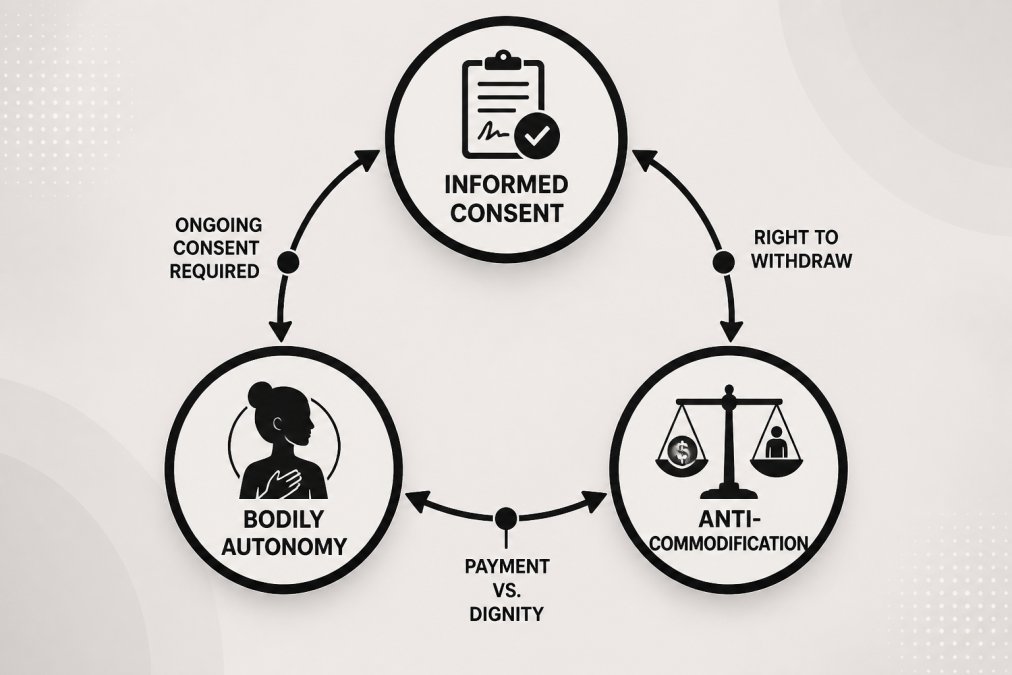
Three principles anchor every ethical surrogacy arrangement: informed consent, bodily autonomy, and protection against commodification. Ethical surrogacy means a gestational carrier understands the medical process, the legal consequences, and her rights before she agrees to anything.
Informed Consent and Bodily Autonomy
Informed consent is the process by which a gestational carrier receives complete, understandable information about medical procedures, risks, and legal outcomes before agreeing to participate. Bodily autonomy means she retains the right to make decisions about her own body throughout the pregnancy.
A common mistake is treating a signed contract as proof of consent. True consent is ongoing. Ethical programs confirm that the surrogate has independent legal counsel, understands what she is agreeing to, and can withdraw without coercion.
The Commodification Debate: Compensation vs. Exploitation
Financial compensation for reproductive labor sits at the center of the commodification debate. Paying a surrogate for her time, medical risk, and recovery is reasonable. Treating her as a rented vessel is not.
The distinction comes down to control. When a surrogate negotiates through her own attorney, sets boundaries, and can decline medical instructions, compensation reads as fair payment for work. When an agency dictates every term and she has no real choice, the same payment becomes exploitation.
Best Practices for Ethical Surrogacy Agencies
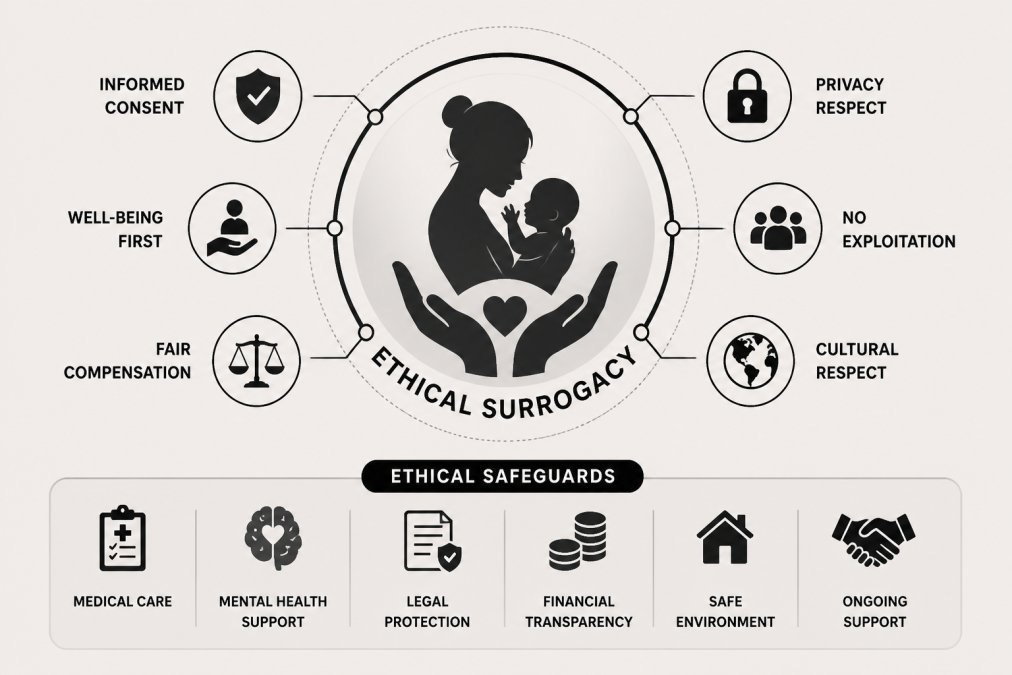
The best practices for ethical surrogacy agencies come down to transparency, independent representation, and screening that protects both parties. An ethical agency never rushes a match to close a deal.
What most guides miss is how much the agency’s incentive structure shapes outcomes. Ask these questions before signing:
- Does the surrogate have her own lawyer, paid independently of you?
- Are all fees disclosed in writing before any commitment?
- Does the agency screen for coercion, financial pressure, and prior trauma?
- Can the surrogate withdraw without financial penalty?
- Are medical and psychological records shared openly with both parties?
Surrogate Rights in International Surrogacy: Screening, Support, and Welfare
Surrogate rights in international surrogacy depend on medical screening, psychological evaluation, and support that continues after birth. A program that ends its involvement at delivery has not met its obligations.
Medical Screening and Psychological Evaluation
Medical screening confirms the gestational carrier can safely carry a pregnancy. Psychological evaluation checks for coercion, untreated trauma, and unrealistic expectations. Both are standard in reputable programs.
Independent legal counsel matters here too. A surrogate who does not understand the contract she signed cannot give meaningful consent. Reproductive justice demands that her voice carries equal weight to the Intended Parents’.
Post-Birth Monitoring and Long-Term Care
Post-birth monitoring is one of the most neglected areas in cross-border surrogacy. Ethical programs track the surrogate’s physical and emotional recovery for months after delivery, not days.
This matters because postpartum complications, both medical and psychological, often appear weeks later (the CDC). A program that provides real support through this period treats the surrogate as a person, not a means to an end.
Legal Protections for Intended Parents in Cross-Border Surrogacy
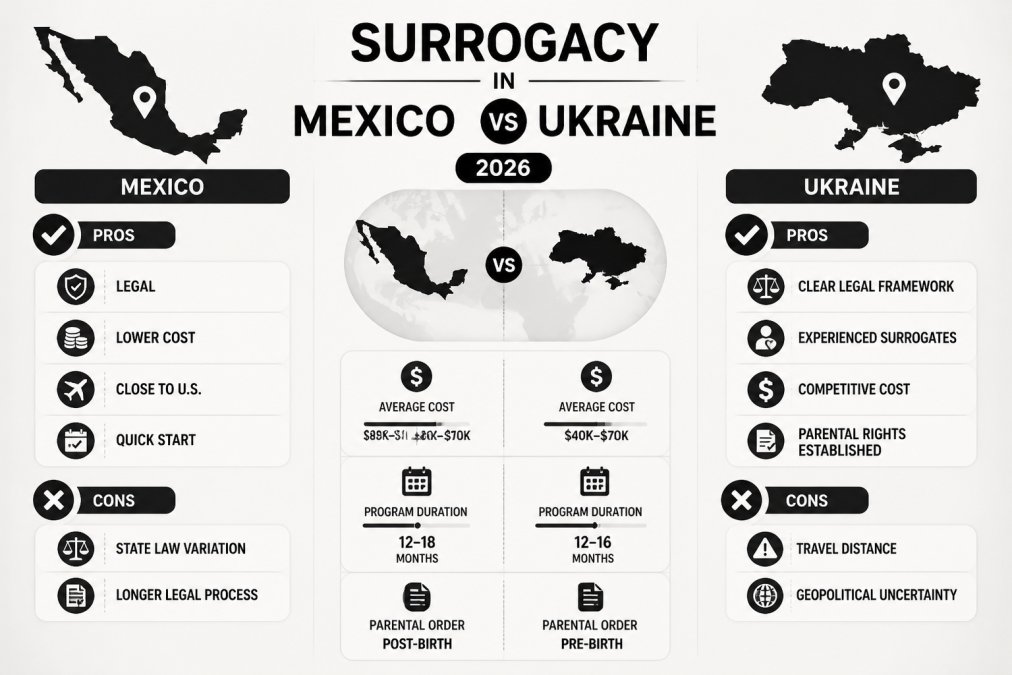
Legal protections for Intended Parents in cross-border surrogacy begin long before a transfer and depend on rules that vary dramatically from one jurisdiction to the next. The core problem is that parentage is not portable by default. A court order, birth certificate, or clinic record that is valid where the child is born may not be recognized where you live, and the gap between those two systems is where families get stuck.
The Three Legal Questions That Decide Everything
Before committing to any program, Intended Parents should be able to answer three questions in writing:
- Who is the legal parent at the moment of birth? Some jurisdictions recognize the Intended Parents on the birth certificate immediately. Others name the gestational carrier as the legal mother and require a post-birth order, an adoption, or a court declaration to transfer parentage.
- What is the exit mechanism? This is the process for obtaining a travel document or passport for the child and permission to leave the jurisdiction. It may involve a court hearing, a waiting period, or administrative review.
- What happens if the process stalls? Contingency planning matters. A program should be able to describe what occurs if a judge requests additional evidence, if a clinic record is incomplete, or if a required document is delayed.
Documents That Do the Real Work
A written legal roadmap is only as strong as the documents behind it. In practice, the following items carry the most weight:
- A pre-birth order or post-birth order, depending on the jurisdiction, establishing parentage.
- A gestational carrier agreement reviewed by independent counsel for each party.
- A parentage judgment or equivalent court declaration that can be presented to consular officials.
- Citizenship and immigration documentation confirming how the child acquires status and how travel is authorized.
- Medical and clinic records that match the names and details in the legal file.
A common pattern is for families to discover a mismatch between the name on a clinic record and the name on a court order only after the birth, when correcting it is slow and stressful.
Why Independent Counsel on Both Sides Matters
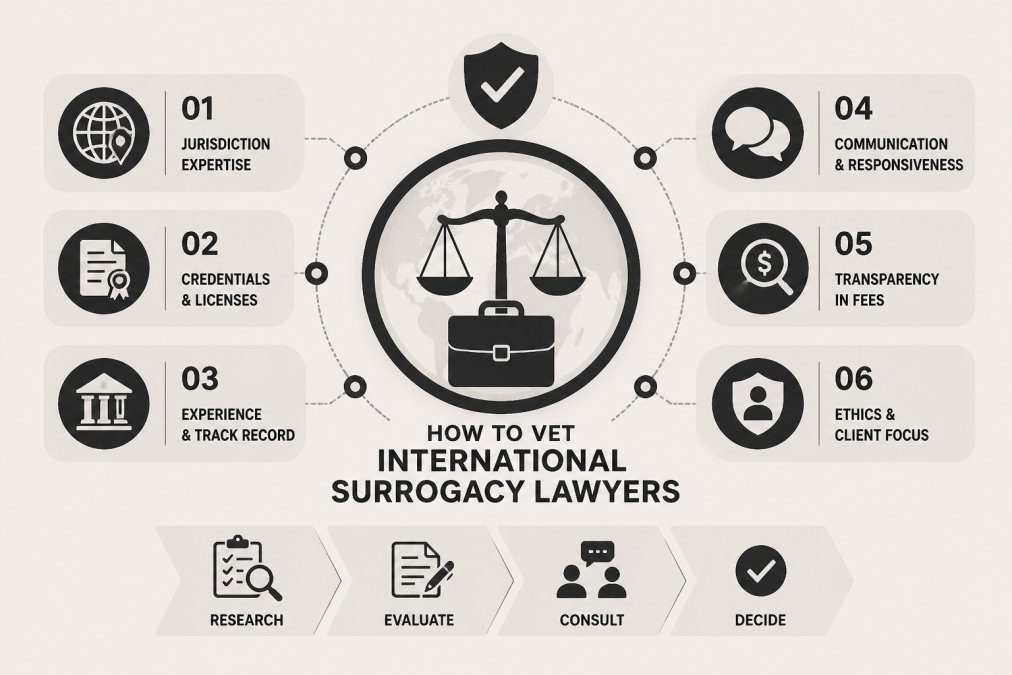
Intended Parents should have an attorney who practices in the destination jurisdiction and understands how parentage is established there. The gestational carrier should have her own attorney, selected by her and not by the agency or the Intended Parents. When one lawyer represents both sides, the conflict of interest is structural, and the surrogate’s interests are the ones most likely to be sacrificed.
Digital Ethics in Matching Platforms: Data Privacy and Transparency
Digital ethics in matching platforms is a gap most agencies ignore. Intended Parents and surrogates share deeply personal medical, financial, and identity data through online portals, and many platforms handle it carelessly.
Ask any agency how it stores medical records, who can access them, and whether data is shared with third-party clinics without consent. Transparency about matching algorithms matters too. If a platform claims “zero wait times,” you deserve to know how matches are actually made, not just that they happen quickly.
Reproductive Justice and Global Health Policy: The Bigger Picture
A reproductive justice framework asks a different set of questions than a compliance checklist.
Moving Beyond Exploitation Toward Bodily Autonomy
The practical difference shows up in three places:
The Structural Imbalance
Environmental Impact of Cross-Border Travel
Intended Parents can reduce this footprint in practical ways:
What This Means for Intended Parents
Conclusion
Frequently Asked Questions
What are the primary ethical concerns regarding international surrogacy?
Key ethical concerns include ensuring informed consent and bodily autonomy for surrogates, preventing exploitation and commodification, guaranteeing fair financial compensation, and providing robust legal protections for all parties. Cross-border arrangements add complexity around legal parentage, citizenship, and regulatory oversight. Ethical programs address these by adhering to clear practice standards, offering independent legal counsel, and prioritizing surrogate welfare through medical screening, psychological evaluation, and post-birth support. Intended Parents should verify these safeguards before committing.
How do reputable agencies ensure the protection of surrogates in international programs?
Reputable agencies implement rigorous medical screening and psychological evaluation, provide independent legal counsel, and ensure informed consent is truly voluntary. They offer fair financial compensation, ongoing emotional support, and post-birth monitoring. Best practices for ethical surrogacy agencies also include transparent contracts, conflict-of-interest policies, and adherence to local regulations. Surrogate rights in international surrogacy are upheld when agencies prioritize the surrogate’s health, autonomy, and well-being throughout the gestational arrangement and beyond.
What role does informed consent play in ethical surrogacy arrangements?
Informed consent is foundational: surrogates must fully understand medical risks, legal implications, and their rights before agreeing. This includes disclosure of all material information, voluntary participation without coercion, and the freedom to withdraw. Ethical programs ensure consent is documented and ongoing, not a one-time signature. For Intended Parents, informed consent also means understanding cross-border legal frameworks, citizenship processes, and financial obligations. Without genuine informed consent, an arrangement risks being exploitative and legally vulnerable.
What are the legal implications of cross-border surrogacy for the child’s citizenship?
Citizenship depends on the laws of the Intended Parents’ country and the surrogacy destination. Some countries grant citizenship automatically if a genetic link exists; others require adoption or court orders. The U.S. Department of State provides guidance on citizenship for children born abroad through assisted reproductive technology. Legal protections for Intended Parents in cross-border surrogacy include securing independent legal counsel in both jurisdictions to establish legal parentage and ensure the child’s citizenship and travel documents are properly obtained before returning home.