Table of Contents
- Mexico vs Ukraine: At-a-Glance Comparison for Intended Parents
- Legal Parentage and the Legal Risks of International Surrogacy
- The Intended Parents Surrogacy Journey Abroad: Process and Timeline
- Medical Standards, Success Rates, and Insurance Contingencies
- Surrogacy Agency Selection Criteria and Support Models
- Understanding Compensation Costs and Hidden Fees
- Conclusion: Making an Informed Choice for Your Family
- Frequently Asked Questions
Last Updated: September 14, 2026
Mexico vs Ukraine: At-a-Glance Comparison for Intended Parents
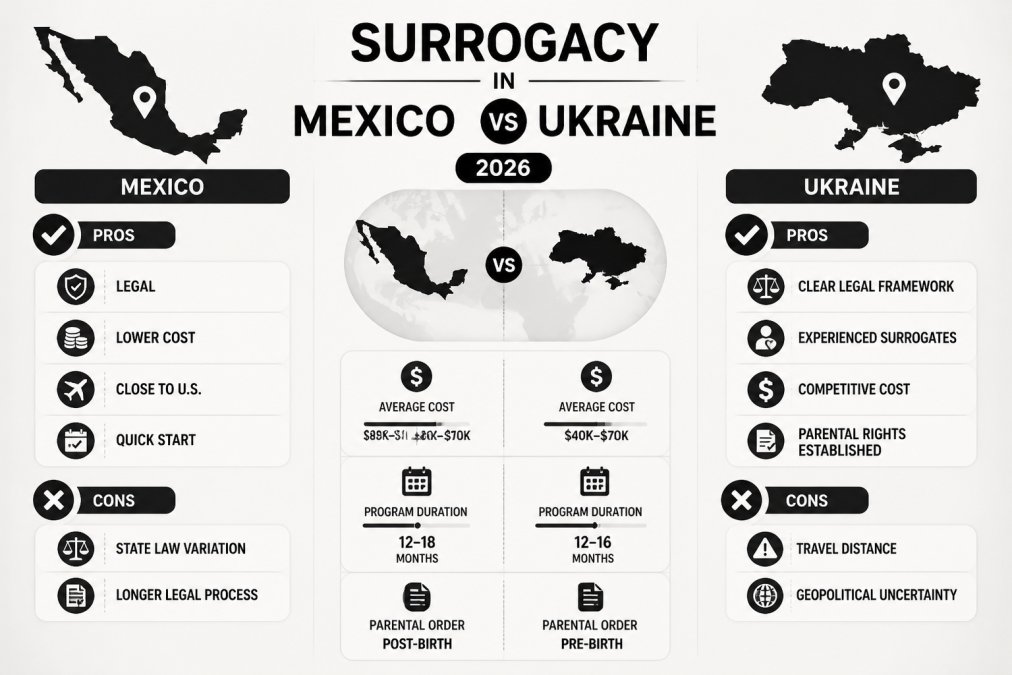
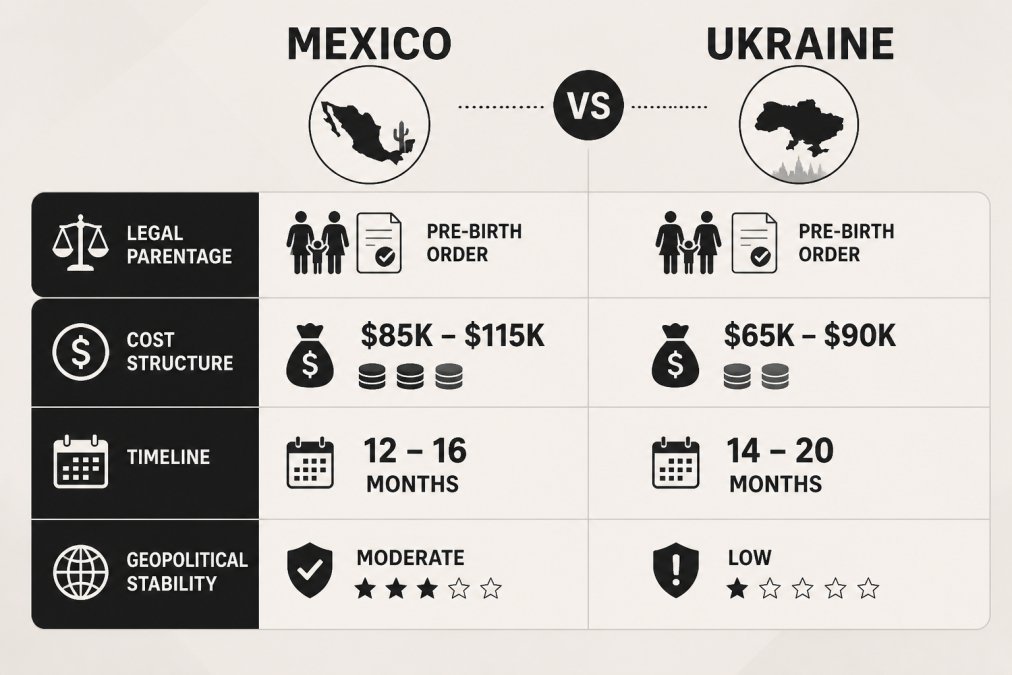
Choosing between surrogacy in Mexico and Ukraine is one of the most consequential decisions Intended Parents will ever make, and the two destinations now sit in very different positions. Mexico offers a comparatively accessible entry point for cross-border surrogacy, while Ukraine’s program has been reshaped by the ongoing war and its aftermath. This guide from Herman Family Group compares both through the lens that matters most: legal parentage, medical standards, cost, and safety.
| Factor | Mexico | Ukraine |
|---|---|---|
| Legal parentage | Varies by state; often resolved after birth | Historically clearer, now complicated by war |
| Genetic link | Frequently required | Commonly required |
| Geopolitical stability | Generally stable | Ongoing wartime disruption |
| Timeline | Moderate, state-dependent | Uncertain, program-dependent |
| Consular processing | Case-by-case | Case-by-case |
The single biggest mistake Intended Parents make is assuming the two are interchangeable. They are not. Mexico’s regulatory environment is fragmented, and Ukraine’s is currently defined as much by security conditions as by statute.
Legal Parentage and the Legal Risks of International Surrogacy
The legal risks of international surrogacy center on one question: who is recognized as the child’s legal parent, and where. The answer is never automatic, and it is never the same in two jurisdictions. What follows is the practical mechanics Intended Parents should understand before committing to either destination.
How parentage is actually established in Mexico
Mexico has no single federal surrogacy statute (loc.gov). Regulation is state by state, and the practical result is a patchwork:
- Some states permit surrogacy under civil codes that allow a court to issue a parentage order after birth.
- Some states restrict the practice, limit it to residents or nationals, or require a genetic link between the Intended Parent and the child.
- Some states are silent, which means the outcome depends on how a local judge reads general family-law principles.
Because of this, parentage in Mexico is typically confirmed through a post-birth court process rather than at delivery. The birth certificate may initially list the gestational carrier, and the Intended Parents’ names are added only after a judge issues an order. That order then has to be recognized by the consulate and by the Intended Parents’ home jurisdiction. Each of those steps is a separate legal event with its own timeline and its own risk of delay.
How parentage is actually established in Ukraine
Ukraine has historically had a more defined statutory pathway. Under its family code, parentage can be established for Intended Parents based on the surrogacy agreement and the clinic’s confirmation of the genetic link, with the gestational carrier’s consent (loc.gov). That framework is why Ukraine was, for years, one of the more predictable cross-border destinations.
The war has not erased that framework, but it has introduced real operational uncertainty. Court schedules can shift, registry offices may be disrupted, and documentation timelines can stretch unpredictably. The statute may still say one thing while the practical ability to execute it on a given week says another. Intended Parents should treat Ukraine as a jurisdiction where the law is defined but the logistics are not.
The recognition problem on the home side
Even a perfectly executed foreign parentage order can fail at the border of recognition. Consular officers and state courts in the Intended Parents’ home jurisdiction apply their own rules. A common pattern is that the foreign order is accepted for some purposes but not others, or that a second parentage step is required after the family returns home. This is the single most underestimated risk in cross-border surrogacy, and it is the reason written legal opinions for both jurisdictions are essential before any funds move.
A practical checklist for legal due diligence
- Obtain a written legal opinion from counsel licensed in the destination jurisdiction, not a general summary from an agency.
- Obtain a separate written opinion from counsel in your home jurisdiction on recognition of the expected foreign order.
- Confirm in writing whether a genetic link is required and, if so, how it is documented.
- Confirm whether the gestational carrier’s name will appear on the initial birth certificate and how it is replaced.
- Confirm the specific court or registry office that will issue the parentage order and the typical processing window.
- Confirm what happens if the order is delayed past the child’s travel document window.
Never rely on an agency’s verbal assurance that “parentage is guaranteed.” In cross-border surrogacy, recognition depends on court orders, birth certificates, and consular decisions. Get written legal opinions for both jurisdictions before you commit funds.
What this means for non-traditional families
Most published comparisons assume a married heterosexual couple. The legal reality is narrower for single Intended Parents and for same-sex couples. Some jurisdictions require a genetic link from both Intended Parents, which is not possible for every family structure. Others require marriage, or restrict who may be named on a parentage order. Before choosing a destination, confirm in writing that your specific family structure is recognized under that jurisdiction’s law, and confirm how the home jurisdiction will treat the resulting order. This is the question most guides skip, and it is often the one that decides the case.
The Intended Parents Surrogacy Journey Abroad: Process and Timeline
An Intended Parents surrogacy journey abroad typically moves through screening, matching, legal contracting, embryo transfer, pregnancy, birth, and post-birth documentation. The order rarely changes, but the pace does.
A realistic sequence looks like this:
- Medical and psychological screening of all parties
- Matching with a gestational carrier
- Drafting and executing the surrogacy agreement
- Fertility treatment and embryo transfer
- Prenatal care and monitoring
- Birth and immediate legal steps
- Passport application and consular processing for the child
Timelines vary widely by destination and by how quickly legal documents clear. Ukraine’s current conditions can extend or disrupt several of these stages unpredictably, which is a planning risk, not a dealbreaker.
Medical Standards, Success Rates, and Insurance Contingencies
Medical standards in both Mexico and Ukraine include recognized fertility clinics, established embryo transfer protocols, and prenatal care. Success rates depend far more on the individual case, the age and health of the parties, and the quality of embryos than on the country itself. Any clinic or agency that quotes a single success percentage without reference to your specific profile is giving you marketing, not medicine.
What to verify about the clinic itself
- Laboratory accreditation and embryology staffing levels.
- Whether the clinic has an on-site or formally affiliated hospital for obstetric emergencies.
- The named neonatal intensive care unit the clinic transfers to, and its distance from the clinic.
- The clinic’s written protocol for a failed transfer, a multiple pregnancy, and a preterm birth.
- Whether the clinic works with gestational carriers as a routine part of its practice or only occasionally.
The insurance gap most guides ignore
This is the area where nearly every published comparison stops short. The real risk in cross-border surrogacy is not the routine pregnancy; it is the complication that arrives without warning. Three scenarios deserve a written answer before you sign anything:
- Surrogate medical emergency. If the gestational carrier experiences a serious complication, who authorizes treatment, who pays, and under what timeline? In many cross-border arrangements, the gestational carrier’s own health coverage does not extend to pregnancy-related care, and the Intended Parents’ domestic policy does not travel. Confirm whether a dedicated policy is in place, who is the named beneficiary, and how claims are filed.
- Neonatal intensive care. A preterm birth can require weeks of NICU care (Science Update: Pain experienced during newborn intensive care could influence preterm…). Confirm the named facility, its level of care, the estimated daily cost structure, and who is financially responsible if the Intended Parents’ coverage does not apply. Ask for this in writing, not verbally.
- Pregnancy loss or carrier withdrawal. Confirm the contractual and financial treatment of a failed cycle, a loss after transfer, and a carrier’s decision to withdraw. These are uncomfortable questions, and they are exactly the ones that determine whether a program is professionally run.
How the two destinations differ in practice
Mexico’s private clinic sector includes well-equipped urban facilities, but the quality and emergency infrastructure vary significantly by region. Intended Parents should confirm the specific hospital and NICU that would receive the gestational carrier and the baby, not just the clinic’s general reputation.
Ukraine’s medical infrastructure has been under wartime strain. Some facilities have relocated, some have reduced services, and emergency transfer routes can change with security conditions. The clinical standards may remain high, but the surrounding logistics are less predictable than they were before the war. Intended Parents should ask for current, dated information about the specific facility, not a general description of the program.
Request the clinic’s complication protocol in writing. The strongest programs have a named neonatal unit, a defined emergency transfer route, and a pre-agreed financial responsibility matrix. If an agency cannot produce this, treat it as a red flag.
A note on medical records and continuity of care
Ask how prenatal records will be transferred to your home pediatrician and obstetric provider. Cross-border records are often incomplete, and the receiving provider needs a clear history. Confirm in advance that the clinic will release records in a format your home provider can use, and that the gestational carrier’s prenatal file will be available to you. This is a small logistical point that becomes very large if the baby needs follow-up care after arrival home.
Surrogacy Agency Selection Criteria and Support Models
Surrogacy agency selection criteria should weigh legal infrastructure first, communication second, and price last. A low fee is meaningless if the legal scaffolding collapses at birth.
Judge any agency on these points:
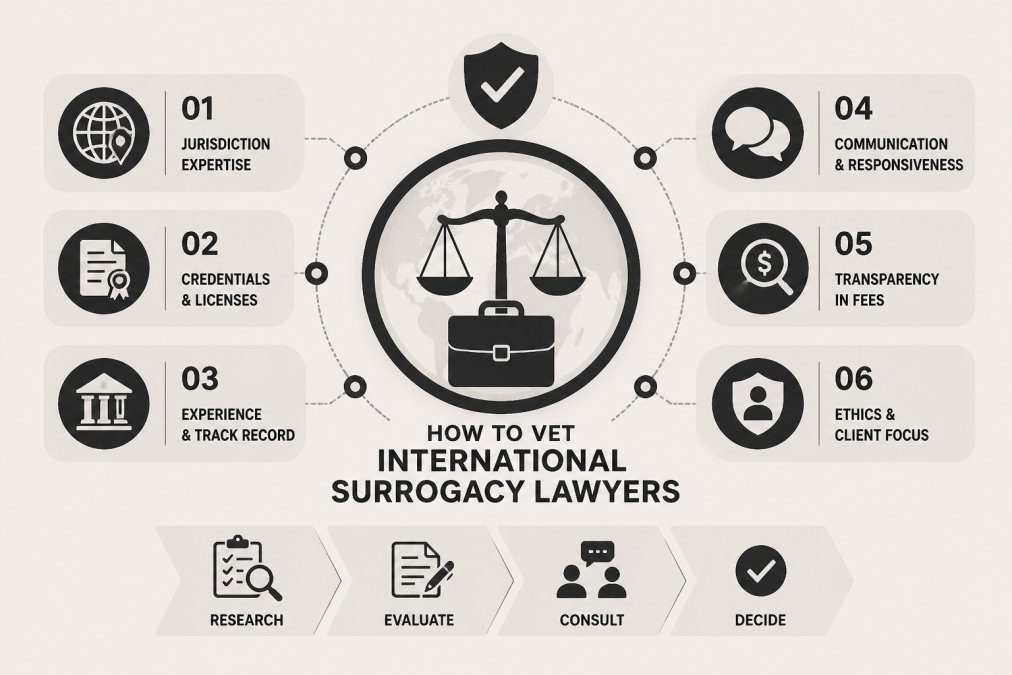
- Does it provide jurisdiction-specific legal counsel, not general advice?
- Does it manage coordination, or hand you a list of contacts?
- How does it handle single Intended Parents and same-sex couples?
- What is its written policy on hidden costs and refunds?
Herman Family Group specializes in cross-border surrogacy in legally structured destinations, with personalized plans and full coordination from planning through birth and beyond. That hands-on model matters when you are managing clinics, lawyers, and consulates across borders.
Understanding Compensation Costs and Hidden Fees
Compensation costs vary by destination, carrier profile, and the scope of legal and medical services included. Rather than quote a single figure, compare what each program actually covers.
Watch for these commonly excluded items:
- Legal fees for parentage and recognition
- Travel, lodging, and extended stays
- Neonatal care and insurance premiums
- Documentation and consular processing
- Additional cycles if a transfer fails
Transparent pricing means every line item is disclosed before you sign. Herman Family Group publishes its pricing structure with no hidden fees, so Intended Parents can plan the full financial picture rather than discover costs mid-process.
Conclusion: Making an Informed Choice for Your Family
The right choice between Mexico and Ukraine depends on your legal situation, your timeline, and your tolerance for uncertainty. Mexico offers accessibility with state-level legal variation; Ukraine offers a defined framework currently shadowed by wartime risk. Neither is simple, and both demand verified legal counsel.
Herman Family Group supports Intended Parents through zero wait times for program commencement, transparent no-hidden-fee pricing, and full medical and emotional support until birth and beyond. If you are weighing cross-border options, our team can build a personalized plan around your family structure and your home country’s requirements. Create My Plan with Herman Family Group and start your journey with clear legal footing and dedicated coordination.
Frequently Asked Questions
Is surrogacy legal in Mexico and Ukraine?
In Mexico, surrogacy regulation varies by state. In Ukraine, surrogacy is legal for married heterosexual couples, though the ongoing war has disrupted clinic operations and travel. Intended Parents should verify current regulations with a qualified attorney before committing to either country.
What are the primary legal risks of international surrogacy?
The biggest legal risks of international surrogacy include uncertain parentage recognition, delays in securing a birth certificate, and challenges obtaining citizenship documentation for the child. Some countries require a court order before the child can leave, and changing regulations can strand families mid-process. Working with legal counsel who specializes in cross-border surrogacy reduces these risks significantly.
How does the current geopolitical climate impact surrogacy in Ukraine?
The war has affected clinic staffing, embryo storage, and travel logistics. Some programs have relocated operations, while others have paused new cycles. Intended Parents already in process have faced evacuation challenges and delays in legal processing. Anyone considering Ukraine should confirm the current status of their clinic and have a contingency plan.
What should Intended Parents look for in a surrogacy agency?
Look for transparent pricing with no hidden fees, a clear legal pathway to parentage, and a support model that manages coordination rather than leaving it to you. Ask how the agency handles medical emergencies, whether they have in-country legal counsel, and how they screen gestational carriers. A strong agency will provide references and explain exactly what happens if something goes wrong.