Table of Contents
- Domestic vs. International Surrogacy: A Cost Comparison
- What Drives the Average Cost of Surrogacy in the United States
- Insurance Gaps and Hidden Costs in Cross-Border Surrogacy
- Psychological Support and Long-Term Relationship Maintenance
- How to Build a Risk-Adjusted Budget for Your Surrogacy Journey
- Conclusion
- Frequently Asked Questions
Last Updated: September 11, 2026
Domestic vs. International Surrogacy: A Cost Comparison
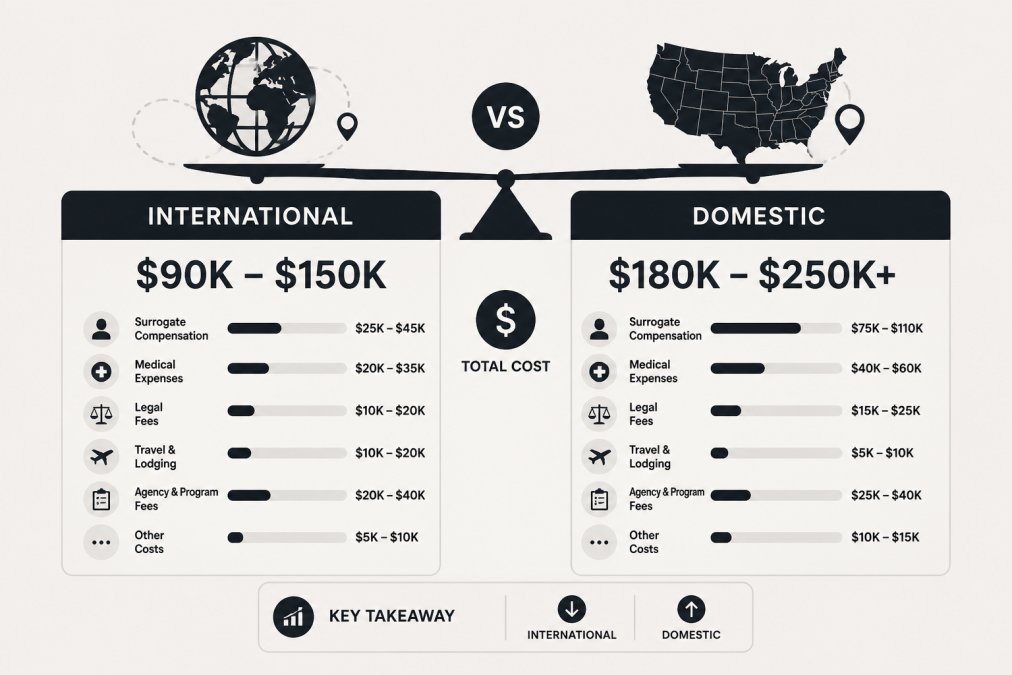
Comparing international surrogacy costs vs domestic surrogacy starts with one uncomfortable truth: the sticker price you see first is rarely the number you pay last. Domestic programs in the United States typically carry the highest headline figures in the world, while international programs advertise far lower base fees (peer-reviewed research). The gap between those two numbers can remain significant even after accounting for legal work, insurance, travel, and the costs associated with bringing the child home. The key is to compare what is actually included in each program rather than looking at the headline price alone.
This guide from Herman Family Group walks through both paths side by side. Below, we break down what actually drives the total, where the hidden costs hide, and how to build a budget that survives contact with reality.
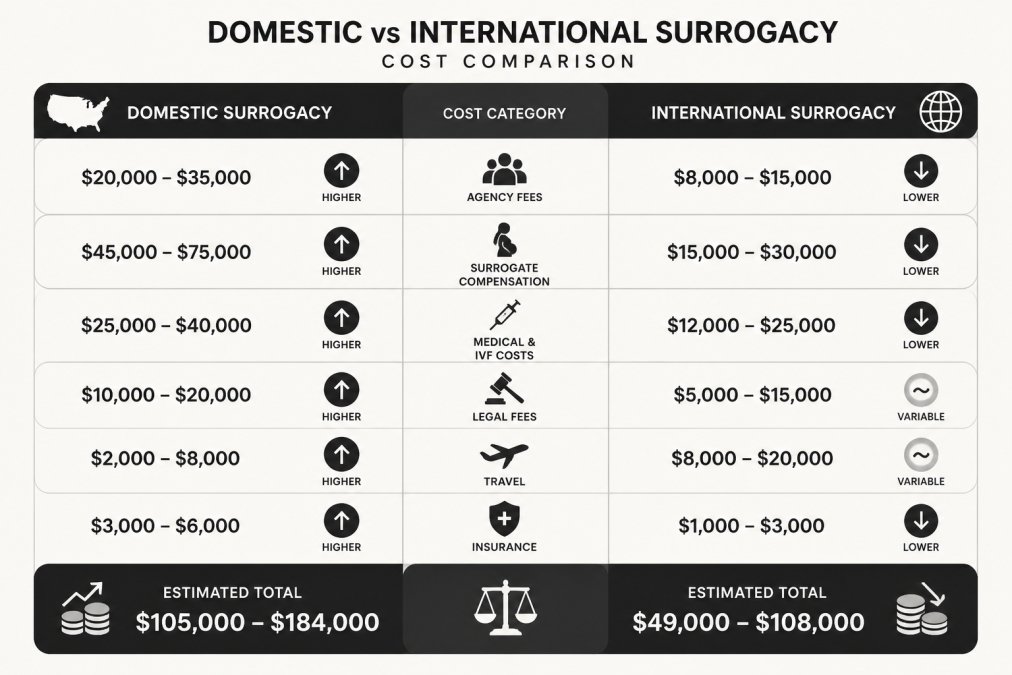
Cost Category | Domestic (U.S.) | International |
|---|---|---|
Agency fees | Higher | Lower |
Surrogate compensation | Higher | Lower |
Medical and IVF | Higher | More cost-efficient |
Legal and parentage | Moderate | Structured |
Travel and stay | Minimal | Additional |
Insurance | Higher | Program-dependent |
What Drives the Average Cost of Surrogacy in the United States
The average cost of surrogacy in the United States is shaped by four forces: surrogate compensation, agency fees, medical and IVF charges, and legal work. Each one is priced at U.S. market rates, and each one is largely non-negotiable.
Surrogate compensation sits at the center. Base fees rise with experience, location, and whether the surrogate is carrying for a known or matched Intended Parent. Medical screening, embryo transfer, and the IVF cycle itself add another layer, particularly when a donor egg is involved.
What most guides miss is that the total cost of a surrogacy journey depends on how the program is structured. International programs can offer a substantially lower overall cost while still providing coordinated medical, legal, and logistical support. The important question is not simply where the program takes place, but what is included, who manages the legal process, and how clearly the post-birth process is defined.
Insurance Gaps and Hidden Costs in Cross-Border Surrogacy
Insurance is an important cost to review in any surrogacy program. Coverage varies by destination and program, so Intended Parents should confirm in writing what is included for the surrogate, pregnancy, delivery, and newborn care. Domestic programs usually build coverage into the quoted total. Cross-border programs frequently do not, and the gap shows up at the worst possible moment.
Ask three questions before committing:
- Does the surrogate’s policy cover pregnancy and delivery, or is it excluded?
- What happens if the newborn needs neonatal intensive care?
- Does your own health plan cover a child born abroad, and from what date?
Travel expenses compound the problem. You may need multiple trips for medical screening, embryo transfer, and birth, plus an extended stay near the delivery hospital. Travel should be included in the overall budget when comparing domestic and international programs.
Psychological Support and Long-Term Relationship Maintenance
Psychological support is not a soft extra; it is part of the cost structure, and it looks very different depending on whether your surrogate lives an hour away or a flight away. Most cost comparisons stop at the birth. The relationship, and the support that sustains it, does not.
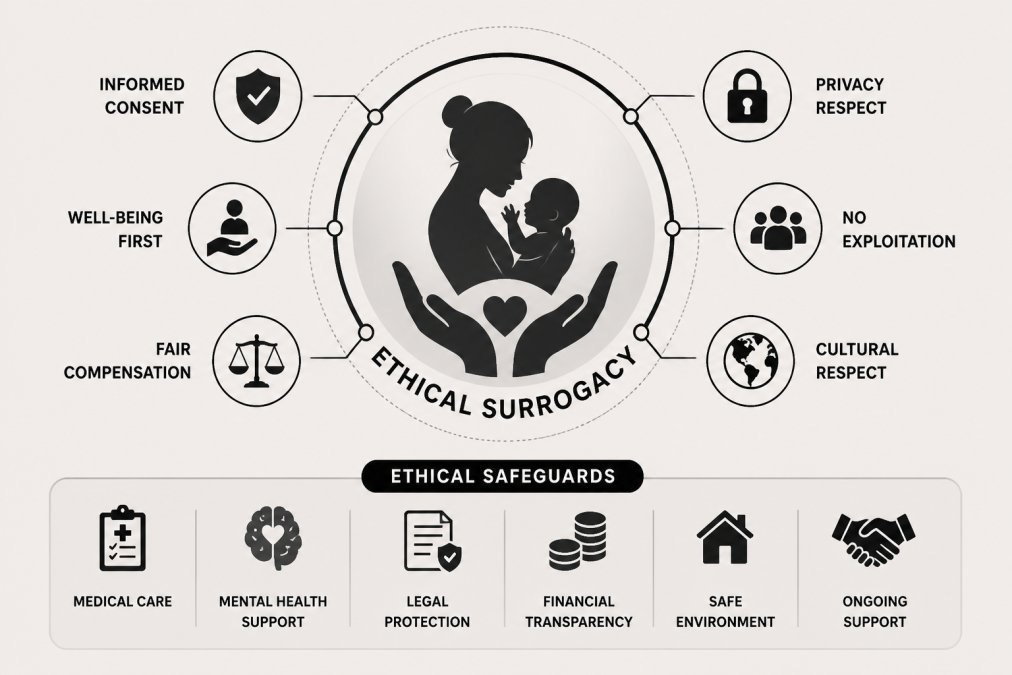
Availability of mental health support. In domestic programs, counseling is typically built into the agency fee. Intended Parents and surrogates are usually required to complete psychological screening before matching, and ongoing counseling is available in the same time zone and the same language. International programs may involve additional cultural and language considerations, which makes clear communication and appropriate psychological support particularly important. Language barriers can mean the surrogate’s counseling is conducted in her native language while yours is conducted in English, with no shared vocabulary for the harder conversations. Ask any international program three questions: Is counseling required for the surrogate, for the Intended Parents, or both? Who pays for it? Is it delivered in a language both sides understand?
Long-term relationship maintenance across borders. Many families want to stay in contact with their surrogate for years. That is achievable, but it is not automatic. Time zones, travel costs, language, and cultural expectations about privacy and family roles all shape whether contact continues. A common pattern is that contact is warm and frequent in the first year, then fades as the child grows and the surrogate’s own life moves on. That is not a failure; it is a normal outcome that is easier to accept when it is discussed in advance rather than experienced as a loss.
Intended Parents who want an ongoing relationship should plan for it the same way they plan for legal work:
- Agree before matching on what contact looks like, frequency, channel, and whether photos are shared.
- Clarify whether the surrogate wants contact to continue after the child is old enough to ask questions.
- Budget for at least one return trip if in-person contact matters to you.
- Use a translator or bilingual counselor for any conversation about boundaries, so nuance is not lost.
- Revisit the agreement annually rather than treating it as fixed.
The emotional load of cross-border programs. For Intended Parents traveling from jurisdictions where surrogacy is restricted, the emotional load is heavier still. Isolation, legal anxiety, and the pressure of coordinating across time zones all take a toll. Build support into the plan from the start, not after a crisis. A counselor who understands cross-border family building is worth more than a general therapist who is learning the terminology alongside you.
How to Build a Risk-Adjusted Budget for Your Surrogacy Journey
A risk-adjusted budget starts by separating fixed costs from contingent ones, then adding a reserve for the things that go wrong. Base fees, agency fees, and legal retainers are fixed. Medical complications, extended stays, and additional legal filings are contingent.
Work through this checklist before you commit to any program:
- Itemize every fixed fee in writing, including agency, legal, and clinic charges
- Confirm who holds funds and whether an escrow account is used
- Map every trip required, with dates and estimated travel expenses
- Verify insurance coverage for the surrogate and the newborn
- Get a written quote for post-birth legal work and repatriation
- Add a contingency reserve for medical and travel overruns
- Confirm the destination’s current reproductive law with licensed counsel
Herman Family Group offers transparent pricing with no hidden fees and zero wait times for program commencement. Our personalized surrogacy plans are built around your specific situation, including single parents and same-sex couples.
Conclusion
The most useful way to compare surrogacy destinations is to look beyond the headline price and evaluate the complete program structure: medical care, surrogate compensation, legal services, insurance, travel, and post-birth procedures.
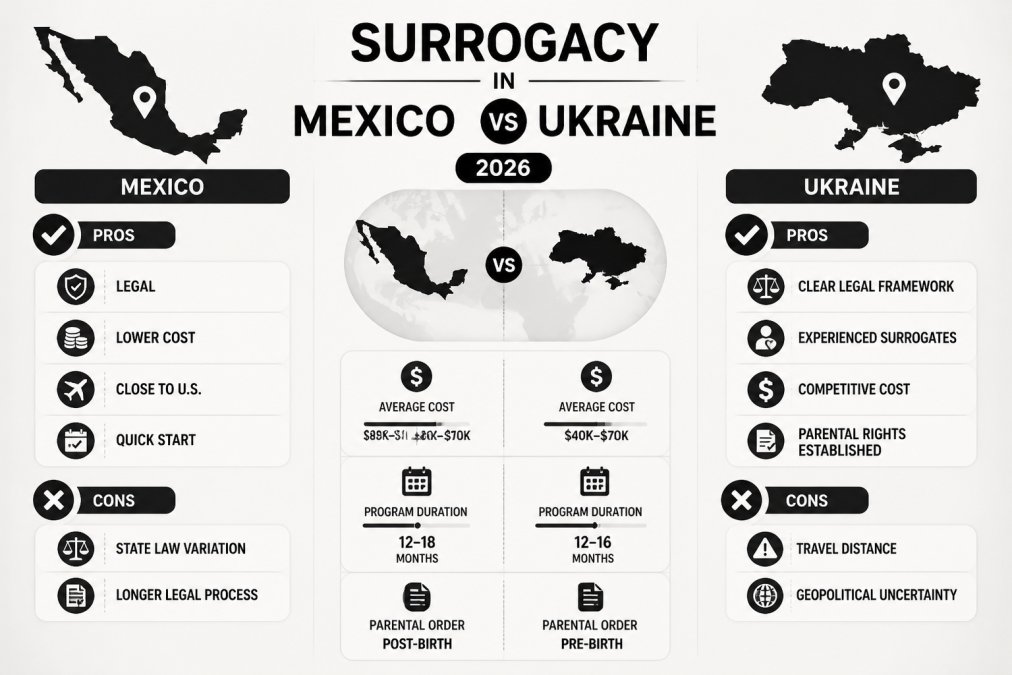
For many Intended Parents, Ukraine offers an attractive balance between cost, medical expertise, structured legal procedures, and comprehensive program coordination. When the full scope of services is clearly defined in advance, an international program does not have to mean sacrificing quality or legal support in exchange for a lower price.
Herman Family Group supports Intended Parents from initial planning through birth and beyond, with transparent pricing, no hidden fees, and comprehensive medical and emotional support at every stage. Create My Plan with Herman Family Group and start your journey with a clear view of what lies ahead.
Frequently Asked Questions
What are the primary financial differences between domestic and international surrogacy?
Domestic surrogacy costs in the U.S. typically include higher surrogate compensation, agency fees, and legal expenses, but benefit from clear legal parentage through pre-birth orders and no international travel. International surrogacy often has lower base fees and medical costs, but adds travel, translation, citizenship acquisition, and repatriation expenses. The total cost depends on the destination’s legal framework, insurance requirements, and how many IVF cycles are needed. A risk-adjusted budget should account for potential legal delays and extended stays.
How do surrogacy legal requirements by state affect the overall cost?
States have different rules on pre-birth orders, parentage establishment, and whether surrogacy agreements are enforceable. Some states require court approval before birth, adding legal fees and potential delays. Others have restrictions that may force Intended Parents to work with a surrogate in a different state, increasing travel and coordination costs. Understanding your state’s requirements early helps you budget for legal counsel and avoid surprises. Always consult a reproductive attorney licensed in your state.
What hidden costs should Intended Parents expect with international surrogacy legal risks?
International surrogacy legal risks can lead to unexpected costs such as extended stays abroad if citizenship or exit permits are delayed, additional legal fees for repatriation, and insurance gaps that require out-of-pocket medical payments. Some countries may require a post-birth order or court process that adds weeks to the timeline. Working with a program that provides transparent pricing and in-house legal coordination can reduce these surprises. Always ask for a detailed cost breakdown before committing.
What psychological support is available for Intended Parents during surrogacy?
Many agencies offer counseling sessions for Intended Parents and surrogates throughout the journey, from matching through post-birth. Support may include individual therapy, support groups, and guidance on managing expectations. For international journeys, cultural differences and distance can add stress, so remote counseling and a dedicated case manager help. Long-term relationship maintenance with your surrogate after birth is also valuable and can be facilitated through regular check-ins. Ask your agency what mental health resources are included.