Table of Contents
- Understanding International Surrogacy Legal Requirements
- How the Surrogacy Destination Legal Landscape Affects You
- Navigating Legal Barriers and Finding a Path Forward
- Frequently Asked Questions
Last Updated: September 23, 2026
Understanding International Surrogacy Legal Requirements
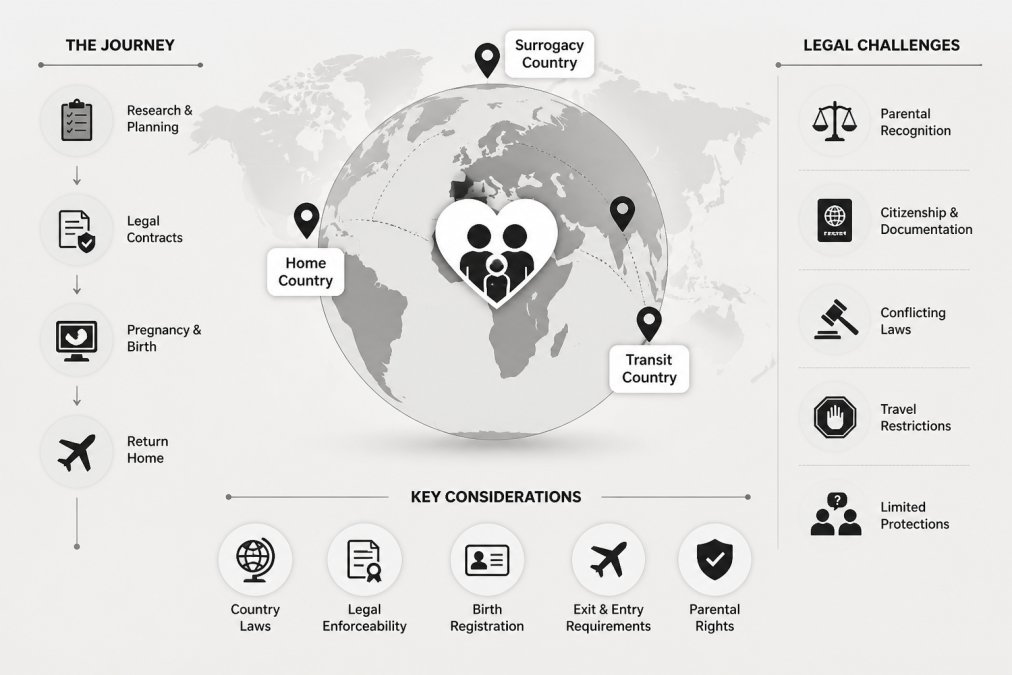
International surrogacy means arranging a surrogacy pregnancy in a country other than where the Intended Parents live, which raises the question of whose laws apply. At Herman Family Group, we work with Intended Parents from around the world, and we organize programs only in Ukraine, Czechia, Mexico, and Armenia. The main legal challenges for LGBTQ+ parents in international surrogacy rarely come from the medical side, they come from the gap between the country where the child is born and the country where the family will live.
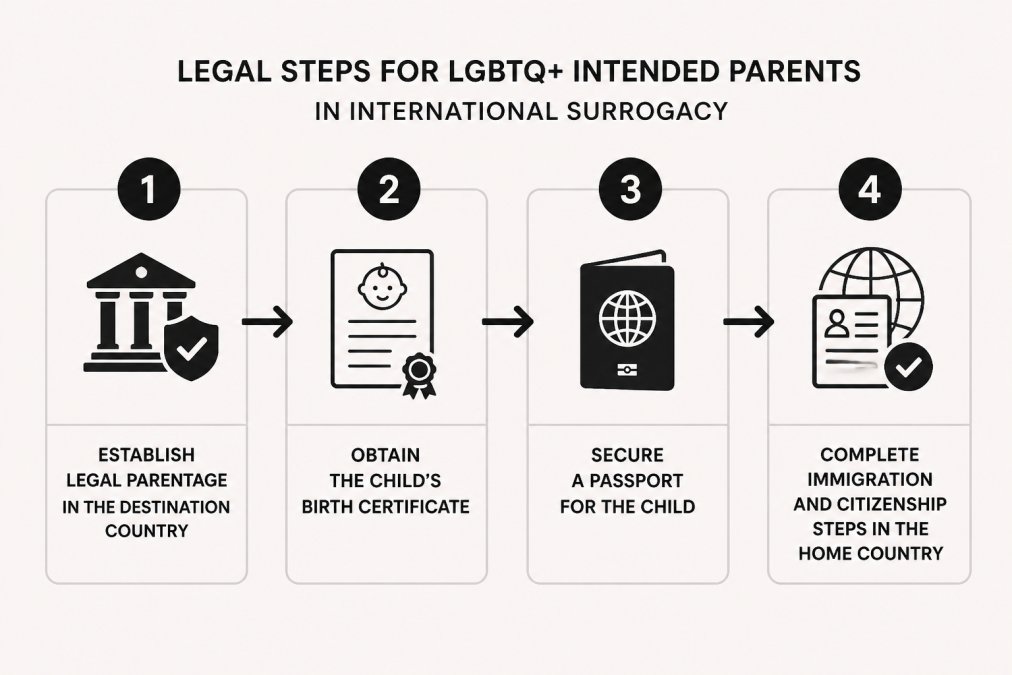
That gap creates four legal questions, each answered before the pregnancy begins:
- Legal parentage in the destination country: who is recognized as the parent on the birth documentation.
- Birth certificate issuance, which depends on that country’s family law.
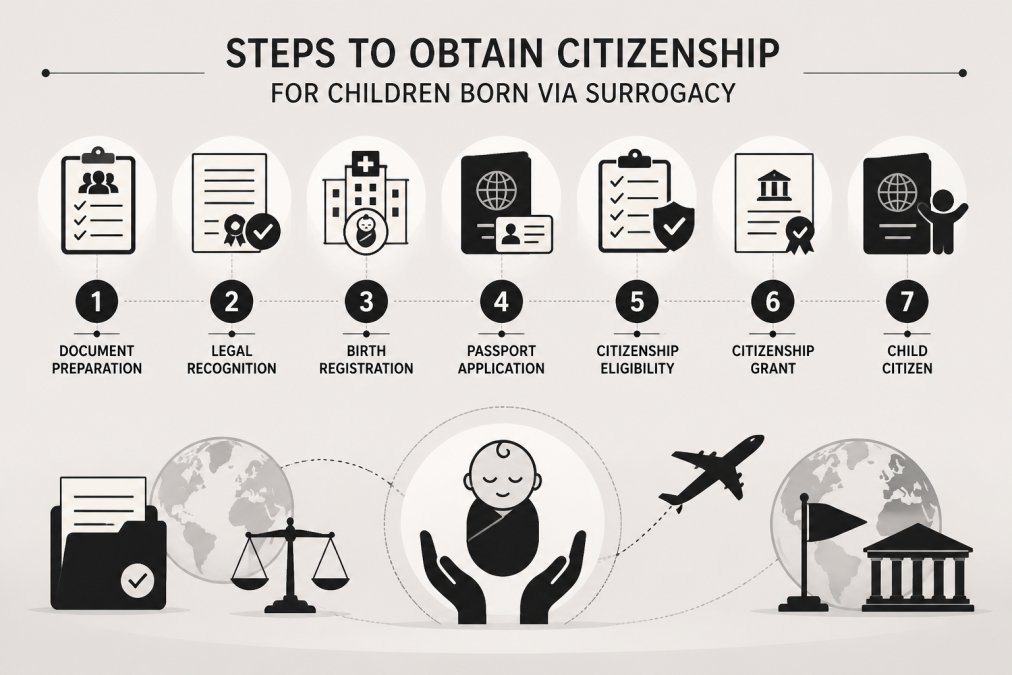
- Passport and citizenship for the child, decided by the Intended Parents’ home country.
- Immigration and re-entry, which can require extra court steps once the family is home.
These questions are answered by different authorities, and success in one does not guarantee success in the next. A birth certificate issued abroad does not automatically create legal parentage at home, so the legal sequence matters more than the destination.
A common mistake is assuming a birth certificate from the destination country is enough. In many cases, the Intended Parents’ home country requires a separate court process, sometimes called a parental order or a parentage judgment, before it will recognize the relationship. Skipping that step can delay a child’s passport or citizenship for months.
How the Surrogacy Destination Legal Landscape Affects You
The surrogacy destination legal landscape determines what is possible for your family structure, not just how long the process takes. Some countries recognize only married heterosexual couples as Intended Parents; others are more open. This is where LGBTQ+ Intended Parents face the sharpest differences.
Here is how the four destinations we work with differ at a high level:
| Destination | Program availability for LGBTQ+ Intended Parents | Key legal consideration |
|---|---|---|
| Ukraine | Not available | By law, participation is limited to married heterosexual couples |
| Czechia | Subject to current national law | Legal parentage rules are set by Czech family law |
| Mexico | Subject to state-level rules | Regulation varies between states |
| Armenia | Subject to current national law | Parentage and birth registration follow Armenian law |
We want to be direct about Ukraine, because it is often misrepresented online. Ukrainian law does not permit surrogacy programs for single Intended Parents or for LGBTQ+ Intended Parents. Participation is restricted to married heterosexual couples. If an agency tells you otherwise, ask them to show you the legal basis in writing. For LGBTQ+ Intended Parents, Czechia, Mexico, and Armenia are the destinations where we can discuss a legally structured path, and eligibility depends on the rules in force at the time of your program.
Ask every agency one question before you pay anything: which specific court or authority will issue the parentage decision, and in which country? A written answer naming the authority is the difference between a real program and a promise.
Navigating Legal Barriers and Finding a Path Forward
Legal barriers in cross-border surrogacy are usually solvable, but only if they are identified before the pregnancy rather than after the birth. Start with your home country’s rules, then choose a destination whose laws can produce documentation your home country will accept.
A workable sequence looks like this:
- Confirm your home country’s requirements first. Citizenship, immigration, and parentage recognition are decided there, not in the destination country.
- Match the destination to your family structure. Confirm your specific situation is permitted under the law currently in force.
- Get the legal plan in writing. The plan should name the authority responsible for the parentage decision and the documents you will receive.
- Plan the return journey before travel. Passport, citizenship, and re-entry steps take time and should be mapped out in advance.
- Build in emotional support. The waiting periods are often harder than the paperwork.
This is where hands-on coordination matters most. The Intended Parents who struggle are rarely the ones with the most complicated legal situation, they are the ones coordinating between a clinic, a lawyer, and a notary in three different countries on their own.
The most reliable predictor of a smooth international surrogacy process is not the destination. It is whether the legal sequence was mapped out and confirmed in writing before the pregnancy began.
If you are at the beginning of this process, the next step is not choosing a country. It is a conversation about your specific situation, so the legal path can be checked against the rules that actually apply to you.
Frequently Asked Questions
What legal factors should LGBTQ+ Intended Parents consider when choosing a surrogacy destination?
The most important factor is whether the destination’s laws allow you to be recognized as the legal parents from birth. You must also check if the country’s laws apply equally to married and unmarried couples, and to same-sex couples. Finally, confirm that your home country will recognize the parentage established abroad for citizenship and passport purposes.
Why is legal counsel essential for LGBTQ+ Intended Parents?
International surrogacy involves the laws of two countries: the destination and your home country. A local lawyer in the destination ensures your surrogacy agreement is valid and helps secure a birth certificate naming you as parents. A lawyer in your home country advises on citizenship and immigration. Without this dual legal support, you risk facing significant barriers to bringing your child home.
What are the primary legal hurdles for same-sex couples in international surrogacy?
The main hurdles are legal parentage and citizenship. Some countries do not recognize both parents in a same-sex couple, creating a ‘filiation’ problem. This can prevent a child from getting a passport or entering a parent’s home country. You must choose a destination where the law protects your family structure from the start.