Table of Contents
- Understanding International Surrogacy: Legal Frameworks and Parentage Laws
- Surrogacy Program Requirements in Ukraine and Other Destinations
- Essential Legal Documentation for International Surrogacy
- Mitigating Risks and Ensuring Legal Compliance in Cross-Border Surrogacy
Last Updated: August 14, 2026
Understanding International Surrogacy: Legal Frameworks and Parentage Laws
Navigating the legal requirements for international surrogacy 2026 involves understanding complex legal frameworks and parentage laws across different jurisdictions. For Intended Parents seeking to build their families through cross-border surrogacy, knowing the legal status of surrogacy in their chosen destination is paramount. At Herman Family Group, we specialize in legally structured destinations to ensure a safe and ethical journey.
Many countries have specific laws governing assisted human reproduction and the recognition of Intended Parents. These laws determine who can pursue surrogacy, the types of surrogacy permitted, and how legal parentage is established. A common mistake is assuming that laws in one country apply universally, when in practice, each nation has unique statutory requirements. For example, Ukraine’s laws define specific eligibility criteria for Intended Parents, while Mexico’s regulations can vary by state, necessitating independent legal counsel to navigate jurisdiction-specific nuances.
Surrogacy Program Requirements in Ukraine and Other Destinations
Understanding surrogacy program requirements in Ukraine and other legally sound destinations is a critical step for Intended Parents. Herman Family Group facilitates programs exclusively in Ukraine, Czech Republic, Mexico, and Armenia, each with distinct legal frameworks and requirements for international surrogacy. These variations ensure regulatory compliance and contractual transparency.
In Ukraine, surrogacy is legally recognized for heterosexual married couples where the Intended Mother has a medical indication preventing her from carrying a pregnancy. The Intended Parents’ names are recorded directly on the birth certificate, establishing legal parentage from birth. Ukraine does not permit surrogacy for single Intended Parents or LGBTQ+ Intended Parents.
The Czech Republic and Armenia also offer legally structured options for cross-border surrogacy, though their specific parentage laws and processes for foreign nationals may differ from Ukraine. Mexico, particularly in certain states, provides a surrogacy-friendly environment with established legal frameworks, often requiring court-ordered parentage to confirm the Intended Parents’ rights. This focus on legally structured destinations is what allows Herman Family Group to offer immediate program commencement with zero wait times, providing a safe and legal family-building option for diverse family structures.
Essential Legal Documentation for International Surrogacy
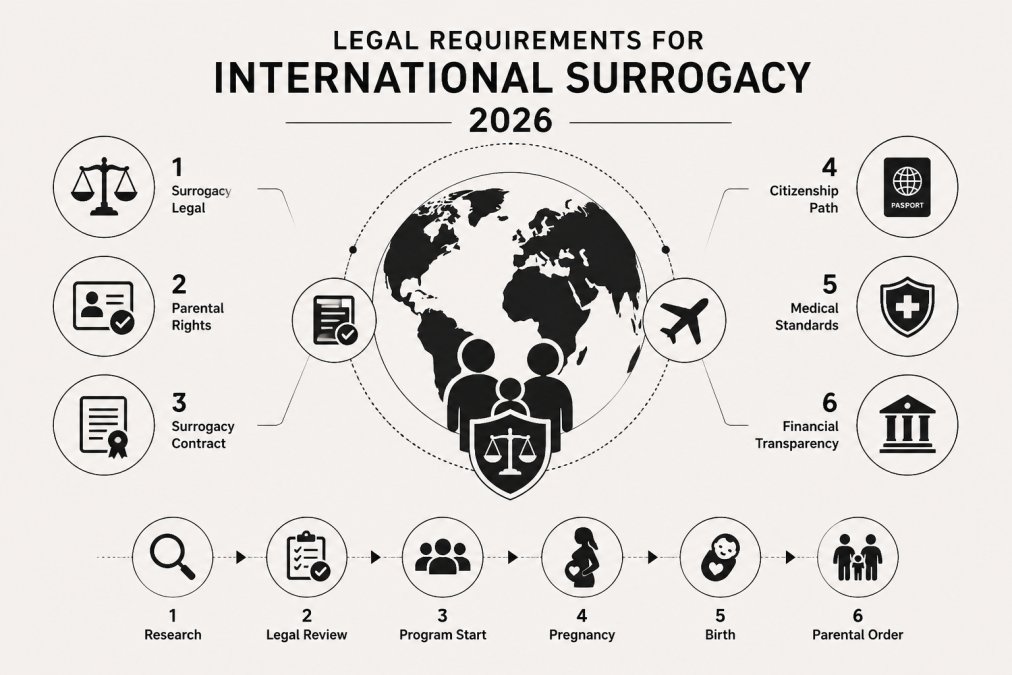
Securing the correct legal documentation for international surrogacy is a detailed process that begins with the initial surrogacy agreement and extends through post-birth procedures. This critical phase ensures parentage laws are respected and that the child’s citizenship by descent can be established.
The journey typically involves several key documents:
- Surrogacy Agreement: A comprehensive contract outlining the rights and responsibilities of both the gestational carrier and the Intended Parents. This agreement must comply with the assisted human reproduction laws of the chosen jurisdiction.
- Medical Documentation: Proof of medical necessity for surrogacy (e.g., infertility diagnosis for the Intended Mother in Ukraine) and records related to the IVF process.
- Pre-Birth Order (PBO) or Post-Birth Order: Depending on the country and jurisdiction, a court order may be sought either before or after birth to establish legal parentage. In some cases, such as Ukraine, Intended Parents are recognized on the birth certificate directly.
- Birth Certificate Amendment: For foreign nationals, amending the initial birth certificate to reflect the Intended Parents’ names can be a crucial step in countries where the gestational carrier is initially listed.
- Citizenship and Passport Documentation: After birth, Intended Parents must apply for their child’s citizenship in their home country and obtain an exit permit or passport for international travel. This often involves DNA testing to confirm biological connection.
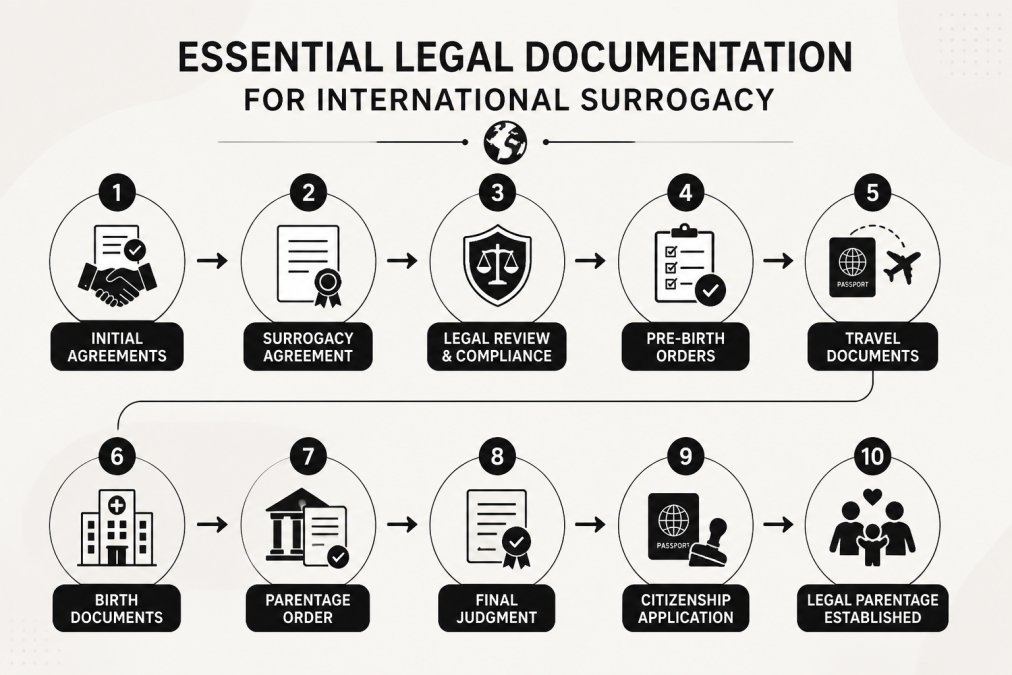
What most reviews miss is the complexity of post-birth citizenship and passport processing timelines. These can vary significantly, requiring careful planning and immigration documentation to ensure a smooth return home. Herman Family Group provides comprehensive support, guiding Intended Parents through each step of this intricate process.
Mitigating Risks and Ensuring Legal Compliance in Cross-Border Surrogacy
Ensuring legal compliance and mitigating risks are paramount when undertaking cross-border surrogacy. The legal requirements for international surrogacy 2026 demand a proactive approach to prevent potential legal challenges. One major concern for Intended Parents is the risk of legal complications regarding parentage or exit permits.
A common mistake is failing to engage independent legal counsel in both the surrogacy destination and the Intended Parents’ home country. This dual legal representation ensures that the surrogacy agreement is valid under both sets of laws and that the child’s legal status will be recognized upon returning home. Herman Family Group emphasizes this, specializing in cross-border surrogacy in legally structured destinations to minimize legal risk.
Another aspect is the importance of contractual transparency. All fees, medical procedures, and legal processes should be clearly outlined in the surrogacy agreement. This prevents unexpected issues and ensures informed consent from all parties involved. Our transparent pricing with no hidden fees addresses this directly. Furthermore, medical oversight and psychological support resources are vital, not just for the gestational carrier but also for the Intended Parents, especially when navigating the emotional complexities of an international journey.
Building a family through international surrogacy presents unique challenges, particularly concerning the intricate legal requirements for international surrogacy. Herman Family Group offers a clear path forward, providing immediate program commencement with zero wait times and transparent, no-hidden-fee pricing. Our comprehensive medical and emotional support, combined with expert guidance in legally structured destinations, ensures a confident and fully supported journey to parenthood. Get started with Herman Family Group and create your personalized family plan.
Frequently Asked Questions
What are the primary legal requirements for international surrogacy?
Primary legal requirements for international surrogacy involve establishing parentage, ensuring the surrogacy agreement is legally binding in the chosen jurisdiction, and navigating citizenship and immigration for the child. This includes obtaining pre-birth orders where available, completing necessary DNA testing, and securing birth certificates that name the Intended Parents. Each country has specific statutory requirements that foreign nationals must meet, making independent legal counsel critical for compliance.
How do legal frameworks for surrogacy differ across countries like Ukraine, Czech Republic, Mexico, and Armenia?
Legal frameworks for international surrogacy vary significantly. Ukraine, for example, is known for its clear parentage laws that typically name Intended Parents directly on the birth certificate. Mexico and Armenia also offer legally structured options, though specific requirements for Intended Parents and gestational carriers differ. The Czech Republic allows altruistic surrogacy but requires careful navigation of post-birth legal processes to establish parentage. Understanding these nuances is essential for a compliant journey.
What documents are typically required for international surrogacy programs?
Typical legal documentation for international surrogacy includes a comprehensive surrogacy agreement, medical reports for both Intended Parents and the gestational carrier, and identification documents. Post-birth, documents like the birth certificate, pre-birth orders (if applicable), and DNA test results are needed to establish parentage and facilitate citizenship by descent. Intended Parents also need to prepare immigration documentation for the child's return to their home country, often involving a Consular Report of Birth Abroad.
What should Intended Parents consider regarding international legal compliance for international surrogacy?
Intended Parents considering international surrogacy must prioritize legal compliance. This involves securing independent legal counsel in both the surrogacy country and their home country to ensure the surrogacy agreement is valid and enforceable. Key considerations include understanding parentage laws, potential legal risks, and the process for amending birth certificates. Regulatory compliance and contractual transparency are vital to mitigate challenges related to cross-border surrogacy and ensure reproductive rights are protected.
This article was written using GrandRanker