Table of Contents
- What Surrogacy Screening Means for Intended Parents
- Medical Screening for Intended Parents: What to Expect
- Legal Documentation for Surrogacy Programs
- How the Matching Process Works After Screening
- Frequently Asked Questions
Last Updated: September 22, 2026
What Surrogacy Screening Means for Intended Parents
Surrogacy screening is the step where an agency and its medical and legal partners check that Intended Parents are ready, eligible, and legally clear to start a program. It covers medical checks, a mental health assessment, and legal documents.
Herman Family Group guides Intended Parents through this stage. Programs run in Ukraine, Czechia, Mexico, and Armenia, each with its own rules.
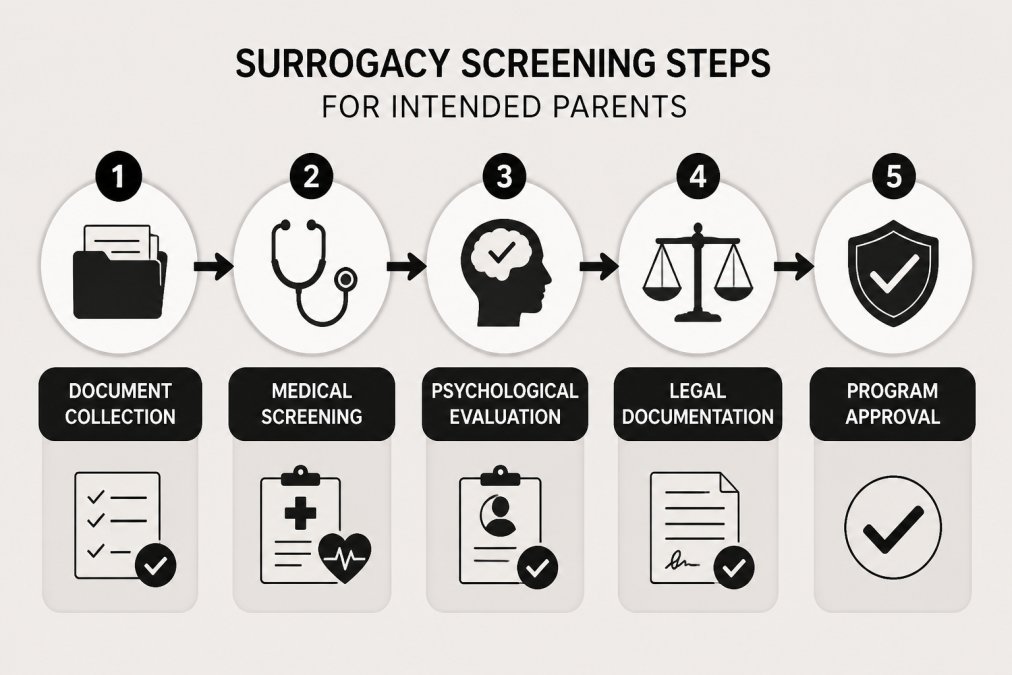
Screening is a checklist, not a judgment. Each item you complete moves your file closer to approval.
Medical Screening for Intended Parents: What to Expect
Medical screening for Intended Parents is a set of health checks a fertility clinic asks for before treatment.
Most clinics ask for blood work, a review of your medical records, a uterine health check if you are providing eggs or carrying, and a semen analysis if you are providing sperm.
A common mistake is booking blood work late, some tests must be repeated if too old, adding weeks.
Ask your clinic for the full test list in writing before you book anything. One lab visit can cover most of it.
Legal Documentation for Surrogacy Programs
Legal documentation for surrogacy programs is the set of contracts and consents setting out everyone’s rights and duties. A lawyer prepares them, and every party signs before the program starts.
The main document is the surrogacy agreement, covering the rights and duties of the Intended Parents, the role of the surrogate candidate, consent for the embryo transfer, and what happens after birth.
You will also sign informed consent forms for the clinic. Some programs ask for a home study or background check; others do not.
Rules differ by country. In Ukraine, the law allows only heterosexual married couples to take part. Other countries in our network have their own rules, and a lawyer there should review your case.
Never sign a document you do not understand. Ask for a full translation and a clear explanation first.
How the Matching Process Works After Screening
Matching starts once your screening file is complete. The agency reviews your profile and looks for a surrogate candidate who fits your case.
Matching usually includes a review of your medical and legal file, a profile of the surrogate candidate, a video call or meeting between both sides, and a final medical review of the surrogate.
Keep your documents organized, a complete file moves faster.
Frequently Asked Questions
What medical documents do Intended Parents need to prepare for surrogacy screening?
Intended Parents are usually asked for recent blood work, a medical records review, and a written medical clearance from a fertility clinic or reproductive endocrinologist. Some programs also request a review of uterine health or pregnancy history where relevant. Because requirements differ between programs, ask your surrogacy agency for a document checklist before you begin. Organizing these records early keeps the screening phase moving. Herman Family Group can guide you through what each program needs.
How long does the surrogacy screening process take for Intended Parents?
Timelines vary by program and by how quickly documents are gathered. Some Intended Parents complete the steps in a few weeks, while others take longer if medical records or legal paperwork need to be requested from several providers. The screening phase usually runs alongside the matching process. Ask your agency for a realistic timeline based on your situation, and start collecting documents early to avoid delays.
What are the legal requirements for Intended Parents in international surrogacy programs?
Legal requirements depend on the country where the program takes place. Each destination has its own rules about who may take part, what the surrogacy agreement must contain, and how parentage is established. In Ukraine, for example, the law allows only married heterosexual couples to participate. Because rules change and differ by country, always confirm the current requirements with a qualified legal professional before you commit to a program.