Table of Contents
- How Surrogacy Legal Frameworks Differ: International vs Domestic
- Establishing Parentage in International Surrogacy
- Surrogacy Laws in Ukraine and How They Compare
- Enforceability and Legal Risk in Cross-Border Arrangements
Last Updated: August 28, 2026
How Surrogacy Legal Frameworks Differ: International vs Domestic
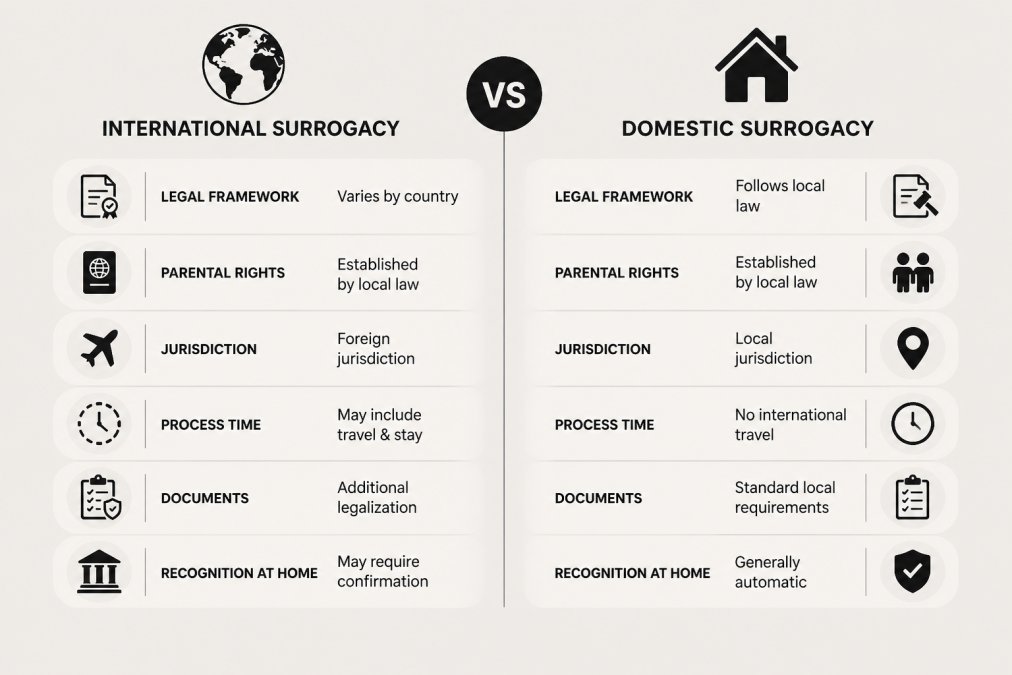
Domestic surrogacy operates under a single country’s laws. International surrogacy requires navigating multiple legal systems and cross-border documentation. This affects how parentage is established and whether your parental rights will be recognized when you return home. (Source: Consular Report of Birth Abroad (CRBA))
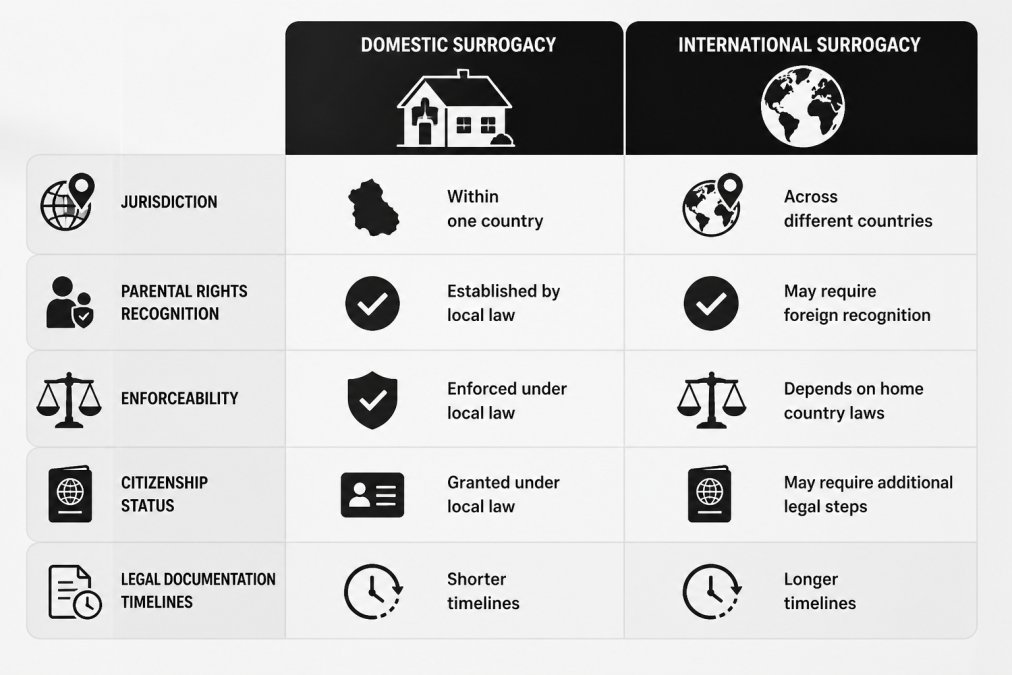
The core difference is jurisdiction. Domestic surrogacy uses one legal system. International surrogacy splits authority: the surrogate’s country controls birth registration, while your home country must recognize those documents and issue citizenship to the child. A signed surrogacy agreement does not automatically guarantee legal protection, enforceability depends entirely on where the agreement is signed and where the child is born.
Establishing Parentage in International Surrogacy
Establishing legal parentage requires a documented pathway from birth through citizenship recognition. Two governments must recognize your parental rights.
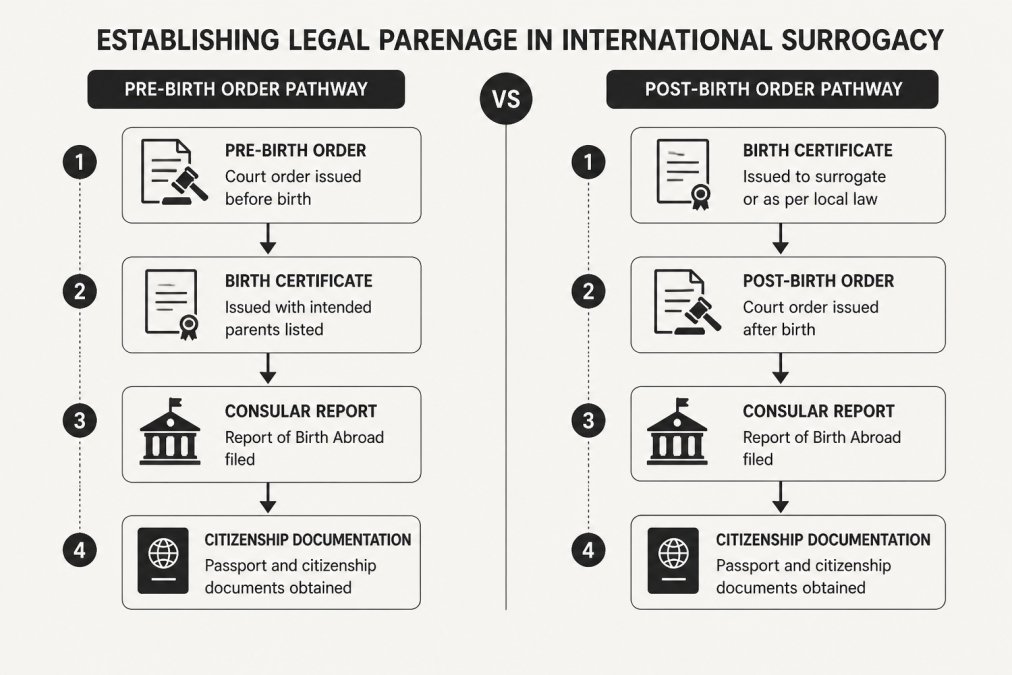
In most international arrangements, the surrogate is initially listed as the mother on the birth certificate. Your legal claim to parenthood is established through either a pre-birth order (obtained before delivery) or a post-birth order (obtained after birth). Pre-birth orders provide immediate legal recognition where available. Post-birth orders require a court process that can take weeks or months.
Once parentage is established in the birth country, register your child’s birth with your home country’s authorities. Many countries issue a Consular Report of Birth Abroad, which proves citizenship and allows you to obtain a passport. This step is essential for travel and legal recognition of your parental rights at home.
Surrogacy Laws in Ukraine and How They Compare
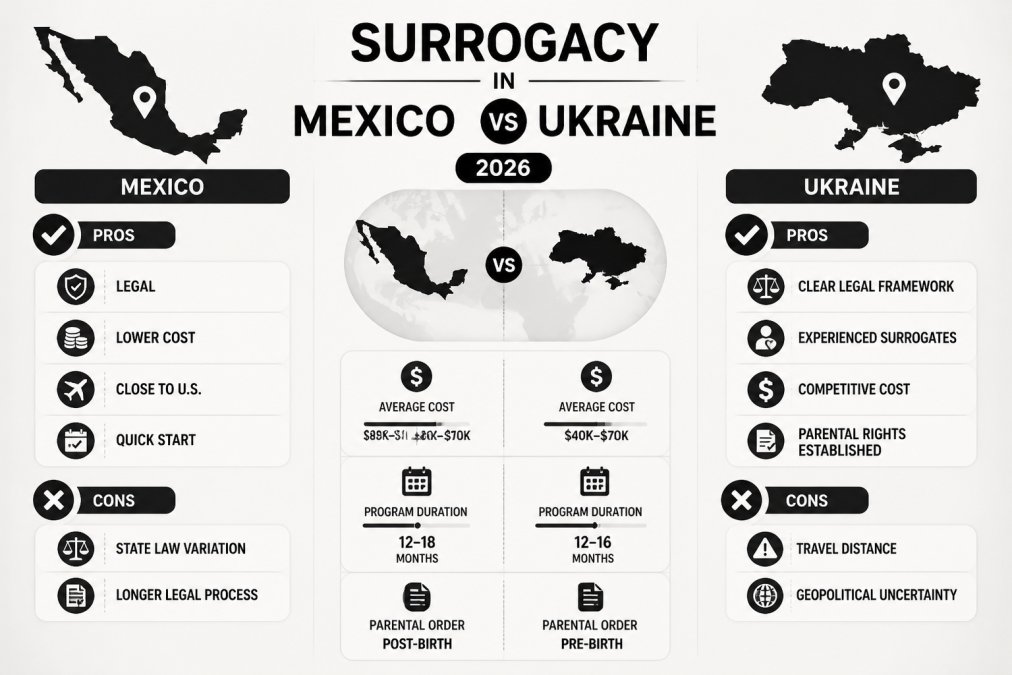
Ukraine permits gestational surrogacy for married heterosexual couples. The legal framework recognizes Intended Parents as the child’s legal parents from birth, which simplifies parentage establishment compared to many other destinations.
Ukrainian law does not permit surrogacy for single men, single women, LGBTQ+ couples, or unmarried heterosexual couples. This eligibility restriction is fundamental. If you fall outside these categories, Ukraine is not a legal option.
The enforceability of surrogacy agreements in Ukraine is strong within the country’s borders. The surrogate has no parental rights or claims to the child. Birth certificates list Intended Parents as parents, creating a clear legal record from birth. Your home country must then recognize this birth certificate.
Enforceability and Legal Risk in Cross-Border Arrangements
The enforceability of surrogacy agreements depends on whether your home country recognizes legal documents from the birth country. A surrogacy contract signed in one jurisdiction has no automatic legal force in another.
Many countries recognize birth certificates and parentage orders from other nations as part of normal civil procedures. If your home country does, a birth certificate listing you as parents will be accepted at face value. You can then obtain a passport and exercise full parental rights without additional court proceedings.
Other countries require additional legal steps, such as filing a petition for recognition of foreign parentage orders. These processes add time and expense but are generally straightforward with proper documentation.
The real risk emerges when documentation is incomplete or when Intended Parents return home before establishing legal parentage in the birth country. Working with legal counsel who understands both the surrogacy destination’s laws and your home country’s recognition requirements is essential.
Building your family through international surrogacy requires clarity on legal frameworks, parentage establishment, and cross-border recognition. Herman Family Group specializes in legally structured international surrogacy in destinations where frameworks are clear and Intended Parents’ rights are protected. We coordinate medical care, surrogate matching, and legal documentation so you can focus on preparing for parenthood. Create your personalized surrogacy plan with Herman Family Group today.
Frequently Asked Questions
What are the primary legal differences between domestic and international surrogacy?
Domestic surrogacy operates under a single jurisdiction with consistent legal recognition of intended parents' rights. International surrogacy involves multiple legal systems: the country where the surrogate lives, the Intended Parents' home country, and potentially the child's citizenship destination. Domestic arrangements typically have straightforward pre-birth parentage orders, while international arrangements require navigating different statutory frameworks, immigration law, and citizenship processes. The enforceability of surrogacy agreements also varies significantly—some countries recognize gestational surrogacy contracts while others do not.
How do I establish legal parentage in international surrogacy after birth?
Establishing parentage in international surrogacy requires multiple steps. First, obtain the birth certificate in the country where the child was born, which typically names the Intended Parents or the surrogate depending on local law. Second, secure citizenship documentation through a consular report of birth abroad if applicable. Third, obtain a post-birth parentage order from a court in your home jurisdiction to ensure full legal recognition. Some countries allow pre-birth orders that establish parentage before delivery. Working with legal counsel specializing in family law and immigration is essential to navigate these requirements correctly and ensure your parental rights are protected across all jurisdictions.
What specific legal challenges exist with surrogacy laws in Ukraine compared to domestic options?
Ukrainian surrogacy law recognizes gestational surrogacy and allows Intended Parents to be named on the birth certificate, creating a streamlined path to legal parentage. However, Intended Parents must be married heterosexual couples—single individuals and same-sex couples cannot access Ukrainian programs. For Intended Parents from countries where surrogacy is restricted or unavailable, Ukraine offers legal certainty within its own system but requires navigating international travel, visa requirements, and post-birth citizenship documentation. The key advantage is that Ukrainian law directly supports the Intended Parents' legal status at birth, reducing post-birth legal complexity compared to jurisdictions where surrogacy agreements lack statutory recognition.
This article was written using GrandRanker