Table of Contents
- Surrogacy Grants vs Personal Savings: The Core Trade-Off
- What Surrogacy Grants Actually Cover (and Their Limits)
- The Hidden Cost of Draining Personal Savings
- Cost of International Surrogacy 2026: What the Numbers Show
- Surrogacy Financing Options Beyond Grants and Savings
- Financial Planning for Surrogacy: A Decision Framework
- Conclusion: Building Your Funding Strategy
- Frequently Asked Questions
Last Updated: September 7, 2026
Surrogacy Grants vs Personal Savings: The Core Trade-Off
Choosing between surrogacy grants vs personal savings is one of the first major financial decisions intended parents face, and getting it wrong can delay your journey by years. The core trade-off is simple: grants offer non-repayable funds but are highly competitive and rarely cover more than a fraction of the total cost, while personal savings provide certainty and control but can deplete your financial security precisely when you need it most. This guide from Herman Family Group breaks down the real costs, hidden risks, and practical strategies so you can build a funding plan with confidence.
Most intended parents assume the question is “which source should I use?” The better question is how to combine multiple funding sources into a coherent financial roadmap. Surrogacy is a significant investment, and the families who navigate it most successfully treat financing as a planning exercise, not a single decision. Below, we’ll show you exactly how to weigh each option, what the numbers actually look like for international programs in 2026, and where most families get tripped up.
What Surrogacy Grants Actually Cover (and Their Limits)
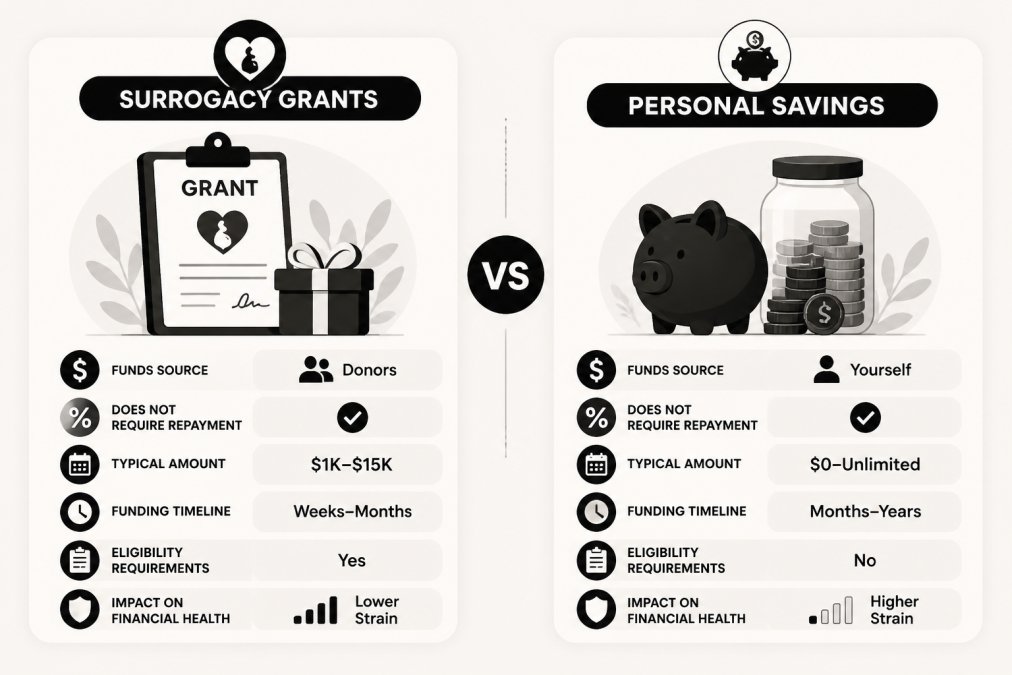
Surrogacy grants are financial assistance awards that do not need to be repaid, typically offered by nonprofit organizations to help intended parents offset specific medical or agency costs. Organizations like the Baby Quest Foundation and The Cade Foundation provide grants for fertility procedures including gestational surrogacy, but they operate with strict eligibility requirements and limited funds.
Grant funding is genuinely helpful, yet it is rarely the solution families hope for. Most grants cover only a small fraction of total surrogacy costs, and the application process demands significant time and emotional energy. Organizations typically require a formal application, financial documentation, and demonstrated medical necessity. Because demand far exceeds available funds, even qualified applicants may wait through multiple cycles before receiving an award.
Who Qualifies for Grant Funding
Eligibility varies by organization, but most grant providers require intended parents to demonstrate genuine financial need and medical necessity. Some organizations prioritize specific family structures or medical diagnoses, so you must research each grant’s criteria carefully before applying.
The application itself typically includes income documentation, a personal essay explaining your situation, and letters of support from your fertility clinic. Competition is intense, and grants are awarded based on both financial need and the strength of your story. Organizations like The Cade Foundation’s Family Building Grant guidelines publish their eligibility criteria openly, so review them before investing time in an application.
The Hidden Cost of Draining Personal Savings
Using personal savings to fund surrogacy feels straightforward, but the true cost extends far beyond the balance you withdraw. Every dollar you remove from savings represents lost growth potential, reduced liquidity, and diminished financial stability during a period when you will also be preparing to welcome a child.
The concept of opportunity cost is central here. Money used for surrogacy cannot simultaneously serve as your emergency fund, your child’s future education savings, or your retirement cushion. Financial planners generally recommend maintaining an emergency fund equal to several months of living expenses, and depleting that safety net to fund a surrogacy journey creates vulnerability if unexpected medical expenses or complications arise.
Another consideration is liquidity. Surrogacy costs arrive in stages, not as a single payment. Agency fees, medical expenses, legal fees, and surrogate compensation each come due at different points in the journey. If your savings are locked in long-term investments, you may face penalties or forced sales at inopportune moments. A high-yield savings account strategy guide can help you maintain accessible funds while still earning meaningful interest.
Cost of International Surrogacy 2026: What the Numbers Show
International surrogacy programs in 2026 involve a complex cost structure that varies significantly by destination and program structure. While exact figures depend on your specific circumstances, the total investment typically encompasses several distinct categories: agency fees, medical expenses at the fertility clinic, legal fees for both your home country and the surrogacy destination, surrogate compensation, and miscellaneous costs including travel, insurance, and documentation.
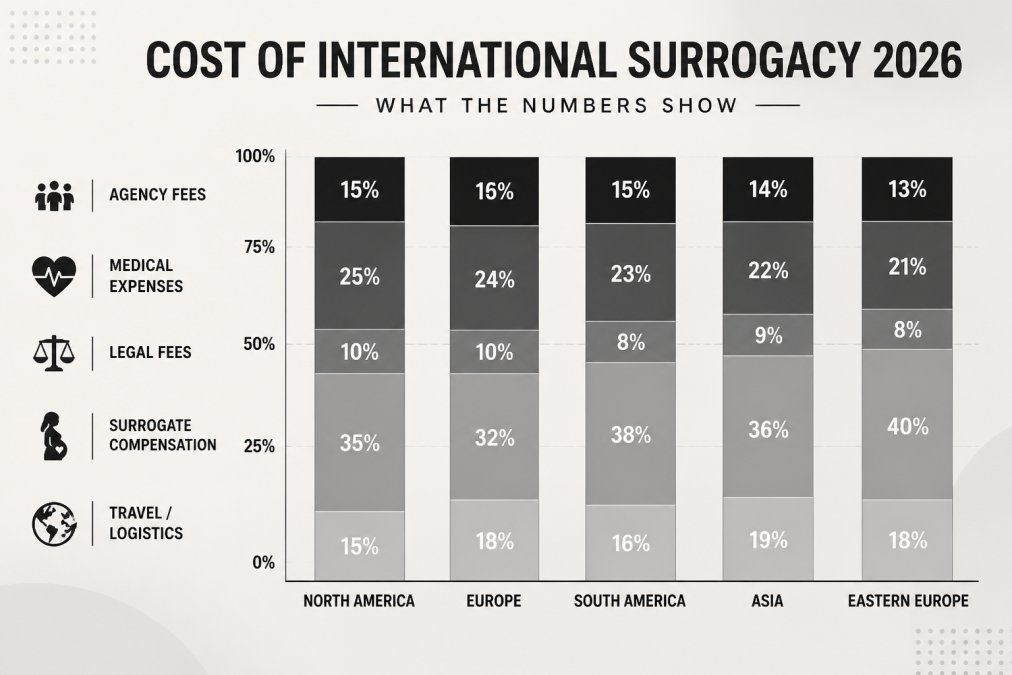
The FertilityIQ database of agency fees and treatment costs provides a valuable reference point for understanding how these categories break down across different providers. What most guides miss is that the lowest quoted price rarely reflects the true total. Hidden fees for legal consultations, escrow management, and post-birth documentation can add meaningful amounts to your final bill.
This is precisely why Herman Family Group emphasizes transparent pricing with no hidden fees. When comparing programs, ask for a complete cost breakdown in writing before committing. A program that appears more expensive upfront may actually be more economical once every expense is accounted for.
Surrogacy Financing Options Beyond Grants and Savings
Grants and personal savings are only two pieces of the puzzle. Most intended parents ultimately combine multiple funding sources to bridge the gap between what they have and what surrogacy costs. Understanding the full landscape of surrogacy financing options helps you build a strategy that protects your financial stability.
Funding Source | Repayment Required | Best For | Key Consideration |
|---|---|---|---|
Surrogacy grants | No | Qualified applicants needing partial support | Competitive, limited coverage |
Personal savings | No | Families with strong liquidity | Depletes emergency reserves |
Fertility loans | Yes, with interest | Bridging funding gaps | Credit approval required |
Employer benefits | No | Employees with fertility coverage | Check specific plan details |
Tax-advantaged accounts | No | Medical expense offset | Withdrawal rules apply |
Fertility Loans and Credit-Based Funding
Fertility loans, such as those offered by Prosper Healthcare Lending, provide immediate access to capital through unsecured loans with fixed monthly payment plans. These loans can be directed either to the medical provider or directly to you, giving you flexibility in managing cash flow throughout the journey.
The trade-off is clear: loans require repayment with interest, and your credit profile determines both approval and your interest rate. Before pursuing this route, check your debt-to-income ratio and understand exactly how monthly payments will fit your budget. A loan that bridges a genuine gap can be the right call; one that overextends you creates stress that no family should carry into parenthood.
Employer Benefits and Tax-Advantaged Accounts
An often-overlooked funding source is your employer’s fertility benefits package. Many employers now offer fertility coverage that includes surrogacy-related expenses, and some provide financial support through specialized benefit programs. Review your benefits documentation carefully, and if surrogacy coverage is unclear, ask your HR department directly.
Tax-advantaged accounts can also offset eligible medical expenses. Health savings accounts and flexible spending arrangements allow you to set aside pre-tax dollars for qualified medical costs, reducing your overall out-of-pocket burden. The rules governing these accounts are specific, so consult the IRS guidance on medical savings accounts or a tax professional to understand what qualifies.
Financial Planning for Surrogacy: A Decision Framework
With multiple funding sources available, the challenge becomes sequencing them effectively. A practical decision framework helps you evaluate your situation objectively rather than reacting emotionally to the pressure of moving forward.
Start by calculating your total expected costs using a detailed cost breakdown from your chosen program. Next, assess your current savings, monthly cash flow, and existing debt obligations. Then evaluate each funding source against three criteria: cost of capital, impact on financial stability, and accessibility.
- Step 1: Establish your emergency fund baseline. Do not fund surrogacy below this threshold.
- Step 2: Apply for grants early, but continue planning as if you will not receive them.
- Step 3: Compare loan offers based on interest rates and repayment terms, not just monthly payments.
- Step 4: Maximize employer benefits and tax-advantaged accounts before touching savings.
- Step 5: Reassess your plan quarterly, adjusting as costs and circumstances evolve.
The families who manage surrogacy financing most successfully treat it as a multi-year financial planning exercise, not a single funding event. They build flexibility into their approach, maintain open communication with their program coordinator, and protect their long-term financial health even as they pursue their immediate goal of building a family.
Conclusion: Building Your Funding Strategy
The choice between surrogacy grants and personal savings is rarely either-or. A resilient funding strategy layers multiple sources, protecting your financial stability while ensuring you can move forward without unnecessary delay. Start by understanding your complete cost picture, apply for grants where you qualify, preserve your emergency fund, and explore loans and employer benefits to fill remaining gaps.
Herman Family Group supports intended parents through every stage of the surrogacy journey, from initial financial planning through birth and beyond. Our team provides personalized plans designed for your specific family situation, with transparent pricing so you always know where you stand. Create your plan today and take the first confident step toward parenthood.
Frequently Asked Questions
Are there legitimate grants available for surrogacy in the United States?
Yes, several nonprofit organizations offer legitimate surrogacy grants. Organizations like Baby Quest Foundation and The Cade Foundation provide financial assistance to Intended Parents. These grants are non-repayable funds, meaning you do not pay them back. However, they are highly competitive and typically cover only a fraction of the total cost. Most require a formal application, financial documentation, and proof of medical need. Because demand far exceeds available funds, treat grants as one piece of your overall funding plan, not the sole solution.
Can you combine multiple funding sources to pay for surrogacy?
Yes, most Intended Parents combine several funding sources. A common strategy uses grants to offset specific costs like agency fees or medical expenses, personal savings for a portion of the journey, and fertility loans to cover the remaining gap. Some employers also offer fertility benefits that can be layered with other funding. Combining sources reduces the amount you need to borrow and helps protect your long-term savings. Before committing, map out your total expected costs and determine what portion each funding source will cover.
How do personal savings compare to third-party financing for surrogacy?
Personal savings cost less over time because you avoid interest charges, but they reduce your liquidity and emergency fund. Third-party financing, such as fertility loans, preserves your savings but adds monthly payments and interest. The right choice depends on your financial stability, debt-to-income ratio, and how quickly you can rebuild savings. Many Intended Parents use a hybrid approach: savings for the largest upfront costs and loans to spread remaining expenses over time. Review repayment terms carefully before choosing a loan.
What tax implications should Intended Parents consider when using grants?
The tax treatment of surrogacy grants depends on how the funds are used and your specific situation. In general, grants used for medical expenses may have different implications than those used for non-medical costs like agency fees or surrogate compensation. Some medical expenses may be deductible if they exceed a certain percentage of your adjusted gross income. Because tax rules are complex and change frequently, consult a qualified tax professional who understands family-building expenses. They can help you document expenses properly and determine what applies to your circumstances.