Last Updated: August 22, 2026
Altruistic vs Commercial Surrogacy: Core Differences
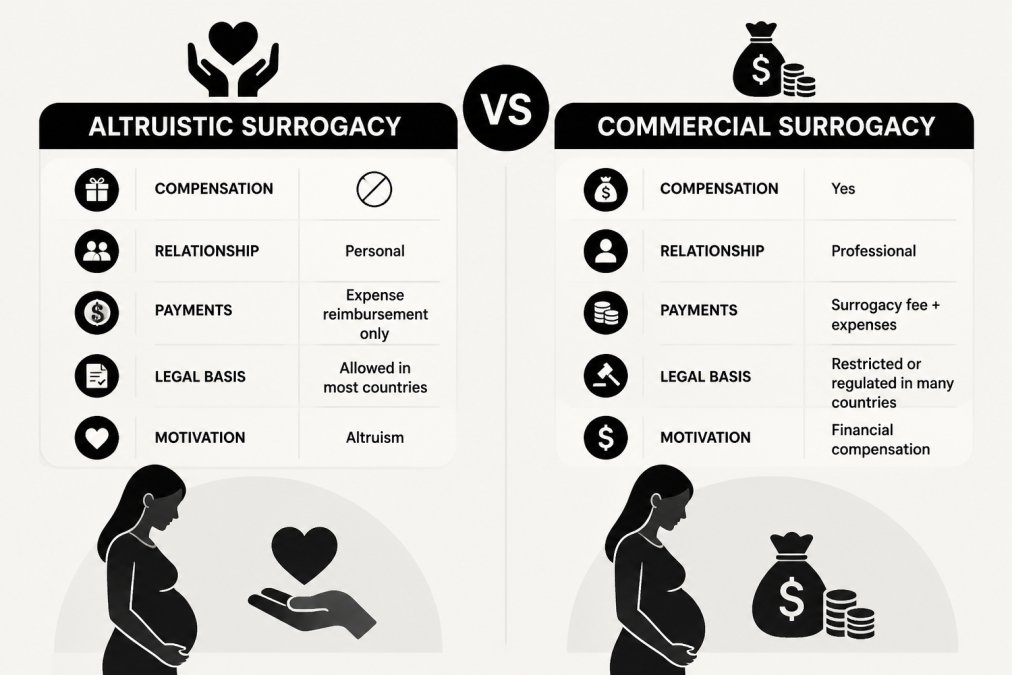
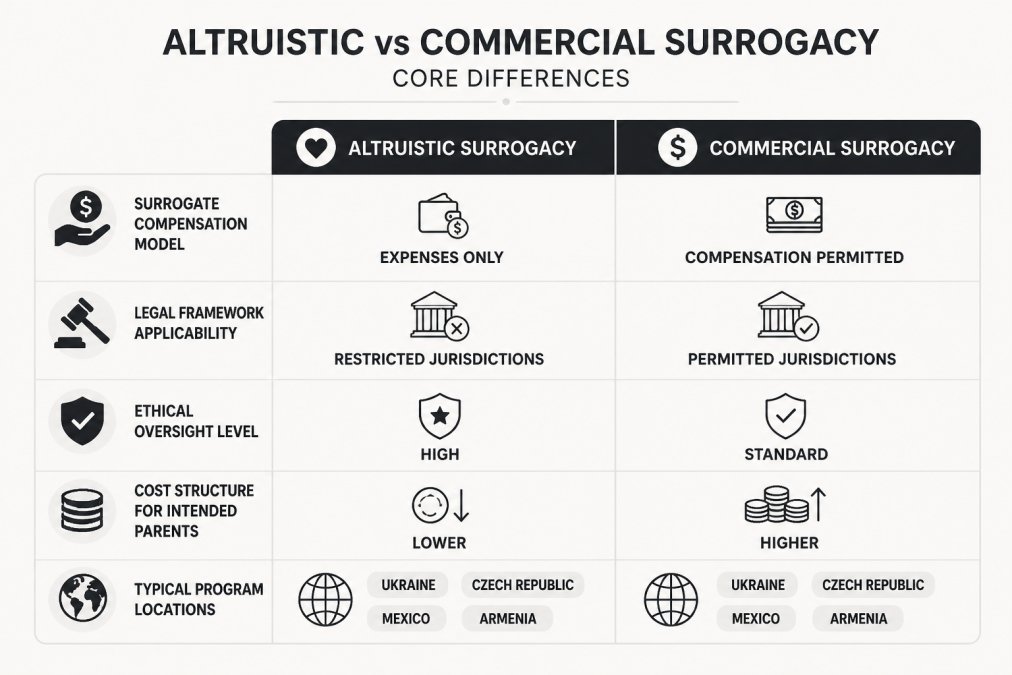
Altruistic surrogacy covers only medical expenses, prenatal care, delivery, and living costs during pregnancy. Commercial surrogacy allows additional compensation for the surrogate’s time and effort beyond expenses. Legal status varies by location, some countries permit only altruistic arrangements, others allow commercial surrogacy under specific conditions.
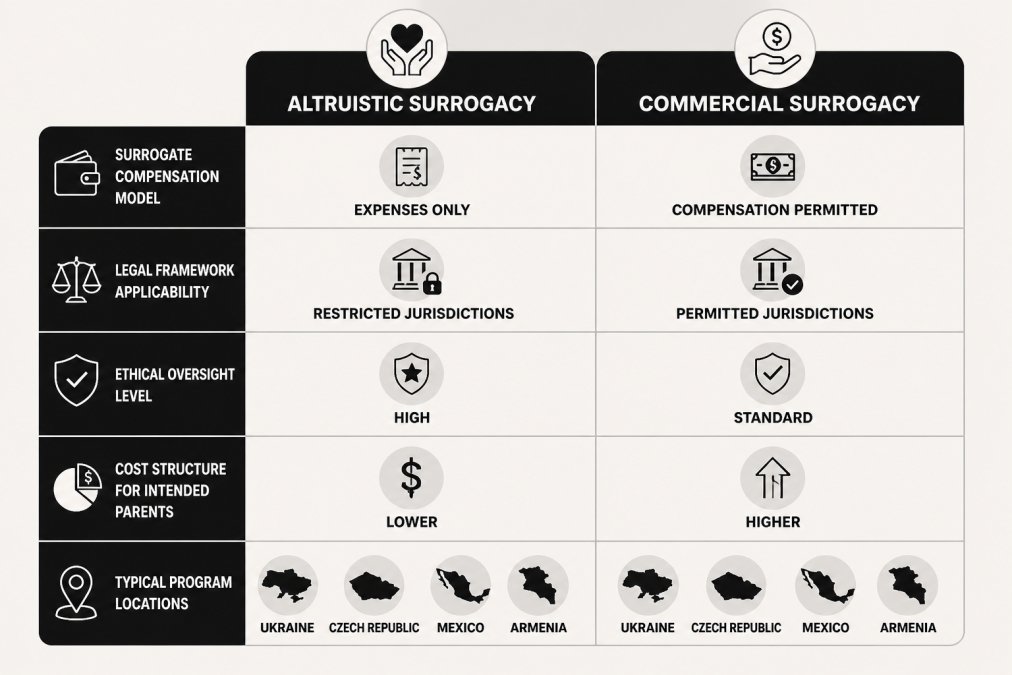
Herman Family Group works with legally structured programs in Ukraine, Czech Republic, Mexico, and Armenia, each with different rules for compensation and Intended Parent protections.
International Surrogacy Legal Requirements by Model
Altruistic surrogacy operates under stricter legal oversight, with agreements specifying qualified expenses: medical screening, fertility treatments, prenatal appointments, delivery, and hospital stays. Commercial surrogacy jurisdictions establish their own frameworks for permissible compensation, with independent legal counsel representing both parties.
| Aspect | Altruistic Model | Commercial Model |
|---|---|---|
| Surrogate Compensation | Expenses only | Expenses + compensation |
| Legal Complexity | Moderate | Higher |
After delivery, establishing legal parentage requires navigating both the surrogacy country’s laws and the Intended Parents‘ home country requirements (un.org). A child born through international surrogacy may not automatically acquire the Intended Parents’ citizenship, many countries require formal adoption or additional legal steps (europa.eu).
The legal pathway to parentage after birth is complex and country-specific. Intended Parents must work with lawyers experienced in both the surrogacy jurisdiction and their home country’s family law.
Surrogacy Process for International Intended Parents
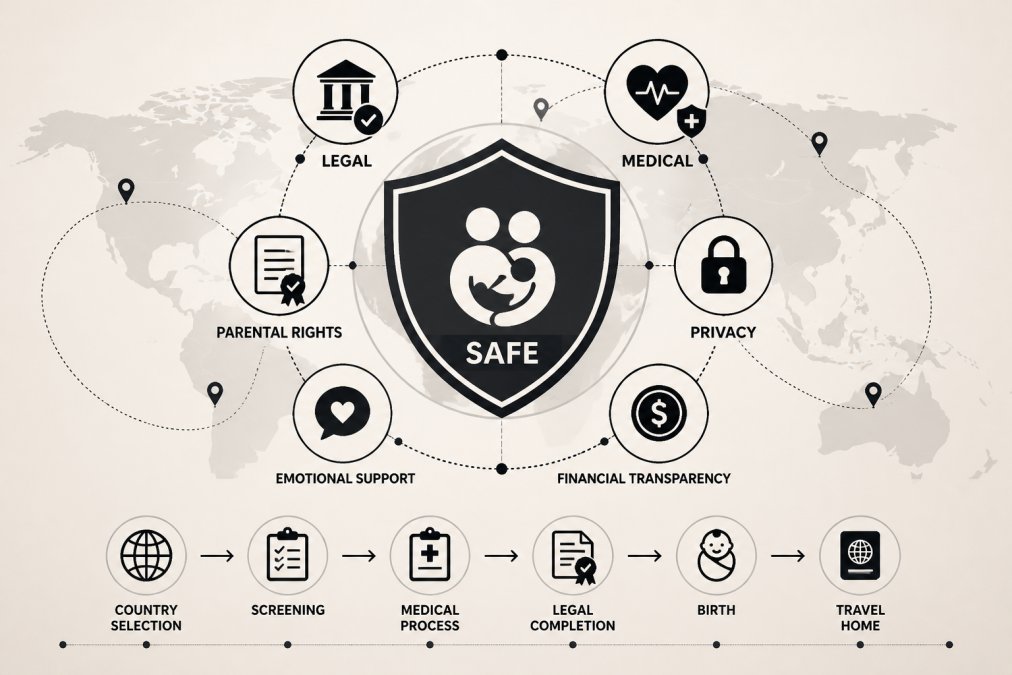
The surrogacy journey follows a structured sequence: initial consultation, legal review, surrogate matching, medical evaluation, embryo transfer, pregnancy monitoring, birth, legal documentation, and citizenship processing.
Legal review examines home country laws regarding surrogacy, parental recognition, and child citizenship. Surrogate matching and screening follows, with medical teams evaluating potential surrogates for health and psychological readiness. After birth, Intended Parents work with attorneys to obtain a parentage order or adoption decree, depending on local law.
International Intended Parents should budget time for legal processing after birth. Parentage orders and citizenship documentation typically require 2-8 weeks, depending on jurisdiction ([peer-reviewed research](https://pmc.ncbi.nlm.nih.gov/articles/PMC6262674/)).
Building a family through international surrogacy requires navigating complex legal, medical, and logistical challenges. Herman Family Group provides comprehensive support throughout this process, offering personalized plans, expert legal coordination, and full medical and emotional support from initial consultation through birth and beyond. Create My Plan today to begin your surrogacy journey.
This article was written using GrandRanker