Table of Contents
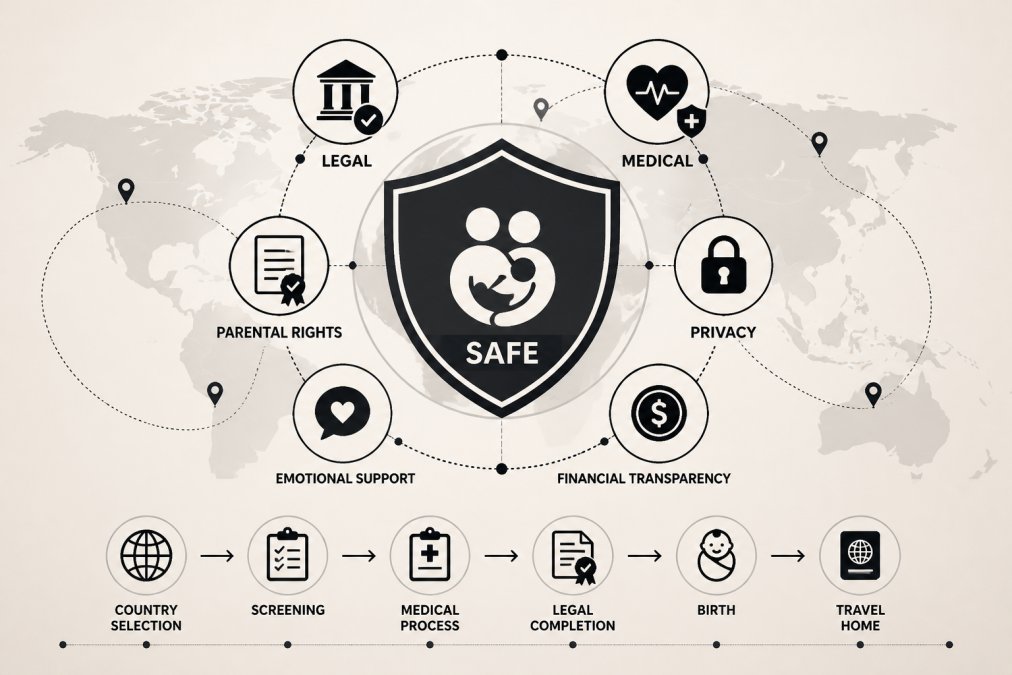
- What Makes International Surrogacy Safe or Unsafe
- Understanding International Surrogacy Legal Risks
- Obtaining Citizenship for a Child Born via Surrogacy Abroad
- Medical Standards and Safety Screening
- Surrogacy Agency Vetting Checklist: What to Verify
- Legal Safeguards and Parental Rights Protection
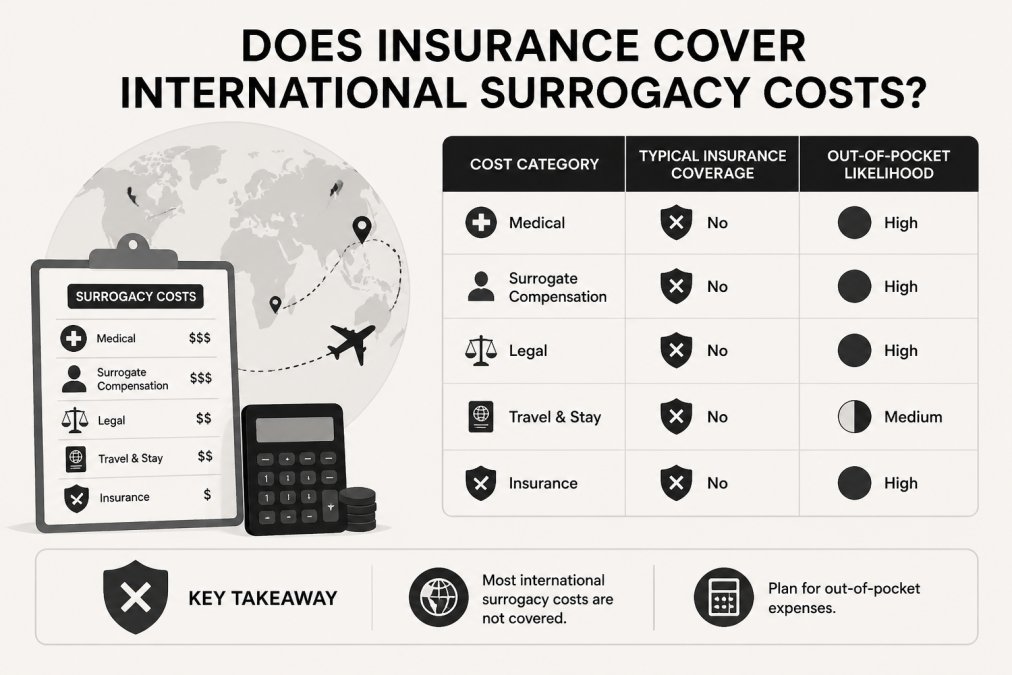
- Post-Birth Planning: Insurance, Contingencies, and Support
- Conclusion
Last Updated: August 22, 2026
What Makes International Surrogacy Safe or Unsafe
International surrogacy safety depends on three critical factors: the legal framework of the destination country, the medical standards of fertility clinics, and the reputation and transparency of the surrogacy agency. When these align, Intended Parents can pursue family-building with significantly reduced risk. When they don’t, families face custody disputes, citizenship complications, and medical emergencies with no legal recourse.
The difference between safe and unsafe arrangements often comes down to preparation. Intended Parents who work with established agencies specializing in legally sound destinations, conduct thorough medical vetting, and secure proper legal counsel before conception rarely encounter the horror stories that dominate online forums. Those who cut corners, choosing cheaper agencies, traveling to unregulated jurisdictions, or skipping legal documentation, face custody nightmares and stranded infants.
At Herman Family Group, we prioritize legal safety from day one.
Understanding International Surrogacy Legal Risks
The primary legal risk is that your parental rights may not be automatically recognized in your home country, even if established abroad. Some countries require a separate adoption process after birth to recognize Intended Parents as legal guardians. Others refuse to recognize surrogacy arrangements entirely, leaving biological children in legal limbo.
A second critical risk involves citizenship. A child born via surrogacy abroad may not automatically qualify for citizenship in the parents’ home country. The child might be born stateless, holding citizenship in the birth country but unable to obtain citizenship in the parents’ country of residence.
The U.S. State Department’s guidance on surrogacy and citizenship clarifies that children born via surrogacy abroad to U.S. citizen Intended Parents do not automatically acquire U.S. citizenship at birth. Instead, Intended Parents must establish biological parentage and apply for a Consular Report of Birth Abroad (CRBA) before the child can obtain a U.S. passport. This process requires proper legal documentation from the birth country, documentation that’s only reliable when the destination has clear surrogacy laws.
Unregulated jurisdictions present the highest risk. Without government oversight, surrogacy arrangements lack legal enforceability. If a surrogate changes her mind about relinquishing the child, or if a clinic mishandles medical care or financial obligations, Intended Parents have no legal recourse.
Obtaining Citizenship for a Child Born via Surrogacy Abroad
Securing citizenship for a child born via surrogacy abroad requires a clear sequence of legal steps. First, the child must be registered with a birth certificate in the birth country, listing the Intended Parents as the biological parents. This is only possible in countries with legal frameworks explicitly recognizing intended parentage in surrogacy cases.
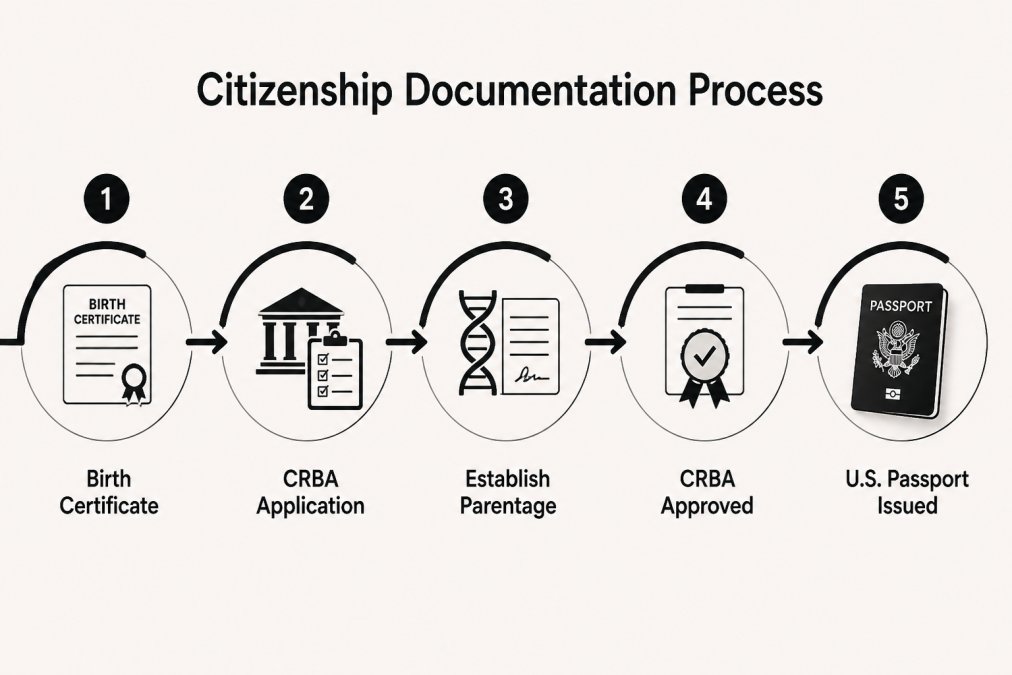
Once the birth certificate is secured, Intended Parents must apply for a Consular Report of Birth Abroad at the nearest U.S. consulate or embassy. The consulate will require proof of biological parentage, typically a DNA test or a legal declaration from the birth country confirming the Intended Parents’ genetic connection to the child.
The timeline typically spans 4-8 weeks from birth certificate issuance to passport approval, though delays are common when Intended Parents haven’t secured proper legal counsel before conception. Families who work with agencies coordinating with immigration attorneys from the start rarely encounter documentation gaps.
Countries that explicitly recognize intended parentage in surrogacy contracts simplify this entire process. Countries without such laws force Intended Parents into costly, time-consuming legal battles to establish parentage after birth, sometimes requiring adoption proceedings even though the child is biologically theirs.
Medical Standards and Safety Screening
Medical safety in international surrogacy depends entirely on the fertility clinic’s adherence to international reproductive health standards. Reputable clinics maintain accreditation from recognized bodies, conduct rigorous health screening for both surrogates and Intended Parents, and follow established protocols for embryo handling, transfer procedures, and prenatal care.
The American Society for Reproductive Medicine (ASRM) ethical guidelines provide a global standard for assisted reproductive technology practices, though not all countries enforce these standards. Clinics that voluntarily comply with ASRM guidelines typically maintain higher safety records and better outcomes.
A reputable surrogacy clinic should require:
- Comprehensive medical screening for the surrogate, including infectious disease testing, genetic carrier screening, and psychological evaluation
- Medical screening for Intended Parents, including fertility assessment and infectious disease testing
- Documented protocols for embryo creation, cryopreservation, and transfer
- Prenatal care coordination with local obstetric providers
- Clear communication channels between the clinic, the surrogate, and the Intended Parents throughout pregnancy
- Emergency protocols for medical complications during pregnancy or delivery
Clinics in unregulated jurisdictions often skip these steps to reduce costs. A surrogate might undergo minimal health screening, or the clinic might transfer multiple embryos without regard for the risks of multiple births.
Surrogacy Agency Vetting Checklist: What to Verify
Choosing the right surrogacy agency is the single most important decision in your international surrogacy journey. A reputable agency serves as your advocate, coordinator, and safety net throughout the process.

Before committing to any agency, verify these essential criteria:
- Legal expertise in your destination country. Ask the agency to name the immigration attorney or law firm they partner with in the birth country. Call that firm directly to confirm the partnership and ask about their experience with surrogacy cases.
- Fertility clinic accreditation. Request documentation of the clinic’s accreditation status. Verify independently through the International Committee for Monitoring Assisted Reproductive Technology (ICMART) or the destination country’s health ministry (icmart.org).
- Transparent, itemized pricing. Demand a complete breakdown of all costs. Any agency that refuses to itemize costs or quotes a vague total is hiding something.
- Client references from the past 24 months. Ask for contact information of at least three families who completed a surrogacy through the agency within the last two years. Call them directly and ask about legal complications, unexpected costs, and whether the agency delivered on its promises.
- Written guarantees and dispute resolution. Request the agency’s written service agreement. Look for guarantees about legal parental recognition, timelines, and what happens if complications arise.
- Insurance and contingency coverage. Ask what happens if the surrogate has a miscarriage, if the baby is born with a health condition, or if the Intended Parents can’t travel for birth. A reputable agency carries insurance covering these scenarios.
Herman Family Group specializes in these vetting practices.
Legal Safeguards and Parental Rights Protection
Legal safeguards begin before conception and continue through birth and beyond. The strongest safeguard is a surrogacy agreement drafted by an attorney licensed in both the Intended Parents‘ home country and the birth country. This agreement should specify that the Intended Parents are the biological and legal parents, that the surrogate has no parental rights, and that the surrogate consents to relinquish the child at birth.
However, a surrogacy agreement is only as strong as the legal system enforcing it. In countries with no surrogacy law, the agreement is a contract between private parties, not a legally binding parental declaration.
The safest destinations have explicit legal frameworks recognizing intended parentage in surrogacy cases. These laws typically state that:
- The Intended Parents are presumed to be the legal parents from the moment of conception or birth
- The surrogate has no parental rights or obligations
- The surrogacy agreement is enforceable by law
- Citizenship and inheritance rights pass to the Intended Parents automatically
A second critical safeguard is escrow protection for financial payments. Reputable agencies place Intended Parents’ funds in a third-party escrow account, releasing money only when contractual milestones are met.
Post-Birth Planning: Insurance, Contingencies, and Support
Post-birth complications are where many international surrogacy arrangements fall apart. Intended Parents arrive expecting to take their newborn home and discover unexpected medical issues, legal delays, or financial demands. Advance planning for these contingencies is essential.
Medical contingencies begin during pregnancy. Surrogate health insurance should cover complications like gestational diabetes, preeclampsia, or premature labor. The Intended Parents should understand their financial responsibility if the surrogate requires extended hospitalization or if the baby needs neonatal intensive care.
Travel contingencies matter equally. Intended Parents should plan for extended stays in the birth country, typically 2-4 weeks minimum. This covers the birth, initial legal documentation, and medical clearance for international travel. Some families face unexpected delays due to surrogate recovery, legal paperwork processing, or additional medical evaluation.
Psychological support is often overlooked but critical. The transition to parenthood after international surrogacy is emotionally complex. Intended Parents may experience joy mixed with guilt about the surrogate’s role, anxiety about bonding with a child they didn’t carry, or grief about their infertility journey. Reputable agencies offer access to counselors experienced with surrogacy families.
Post-birth legal support continues after you return home. You’ll need to register the child’s birth certificate with your home country’s vital records office, apply for citizenship or residency status, update your will and estate plans, and establish guardianship documents. An immigration attorney can guide this process.
Herman Family Group provides comprehensive post-birth coordination, including legal document processing, citizenship application support, and access to counseling resources.
International surrogacy can be a safe, legal path to parenthood when you prioritize legal clarity, medical standards, and agency transparency. The families who encounter problems typically cut corners by choosing cheaper agencies, traveling to unregulated countries, or skipping legal counsel. Those who invest in proper vetting, work with agencies specializing in legally sound destinations, and secure legal representation before conception rarely face the custody disputes or citizenship crises that dominate surrogacy horror stories.
Your most important decision is choosing an agency and destination that align your family-building goals with legal reality. Create My Plan with Herman Family Group, and we’ll walk you through each decision point, coordinate with legal and medical partners in your chosen destination, and ensure your path to parenthood is both safe and legally protected.
Frequently Asked Questions
What are the primary legal risks of international surrogacy?
Legal risks include parental rights not being recognized in your home country, complications with birth certificate issuance, delays in citizenship documentation, and exposure to surrogacy laws that may change mid-process. Countries with unregulated or ambiguous surrogacy frameworks pose the highest risk. Working with an immigration attorney familiar with your specific country's laws and having a comprehensive surrogacy agreement in place significantly reduces these risks.
How do Intended Parents ensure citizenship for a child born via international surrogacy?
Citizenship is typically established through the consular report of birth abroad (CRBA) filed at the U.S. embassy or consulate in the country of birth. This requires proof of biological parentage, a valid surrogacy agreement, and legal parentage documentation from the birth country. An immigration attorney specializing in surrogacy should guide this process before birth to avoid delays. Some countries allow direct citizenship registration; others require a separate legal adoption step.
What medical standards should Intended Parents look for in international clinics?
Verify that clinics are accredited by recognized reproductive medicine organizations, employ board-certified embryologists and physicians, maintain transparent success rates, and follow protocols matching those in developed countries. Request information on infection control, laboratory standards, and embryo screening capabilities. Clinics should provide detailed medical screening results for surrogates and clear communication throughout the assisted reproductive technology process.
What happens if complications arise during pregnancy or after birth?
Comprehensive planning should include medical emergency insurance, backup funding for unexpected travel or medical costs, and clear protocols with your clinic and legal team for contingencies. Your surrogacy agreement should address medical decision-making authority, financial responsibility for complications, and post-birth support. Psychological support services and coordination with your home country's healthcare providers help manage unexpected situations and ensure continuity of care for your child.
This article was written using GrandRanker