Table of Contents
- Does Health Insurance Cover International Surrogacy?
- Understanding Maternity Coverage and Gestational Carrier Medical Costs
- Cost of International Surrogacy 2026: What Remains Your Responsibility
- International Surrogacy Financial Planning: Building Your Coverage Strategy
Last Updated: August 24, 2026
Does Health Insurance Cover International Surrogacy?
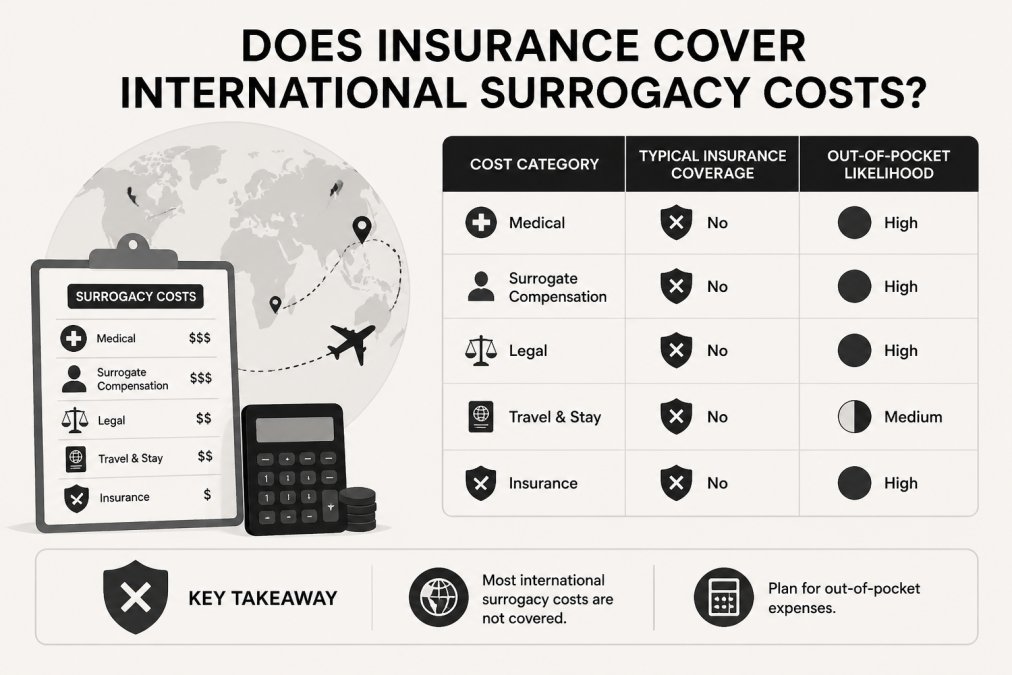
Standard health insurance rarely covers international surrogacy costs. Most policies exclude third-party reproduction, meaning Intended Parents typically face significant out-of-pocket expenses. Understanding what coverage exists and where gaps remain is critical for financial planning. (Source: guidance from the American Society for Reproductive Medicine)
Coverage depends on your specific policy, your location, and the laws governing surrogacy in your destination country. At Herman Family Group, we help Intended Parents navigate these complexities by breaking down what insurance typically covers and where gaps emerge.
Understanding Maternity Coverage and Gestational Carrier Medical Costs
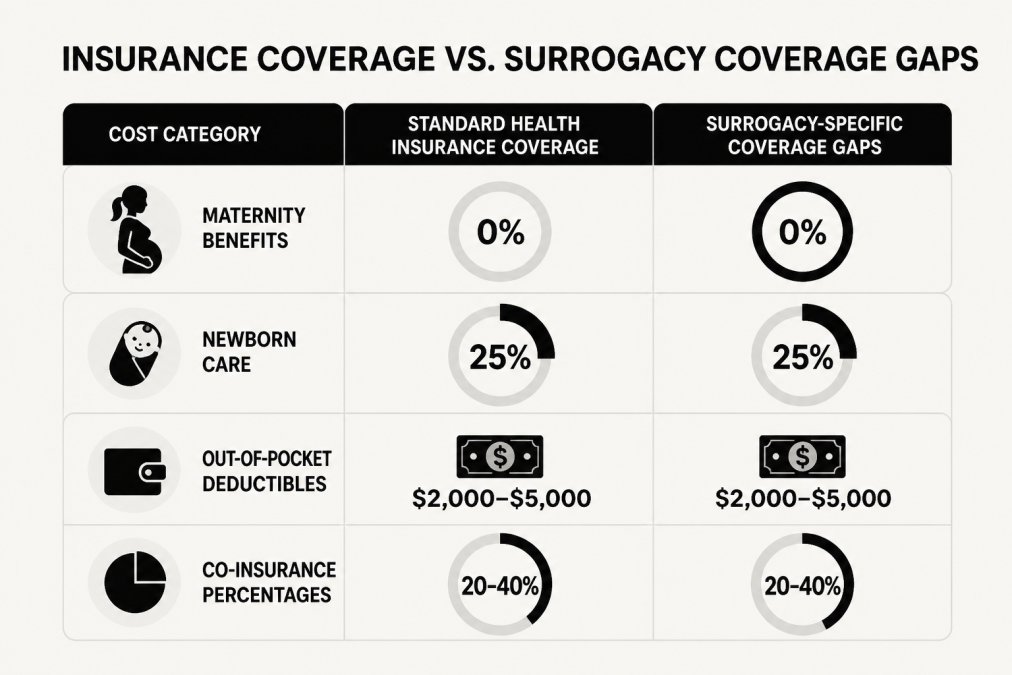
Your health insurance may not cover the surrogate’s prenatal care, delivery, or postnatal recovery, even if it covers standard maternity benefits for you as an Intended Parent.
The key distinction: your own maternity coverage is separate from coverage for a gestational carrier’s medical expenses. Most policies explicitly exclude expenses for someone else’s pregnancy, even when that person is carrying your genetic child.
Gestational carrier medical costs include:
- Prenatal appointments and monitoring
- Ultrasounds and genetic screening
- Labor and delivery
- Postnatal care and recovery
- Any complications during pregnancy or birth
Employer-sponsored health plans rarely extend maternity benefits to gestational carriers, creating a significant financial gap that Intended Parents must address through alternative means.
Cost of International Surrogacy: What Remains Your Responsibility
International surrogacy involves multiple financial components, most of which fall outside standard insurance coverage. Intended Parents typically bear responsibility for medical, legal, travel, and program coordination expenses.
What you’ll likely pay out-of-pocket includes:
- Gestational carrier medical expenses (prenatal through postnatal care)
- Fertility clinic costs (egg retrieval, embryo transfer, monitoring)
- Legal fees for contracts and birth documentation
- Travel and accommodation for you and family members
- Surrogate compensation and living expenses
- Insurance for the gestational carrier during pregnancy
- Newborn medical care in the country of birth
- Immigration and citizenship documentation
Some Intended Parents have access to employer-sponsored fertility benefits that may cover limited aspects of fertility treatment, but these rarely extend to gestational carrier expenses or international travel costs.
International Surrogacy Financial Planning: Building Your Coverage Strategy
Building a coverage strategy requires a three-step approach: verifying your existing coverage, identifying gaps, and exploring supplemental options.
Contact your health insurance provider directly. Ask specific questions about their policy language regarding third-party reproduction, gestational carrier expenses, and newborn coverage in international settings.
Document what your policy covers:
- Your own prenatal and delivery care (if applicable)
- Newborn care for a child born internationally
- Coverage for complications or NICU stays
Then identify gaps and explore alternatives:
- Specialized surrogacy insurance policies
- Supplemental health coverage for the gestational carrier in your destination country
- Medical tourism insurance for international birth-related expenses
- Self-insurance through dedicated savings accounts

Planning ahead is essential. Addressing insurance gaps before matching with a gestational carrier ensures you move forward with confidence.
=== FAQ ANSWERS (audit these too, same rules) ===
[1] Q: Does standard health insurance cover international surrogacy costs? A: Most standard health insurance policies exclude surrogacy-related expenses, including gestational carrier medical care, fertility treatments, and legal fees. Coverage depends entirely on your specific policy and employer plan. Many plans treat surrogacy as an elective procedure or explicitly exclude third-party reproduction. Review your policy documents carefully or contact your insurer directly to confirm whether international surrogacy is covered under your plan.
[2] Q: What costs typically remain the responsibility of Intended Parents in international surrogacy? A: Intended Parents generally cover gestational carrier medical expenses, fertility clinic fees, legal and documentation costs, travel expenses, and newborn insurance. Even when maternity benefits apply to the surrogate’s care, Intended Parents are responsible for out-of-pocket expenses, deductibles, and co-insurance amounts. Additionally, newborn insurance for the child and post-birth medical complications often fall outside standard coverage, making financial planning essential for managing these gaps.
[3] Q: How should Intended Parents plan financially for international surrogacy? A: Start by verifying your current health insurance coverage and identifying policy exclusions related to surrogacy and third-party reproduction. Request a detailed benefits summary from your insurer. Next, research whether your employer offers self-insured plans with different surrogacy provisions. Consider supplemental or specialized surrogacy-friendly policies to cover gaps. Create a comprehensive budget that accounts for medical, legal, travel, and post-birth expenses. Finally, consult with a surrogacy coordinator who understands how insurance verification works across different jurisdictions to ensure you’re prepared for all financial responsibilities.
Frequently Asked Questions
Does standard health insurance cover international surrogacy costs?
Most standard health insurance policies exclude surrogacy-related expenses, including gestational carrier medical care, fertility treatments, and legal fees. Coverage depends entirely on your specific policy and employer plan. Many plans treat surrogacy as an elective procedure or explicitly exclude third-party reproduction. Review your policy documents carefully or contact your insurer directly to confirm whether international surrogacy is covered under your plan.
What costs typically remain the responsibility of Intended Parents in international surrogacy?
Intended Parents generally cover gestational carrier medical expenses, fertility clinic fees, legal and documentation costs, travel expenses, and newborn insurance. Even when maternity benefits apply to the surrogate's care, Intended Parents are responsible for out-of-pocket expenses, deductibles, and co-insurance amounts. Additionally, newborn insurance for the child and post-birth medical complications often fall outside standard coverage, making financial planning essential for managing these gaps.
How should Intended Parents plan financially for international surrogacy?
Start by verifying your current health insurance coverage and identifying policy exclusions related to surrogacy and third-party reproduction. Request a detailed benefits summary from your insurer. Next, research whether your employer offers self-insured plans with different surrogacy provisions. Consider supplemental or specialized surrogacy-friendly policies to cover gaps. Create a comprehensive budget that accounts for medical, legal, travel, and post-birth expenses. Finally, consult with a surrogacy coordinator who understands how insurance verification works across different jurisdictions to ensure you're prepared for all financial responsibilities.
This article was written using GrandRanker