Table of Contents
- Best Countries for International Surrogacy: A Comparison Overview
- Surrogacy Laws by Country: Legal Frameworks and Restrictions
- International Surrogacy Costs: Affordability Across Destinations
- International Surrogacy Process Steps: From Selection to Repatriation
- Risks of International Surrogacy and How to Mitigate Them
- LGBTQ+ Legal Protections and Surrogate Rights Across Jurisdictions
- Choosing the Right Country: Eligibility and Safety Considerations
- How Herman Family Group Supports Your International Surrogacy Journey
Last Updated: July 14, 2026
Best Countries for International Surrogacy: A Comparison Overview
International surrogacy requires understanding legal frameworks, medical infrastructure, costs, and ethical considerations that vary dramatically across jurisdictions. Herman Family Group has guided intended parents through this complex landscape for over a decade, helping families navigate cross-border surrogacy in legally sound destinations with confidence and transparency.
According to research from the International Fertility Law Group, cross-border surrogacy involves clients from nearly 80 countries, with demand concentrated in jurisdictions offering stable legal frameworks and proven medical outcomes. The best countries for international surrogacy share common characteristics: transparent legal frameworks governing commercial or altruistic surrogacy, established IVF clinics with documented success rates, clear pathways to citizenship and birth certificate issuance for the child, and regulatory environments that protect surrogate mothers while ensuring parental rights.
Comparison Table: Key Metrics Across Top Destinations
Country | Legal Model | Estimated Cost Range | Citizenship Path | Medical Infrastructure | Key Consideration |
|---|---|---|---|---|---|
Georgia | Commercial | Moderate | Straightforward | Strong IVF clinics | Emerging market, political risks |
Ukraine | Commercial | Lower to moderate | Straightforward | Excellent | Current geopolitical instability |
Mexico | Commercial (varies by state) | Moderate | State-dependent | Growing IVF capacity | Regulatory variation by region |
Canada | Altruistic only | Higher | Straightforward | Excellent | Limited surrogate availability, waiting time |
United States | Commercial | Highest | Varies by state | Excellent | Cost barrier, state variation |
Czech Republic | Altruistic only | Moderate | Post-birth parental right acknowledgment | Strong IVF clinics | Risk of law change |
Surrogacy Laws by Country: Legal Frameworks and Restrictions
The legal status of surrogacy determines whether you can establish parental rights, obtain birth certificates, and bring your child home without litigation.

Commercial versus altruistic surrogacy represents the fundamental legal divide. Commercial surrogacy allows the surrogate to receive compensation beyond medical expenses, while altruistic surrogacy permits only reimbursement of pregnancy-related costs. This distinction shapes surrogate availability, program costs, and legal complexity. Countries permitting commercial surrogacy, Georgia, Ukraine, Mexico, and Colombia, offer lower costs and faster timelines. Altruistic-only jurisdictions like Canada face chronic surrogate shortages, creating multi-year wait times.
The real complexity emerges in how countries handle post-birth legal parentage. Some jurisdictions allow pre-birth orders that establish parental rights before delivery, making repatriation straightforward. Others require post-birth adoption proceedings that can take months or years.
Georgia permits commercial surrogacy and allows pre-birth court orders establishing parental rights. The child receives a Georgian birth certificate naming you as parents, and you can obtain an exit visa and travel home. However, Georgia’s legal landscape remains subject to political shifts.
Ukraine historically offered similar clarity, but current geopolitical conditions make it impossible to recommend as a reliable destination.
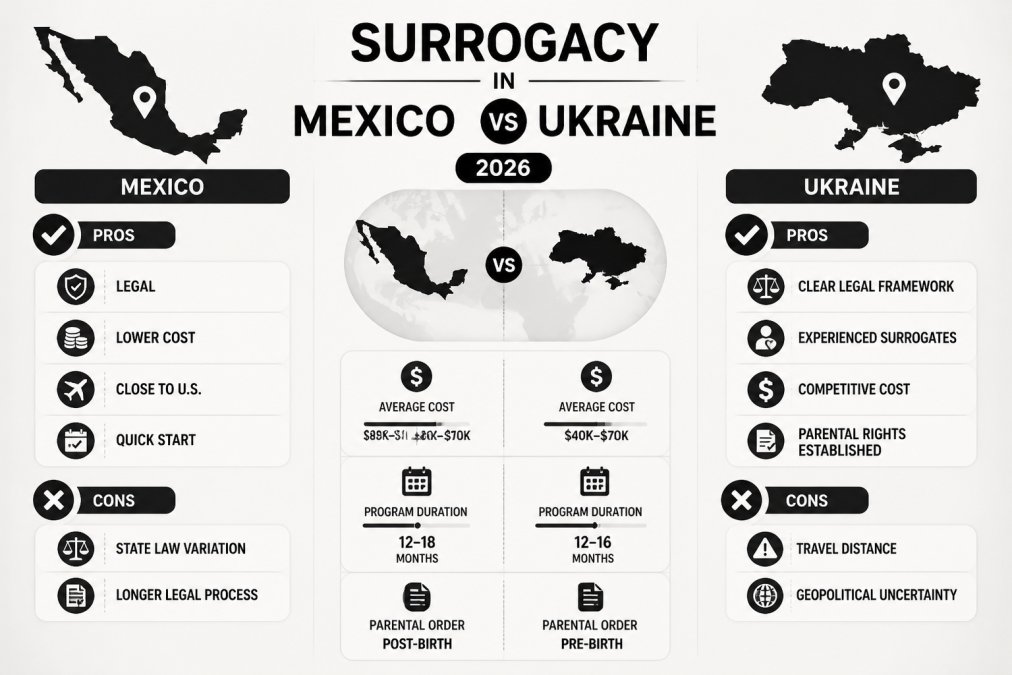
Mexico’s legal status varies significantly by state. Tabasco and Sinaloa explicitly permit commercial surrogacy and allow relatively straightforward birth certificate issuance. You must work with legal counsel familiar with your specific state’s regulations.
Canada permits only altruistic surrogacy, dramatically limiting surrogate availability and creating wait times measured in years. However, Canada’s legal protections are exceptionally strong, with birth certificates naming intended parents directly and automatic citizenship for children.
The United States offers the strongest legal protections for intended parents, with pre-birth orders available in most states and straightforward citizenship pathways. California, Illinois, and New York have explicitly pro-surrogacy laws. However, costs are substantially higher than other destinations.
Iran permits commercial surrogacy with a regulated system, but geopolitical considerations and limited transparency about surrogate protections make it challenging for most international intended parents.
International Surrogacy Costs: Affordability Across Destinations
Cost considerations often drive the initial decision to pursue international surrogacy, but the relationship between price and value is nuanced. Georgia and Ukraine historically offered the lowest total program costs, while Mexico occupies the moderate range. Canada and the United States represent the premium tier, with US costs being the highest globally.
However, cost comparisons require transparency about what’s included. Some programs quote only surrogate compensation and basic medical care, excluding legal fees, travel, visa processing, and post-birth documentation costs. The real cost driver isn’t the surrogate’s compensation, it’s the medical infrastructure, legal complexity, and support services required to ensure a safe outcome.
IVF clinics in Georgia and Mexico operate at lower overhead than US facilities, allowing competitive pricing while maintaining quality standards. Travel and accommodation costs can add 15-25% to the total program expense. Legal fees represent another variable cost, with jurisdictions offering clear surrogacy frameworks allowing simplified processes that reduce attorney hours.
International Surrogacy Process Steps: From Selection to Repatriation
The process typically spans 12-18 months from initial consultation to bringing your child home, though this timeline varies based on medical circumstances, the legal environment, and program efficiency.
Step 1: Program Selection and Initial Consultation involves choosing a surrogacy agency, completing intake assessments, and understanding the legal framework of your chosen country (2-4 weeks).
Step 2: Medical Evaluation and Preparation includes comprehensive fertility testing, genetic screening, and medical clearance (4-8 weeks).
Step 3: Surrogate Matching and Agreement involves identifying a gestational carrier, conducting background screening, and executing a formal surrogacy agreement (4-12 weeks).
Step 4: Embryo Creation and Transfer begins with egg retrieval or thawing frozen embryos (2-4 weeks).
Step 5: Pregnancy Monitoring and Support extends across the surrogate’s entire pregnancy with regular ultrasounds and medical check-ups (approximately 40 weeks).
Step 6: Birth and Immediate Post-Birth Procedures includes delivery, newborn medical screening, and initial legal documentation (1-4 weeks on the ground).
Step 7: Citizenship, Birth Certificates, and Exit Visas represents the most logistically complex phase. The child must receive a birth certificate, citizenship must be established, and an exit visa must be obtained (2-8 weeks depending on jurisdiction).
Citizenship, Birth Certificates, and Exit Visas
A child born in a foreign country to intended parents who aren’t citizens faces a citizenship puzzle: which country claims the child as a citizen, and how do you legally establish that status?
In Ukraine, parental rights are established before delivery, allowing the child to receive a Ukrainian birth certificate naming you as parents. You then apply for citizenship in your home country through a consular process.
In Mexico, birth certificates can name intended parents directly in states with clear surrogacy frameworks. In states with ambiguous laws, you may need to pursue post-birth adoption, significantly extending the timeline.
In the United States, if at least one intended parent is a US citizen, the child acquires US citizenship at birth under federal law. The birth certificate can name intended parents directly in most states.
In Canada, children born to Canadian parents acquire citizenship automatically, and birth certificates name intended parents directly.
Risks of International Surrogacy and How to Mitigate Them
International surrogacy carries distinct risks that domestic surrogacy doesn’t.
Medical Risks include complications during egg retrieval, embryo transfer, pregnancy, or delivery. Mitigation strategies include verifying that clinics maintain accreditation from recognized international bodies, requesting detailed information about complication rates and emergency protocols, and ensuring your home-country physician remains involved in monitoring your care.
Legal Risks emerge when surrogacy agreements are poorly drafted or when jurisdictions change their legal frameworks. Mitigation requires working with attorneys licensed in both your destination country and your home country and obtaining pre-birth legal orders wherever possible.
Financial Risks include currency fluctuations, program cost overruns, and the possibility of losing deposits if complications prevent completion. Mitigation involves getting detailed, transparent cost breakdowns upfront and maintaining financial reserves for unexpected expenses.
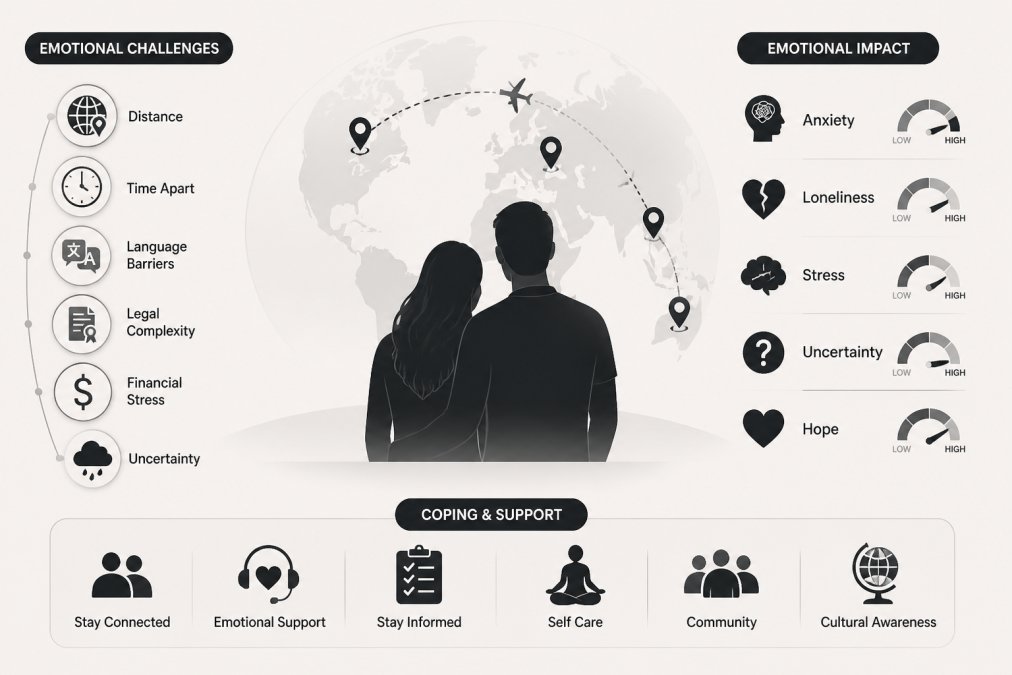
Emotional and Psychological Risks affect both intended parents and surrogates. Mitigation includes working with mental health professionals experienced in surrogacy and maintaining clear communication with your surrogate.
Travel and Logistical Risks include visa complications, travel delays, and extended time away from home. Mitigation involves planning travel well in advance and building flexibility into your schedule.
Medical Infrastructure and IVF Success Rates
The quality of medical care directly impacts your chances of successful embryo transfer and healthy pregnancy. Established destinations like Georgia and Mexico host IVF clinics that rival North American facilities in equipment, training, and success rates. When evaluating medical infrastructure, request specific data about embryo implantation rates, clinical pregnancy rates, and live birth rates stratified by age and diagnosis. Success rates in the 40-60% range per embryo transfer are realistic; claims of 80%+ should raise red flags.
Additionally, evaluate the clinic’s approach to complications and their relationships with local hospitals for emergency care.
Insurance and Medical Emergency Coverage
Most standard health insurance policies exclude surrogacy-related care. The best mitigation strategy is obtaining specialized surrogacy insurance that covers both routine pregnancy care and emergency complications. Verify coverage before committing to a program. Confirm that the international clinic has relationships with local hospitals and that emergency protocols are clearly defined.
LGBTQ+ Legal Protections and Surrogate Rights Across Jurisdictions
LGBTQ+ intended parents face additional legal complexity in many international surrogacy destinations. Legal recognition of same-sex relationships and explicit protections for LGBTQ+ families vary dramatically across jurisdictions.
Canada recognizes same-sex couples and unmarried individuals as eligible intended parents, with birth certificates naming both same-sex parents directly. The United States varies by state, but California, New York, and Illinois explicitly protect LGBTQ+ parental rights and surrogacy arrangements.
Georgia, while offering commercial surrogacy, doesn’t explicitly protect same-sex couples. Mexico’s legal landscape varies by state. Ukraine explicitly prohibits surrogacy for same-sex couples.
For LGBTQ+ intended parents, the safest strategy is working with agencies and legal counsel experienced in LGBTQ+ surrogacy. Confirming that your home country will recognize the birth certificate and parental rights established abroad is critical.
Choosing the Right Country: Eligibility and Safety Considerations
Selecting the best country for international surrogacy requires evaluating your specific circumstances against each destination’s legal, medical, and logistical characteristics. There’s no universally “best” country; the right choice depends on your medical situation, family structure, budget, timeline, and risk tolerance.
For intended parents prioritizing legal certainty and medical excellence: The United States, Ukraine and Canada offer the strongest legal protections, straightforward citizenship pathways, and excellent medical infrastructure. The trade-off is cost and, in Canada’s case, lengthy wait times.
For intended parents balancing cost with legal clarity: Georgia, Ukraine and Mexico (specifically states with established surrogacy frameworks) offer moderate costs, documented legal pathways, and reliable medical infrastructure. You must work with experienced local legal counsel.
For LGBTQ+ intended parents: Canada and certain US states (California, New York, Illinois) offer explicit legal protections and should be prioritized.
For intended parents seeking the lowest costs: Ukraine offers the lowest total program costs.
Screening Processes and Surrogate Selection
The quality of your surrogacy experience depends heavily on surrogate selection and screening. Reputable programs conduct comprehensive evaluations that assess medical suitability, psychological fitness, and genuine understanding of the surrogacy arrangement.
Medical screening includes reproductive history, general health assessment, infectious disease testing, and genetic screening. Psychological screening evaluates the surrogate’s motivations, understanding of emotional demands, and mental health history. Background checks verify criminal history and assess stability.
Personality fit matters. You’ll be communicating with this woman throughout her pregnancy, sharing intimate medical details, and trusting her with your genetic material and your future child. Ask your program about their screening process in detail: How many applicants do they screen to find suitable surrogates? What percentage of matched surrogates complete pregnancies successfully? What support do they provide to surrogates throughout the process?
How Herman Family Group Supports Your International Surrogacy Journey
Herman Family Group specializes in cross-border surrogacy in legally sound destinations, offering immediate program commencement with zero wait times and transparent, no-hidden-fee pricing.
Our approach begins with personalized assessment. We evaluate your medical situation, family structure, budget, and timeline to identify which destinations align with your needs. For LGBTQ+ families, single parents, and couples with specific medical circumstances, we provide guidance on jurisdictions where your family structure will be legally protected.
We provide comprehensive medical and emotional support from initial planning through birth and beyond, including coordinating with international IVF clinics, ensuring your home-country physician remains involved, managing travel logistics, and providing 24/7 access to our team during critical periods.
Legal protection is non-negotiable. We work with attorneys licensed in both your destination country and your home country to ensure surrogacy agreements are properly drafted, that pre-birth legal orders are obtained where available, and that your child’s citizenship and repatriation are planned meticulously.
Our mission-driven team delivers personalized plans and expert coordination, making the path to parenthood confident and fully supported. Create My Plan with Herman Family Group today and begin your journey to parenthood with confidence and expert coordination.
Frequently Asked Questions
Which countries allow international surrogacy for foreigners?
Several countries permit international surrogacy with varying legal frameworks. The United States, Canada, Georgia, Ukraine, and Mexico offer established programs for foreign intended parents. However, legal status varies significantly—some allow commercial surrogacy, while others restrict it to altruistic arrangements. Iran permits surrogacy but with geopolitical considerations. Each jurisdiction has specific eligibility requirements, so consulting legal counsel familiar with international surrogacy law is essential before selecting a destination.
What are the most affordable countries for surrogacy?
Emerging markets like Georgia, Ukraine, Mexico, and Iran typically offer lower costs than North American options. Georgia is known for competitive pricing with clear legal frameworks and unlimited embryo transfer models. Ukraine provides cost-effective programs with established medical infrastructure. Mexico offers proximity advantages for US-based intended parents with moderate pricing. However, affordability must be weighed against medical infrastructure quality, legal protections, and post-birth citizenship logistics to ensure a safe and legally sound journey.
How do I choose the best country for international surrogacy?
Evaluate countries across multiple dimensions: legal status (commercial vs. altruistic), IVF success rates, medical infrastructure quality, citizenship and exit visa processes, insurance coverage for medical emergencies, and specific protections for LGBTQ+ families or single parents. Consider travel requirements, surrogate screening standards, and your access to specialized legal counsel. Herman Family Group offers personalized plans that assess these factors and match your family structure to the safest, most legally sound destination for your circumstances.
What are the legal risks of international surrogacy?
Risks include changing legal frameworks in destination countries, challenges establishing parental rights and birth certificates, complications with exit visas and repatriation, and inadequate insurance coverage for medical emergencies. Surrogate rights protections vary widely—some jurisdictions lack clear regulations. Cross-border disputes over parental orders can arise. Geopolitical instability may affect travel and logistics. Working with specialized international fertility law counsel and selecting destinations with established, stable legal frameworks significantly reduces these risks.
Do LGBTQ+ couples have equal legal protections in international surrogacy?
Legal protections for LGBTQ+ intended parents vary dramatically by country. Some jurisdictions like Canada and parts of the United States offer full legal recognition and parental orders for same-sex couples. Others restrict surrogacy to heterosexual married couples or provide no clear legal framework. Ukraine, Georgia, and Mexico have varying policies. Citizenship recognition for children born to LGBTQ+ parents abroad can be complicated. Specialized legal counsel experienced with LGBTQ+ family formation across jurisdictions is critical to ensure your parental rights are protected.
This article was written using GrandRanker