Table of Contents
- Understanding Surrogacy for Gay Couples
- Surrogacy Programs in Mexico for Gay Couples
- Surrogacy Process Timeline and What to Expect
- Finding the Right Surrogacy Agency and Next Steps
Last Updated: August 19, 2026
Understanding Surrogacy for Gay Couples
For gay couples seeking to build a family, surrogacy offers a legal pathway to biological parenthood. Unlike adoption, surrogacy allows at least one partner to have a genetic connection to the child through egg or sperm donation combined with gestational surrogacy.
The process involves several key players: Intended Parents, a gestational surrogate, an egg donor (if needed), and fertility specialists who coordinate medical care. Legal counsel ensures that parental rights are properly established before and after birth.
Many gay couples find that working with an experienced surrogacy agency that understands their specific needs is essential. At Herman Family Group, we work with Intended Parents worldwide to navigate cross-border surrogacy in legally sound destinations. The journey typically involves medical screening, psychological evaluation, legal documentation, and careful matching between Intended Parents and a surrogate.
Surrogacy Programs in Mexico for Gay Couples
Mexico has become a destination for gay couples seeking surrogacy because the legal framework recognizes parental rights for same-sex couples in many states. A gestational surrogate carries an embryo created from the Intended Parents’ genetic material (or donor eggs and sperm) through IVF.
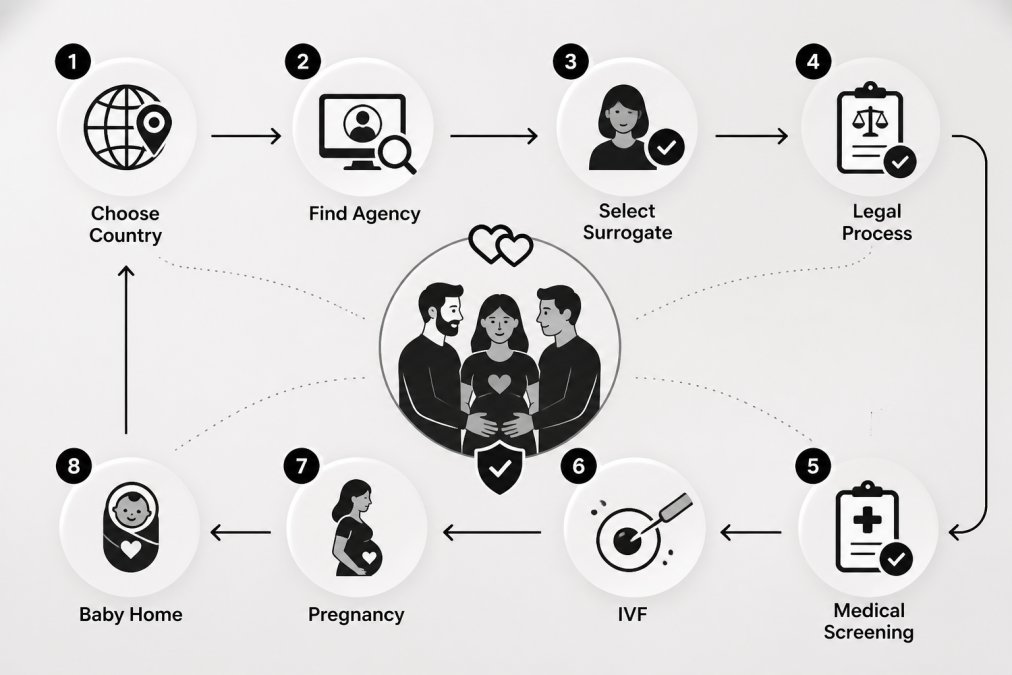
The process typically includes:
- Initial consultation and medical evaluation
- Matching with a suitable gestational surrogate
- Completion of legal contracts that protect all parties
- IVF cycle and embryo transfer
- Pregnancy monitoring and birth
- Post-birth legal steps to establish parental rights
Many Intended Parents choose Mexico because programs can begin relatively quickly. Fertility clinics work with experienced reproductive endocrinologists and have established protocols for international cases.
Legal counsel familiar with both Mexican law and your home country’s requirements is essential. Birth certificates and citizenship documentation must be handled carefully to ensure your child’s legal status is recognized when you return home.
Surrogacy Process Timeline and What to Expect
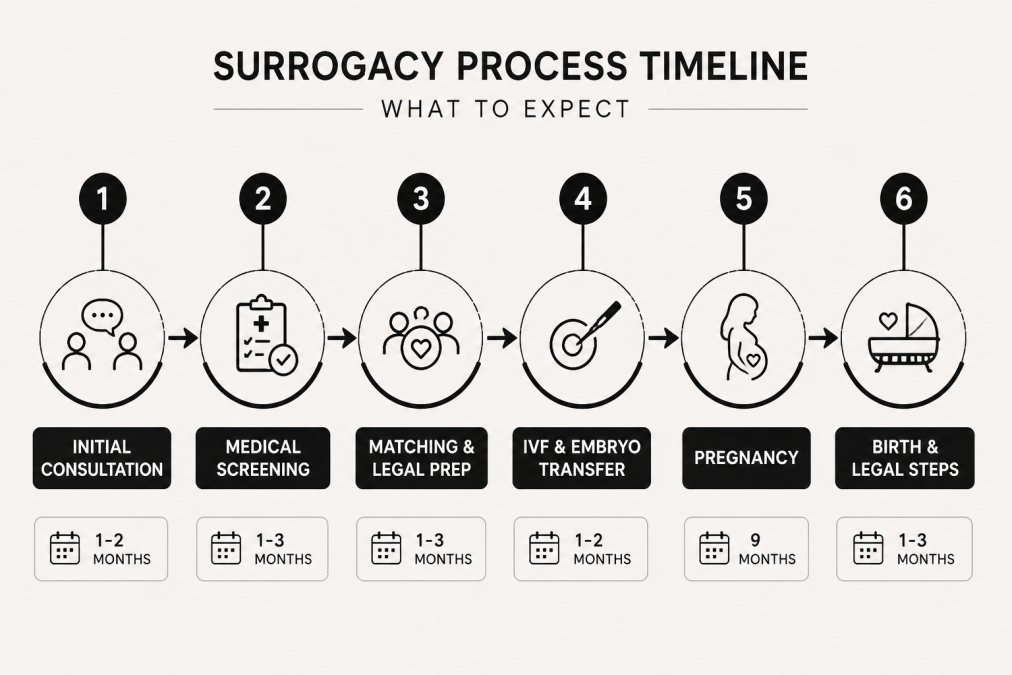
The surrogacy journey typically unfolds over 12-18 months from initial consultation to birth.
Initial Consultation and Planning (1-2 months) You meet with the surrogacy agency to discuss your family goals, medical history, and legal situation. The team assesses your readiness and explains the medical, emotional, and financial commitments ahead.
Medical Screening and Preparation (1-3 months) Both Intended Parents undergo health evaluations. If using donor eggs, the egg donor selection and screening process begins. Psychological evaluation helps ensure emotional readiness.
Matching and Legal Preparation (1-3 months) The agency matches you with a gestational surrogate whose medical profile aligns with your needs. Legal contracts are drafted and reviewed by counsel representing all parties, outlining rights, responsibilities, and post-birth procedures.
IVF Cycle and Embryo Transfer (1-2 months) The egg donor undergoes hormone stimulation and egg retrieval. Sperm is collected from one or both Intended Parents. Embryos are created and transferred into the surrogate’s uterus.
Pregnancy and Monitoring (9 months) The surrogate carries the pregnancy while fertility clinics monitor her health. Many Intended Parents maintain regular contact with the surrogate during this time.
Birth and Post-Birth Legal Steps (1-3 months after birth) After delivery, legal documentation is completed to establish parental rights, including obtaining a birth certificate and securing citizenship documents.
Finding the Right Surrogacy Agency and Next Steps
Selecting a surrogacy agency is one of the most important decisions you’ll make. The right agency provides medical coordination, legal support, and emotional guidance throughout the journey.
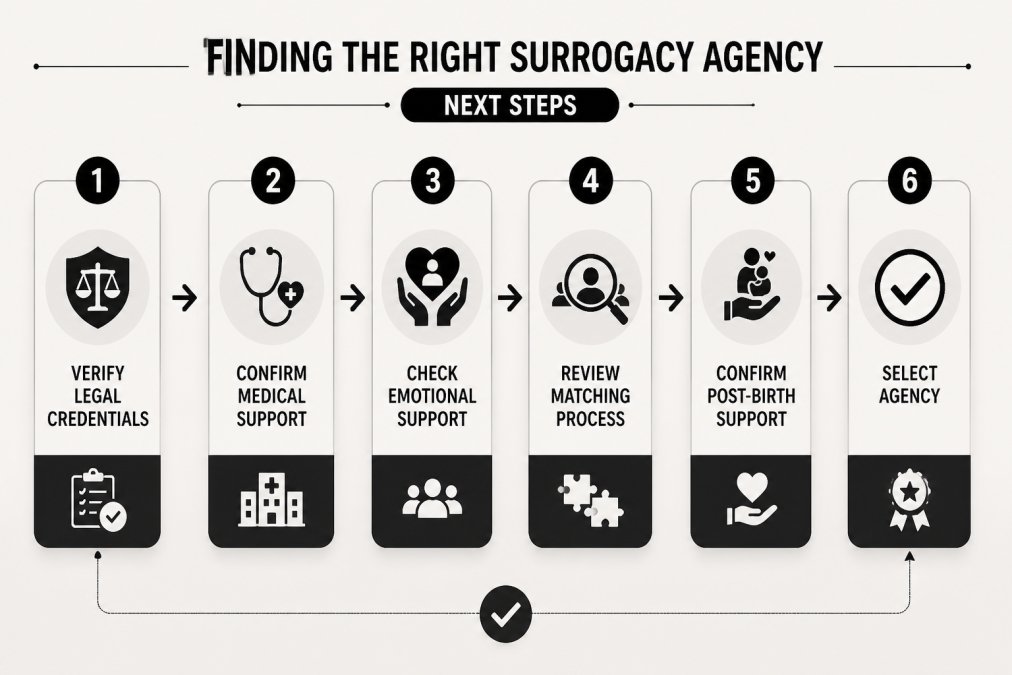
What to verify when evaluating an agency:
- Transparent communication about the entire process and realistic timelines
- Legal expertise in your home country’s surrogacy and citizenship laws
- Established relationships with fertility clinics and reproductive endocrinologists
- Psychological support services for Intended Parents and surrogates
- Clear explanation of how surrogates are screened and matched
- Honest discussion of what happens if complications arise
Questions to ask potential agencies:
- How do you screen and select gestational surrogates?
- What legal protections are in place for Intended Parents?
- How do you handle post-birth legal documentation and citizenship?
- What emotional support do you provide throughout the journey?
- What happens if the surrogate becomes unable to continue the pregnancy?
- Do you have experience with same-sex couples and diverse family structures?
Herman Family Group specializes in cross-border surrogacy for Intended Parents worldwide, including same-sex couples. The team provides personalized planning, medical coordination, and legal guidance designed for your specific situation, with comprehensive support from initial consultation through birth and beyond.
Next steps after choosing an agency:
- Schedule an initial consultation to discuss your specific situation
- Gather medical records and complete health questionnaires
- Begin the legal consultation to understand requirements in your home country
- Start the matching process once you’re ready to move forward
- Prepare emotionally and logistically for the months ahead
Building a family through surrogacy requires careful planning, legal expertise, and emotional support at every stage. Herman Family Group brings experience helping Intended Parents worldwide, offering personalized plans and comprehensive support from initial consultation through birth and beyond. Take the first step toward the family you’ve always wanted.
Frequently Asked Questions
What legal requirements apply when gay couples find a surrogate?
Legal requirements vary by location and the country where Intended Parents live. The surrogacy agreement must establish parental rights before birth. Working with a surrogacy agency that specializes in your situation ensures proper legal documentation, including securing a pre-birth order when available. A qualified legal counsel familiar with both the program location and your home country's laws is essential to protect your family's rights.
How does the surrogacy process timeline work?
The surrogacy process timeline typically includes medical screening (4-6 weeks), matching with a gestational surrogate (varies), IVF cycle preparation and embryo transfer (8-12 weeks), pregnancy (40 weeks), and post-birth legal steps. Total time from start to birth generally ranges from 12-18 months, though this varies based on individual circumstances, medical factors, and the specific surrogacy program you choose.
Are there surrogacy programs in Mexico for gay couples?
Yes, Mexico offers surrogacy programs for gay Intended Parents. These programs typically involve gestational surrogacy with egg donation and IVF. Mexican law permits intended parents to establish legal parentage through proper legal procedures. Working with an experienced surrogacy agency ensures compliance with Mexican regulations and provides support for medical, legal, and emotional aspects of your journey.
What should I look for when choosing a surrogacy agency?
Choose an agency that offers comprehensive support including medical coordination with a fertility clinic, psychological evaluation, legal counsel experienced in your situation, transparent communication, and post-birth support. Verify that the agency has experience working with gay couples, understands the specific laws in both the program location and your home country, and provides hands-on coordination rather than leaving you to manage logistics independently.
This article was written using GrandRanker