Table of Contents
- Surrogacy vs Adoption: Key Differences for Gay Couples
- International Surrogacy for Same-Sex Couples
- Surrogacy Process Steps and Legal Considerations
- Adoption as a Path to Parenthood
Last Updated: August 18, 2026
Surrogacy vs Adoption: Key Differences for Gay Couples
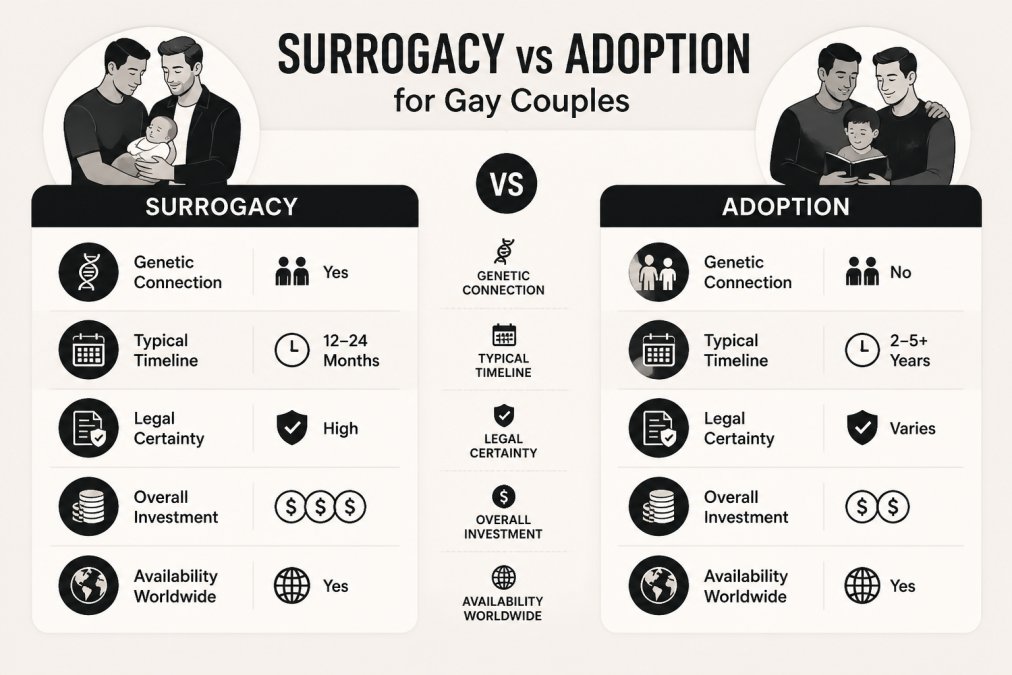
For same-sex couples building a family, the choice between surrogacy and adoption shapes not just the path to parenthood, but the legal, financial, and emotional journey ahead. Each option offers distinct advantages, and real constraints. Understanding how they differ is essential before committing to either route.
Surrogacy involves a gestational surrogate carrying a pregnancy on behalf of Intended Parents, typically using the biological material of one or both parents. Adoption, by contrast, means legally establishing parental rights over a child who already exists. For gay couples, these pathways present fundamentally different timelines, legal structures, and accessibility depending on where you live and whether you seek domestic or international options.
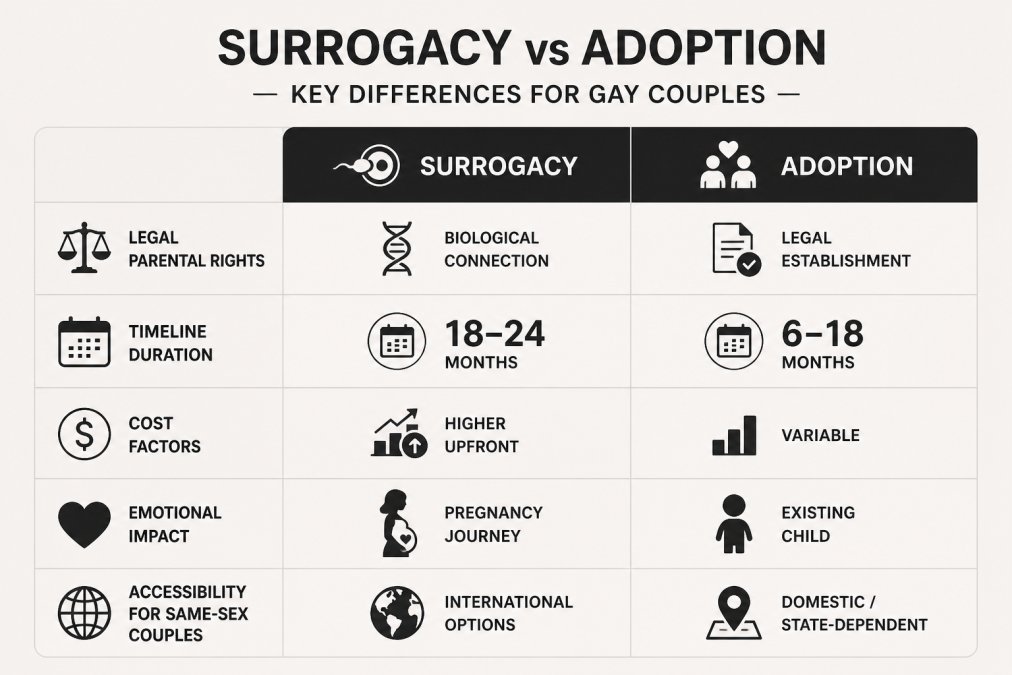
The research shows that many gay couples face different legal obstacles depending on their location. According to Family Equality Council’s resources on LGBTQ+ family building, legal recognition of same-sex parents varies significantly by jurisdiction. For Intended Parents in countries where surrogacy or adoption laws don’t explicitly protect same-sex couples, the choice becomes not just personal preference but legal necessity.
Surrogacy for Same-Sex Couples:
- Allows biological connection to at least one parent
- Requires careful selection of jurisdictions where the process is legally protected
- Involves higher upfront costs and longer timelines
- Offers more control over the pregnancy and medical decisions
Adoption for Same-Sex Couples:
- Establishes full legal parental rights through court finalization
- May involve shorter timelines in some jurisdictions
- Costs vary widely depending on adoption type and location
- Provides a child who already exists with immediate family placement needs
The decision hinges on what matters most to your family: biological connection, timeline, cost structure, or legal certainty in your home country.
International Surrogacy for Same-Sex Couples
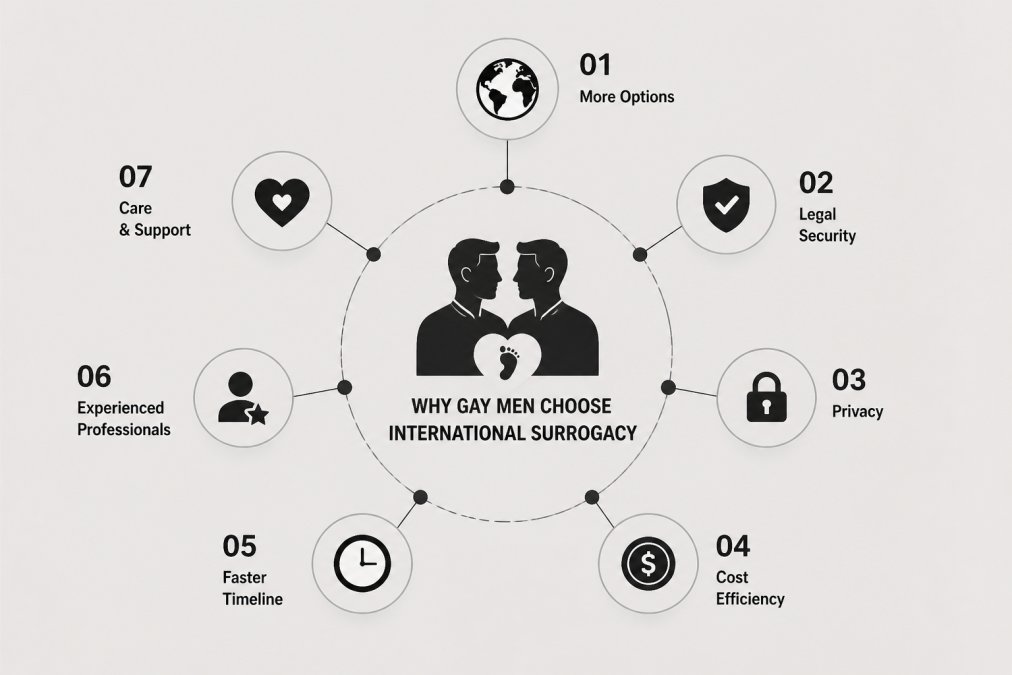
International surrogacy opens doors for same-sex couples when domestic options are limited or unavailable. Many countries restrict surrogacy based on marital status or sexual orientation, making cross-border arrangements the only viable path for some Intended Parents.
The legal landscape for international surrogacy varies dramatically. Some jurisdictions explicitly permit gestational surrogacy for same-sex couples with clear legal frameworks for parental establishment. Others operate in gray zones where the process is technically possible but lacks explicit legal protection. According to Family Equality Council’s Open Door Program certification standards, working with agencies trained in LGBTQ+ family-building practices significantly reduces legal and emotional risk.
Key considerations for international surrogacy:
Intended Parents pursuing international surrogacy must navigate medical screening, surrogate matching, in vitro fertilization, pregnancy monitoring, birth logistics, and post-birth legal finalization across borders. Each step requires coordination between fertility clinics, surrogacy agencies, and international legal counsel. The complexity increases when parental establishment, securing your legal rights as the parent, happens in a different country than your home.
Travel and presence requirements vary. Some programs require Intended Parents to be present for medical procedures, birth, and legal documentation. Others allow remote participation with agency coordination. Understanding these requirements before committing prevents surprises and additional costs.
Ethical considerations matter. Reputable agencies prioritize surrogate health, fair compensation, psychological support, and informed consent. According to American Adoptions’ guidance on ethical family building, transparency about costs, timelines, and surrogate support distinguishes ethical providers from exploitative ones.
Surrogacy Process Steps and Legal Considerations
The surrogacy journey follows a structured sequence, though timing varies by location and individual circumstances.
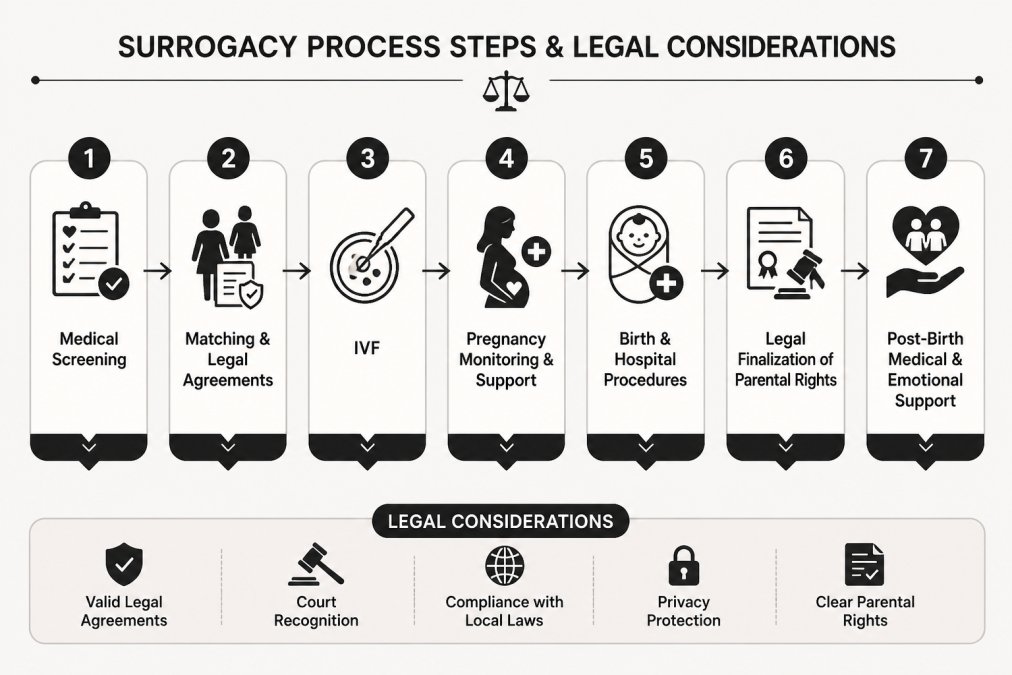
Step 1: Medical and Psychological Screening Both Intended Parents and the surrogate undergo medical evaluation to assess fertility, health status, and readiness for the surrogacy process. Psychological evaluation ensures emotional preparedness and informed consent from all parties.
Step 2: Legal Agreements and Parental Establishment Before any medical procedures begin, comprehensive legal contracts outline rights, responsibilities, and expectations. For same-sex couples, legal parental establishment, securing your name on the birth certificate or adoption decree, requires careful attention to your home country’s laws. Some jurisdictions recognize biological parenthood automatically; others require post-birth legal action. Working with lawyers experienced in both the surrogacy destination country and your home country prevents gaps in legal protection.
Step 3: In Vitro Fertilization (IVF) The Intended Parents’ biological material (or donor material, if needed) is combined to create embryos in a laboratory. The surrogate receives hormone preparation to ready her uterus for implantation.
Step 4: Embryo Transfer and Pregnancy The embryo is transferred into the surrogate’s uterus. If implantation succeeds, pregnancy progresses over nine months with regular medical monitoring and support.
Step 5: Birth and Legal Finalization At birth, legal documents establish parental rights. Depending on jurisdiction, this may happen automatically, through a court order, or through post-birth adoption. Intended Parents typically receive the birth certificate with their names listed as parents.
Step 6: Post-Birth Support Quality surrogacy programs provide ongoing medical support, parental leave resources, and emotional counseling for all parties after the baby arrives. This support extends beyond the birth, many families benefit from counseling as they adjust to parenthood and the surrogate processes her experience.
Legal obstacles for same-sex couples vary by destination. Some surrogacy-friendly jurisdictions explicitly permit same-sex parental establishment; others require additional legal steps. This is where agency expertise and legal counsel become critical. Herman Family Group specializes in navigating these legal complexities for diverse family structures, offering personalized plans that account for your specific situation and home country requirements.
Adoption as a Path to Parenthood
Adoption provides a direct legal pathway to parenthood for same-sex couples in many jurisdictions. Unlike surrogacy, adoption establishes parental rights over a child who already exists and needs a family.
Types of Adoption Available to Same-Sex Couples:
Domestic infant adoption involves adopting a newborn through licensed agencies. Many agencies now explicitly welcome same-sex couples. Financial protection against adoption disruption, a refund of fees if the adoption doesn’t proceed, provides security for Intended Parents.
Foster-to-adopt pathways allow families to foster a child and then pursue permanent adoption. This approach often involves shorter timelines than infant adoption and may have lower costs, though emotional complexity increases given the child’s prior experiences.
International adoption follows different legal frameworks depending on the country of origin. Some nations restrict adoption by same-sex couples; others have no explicit prohibition but operate with ambiguity. Careful legal research is essential before pursuing this path.
Adoption Timeline and Legal Finalization:
Domestic infant adoption typically takes six to eighteen months from initial application to legal finalization. The timeline depends on how quickly a match occurs and how quickly legal paperwork completes. Home studies, comprehensive evaluations of your home, finances, and readiness to parent, are required in most jurisdictions.
Legal finalization happens through court decree, establishing your parental rights permanently. Once finalized, adoption is legally equivalent to biological parenthood in all respects.
Adoption Accessibility for Same-Sex Couples:
Legal protections vary significantly by state and country. Some jurisdictions explicitly protect same-sex adoption; others allow it without explicit protection; a few still restrict it. Checking your specific jurisdiction’s laws before investing time and money prevents heartbreak.
According to Family Equality Council’s comprehensive adoption resources, working with LGBTQ+-affirming adoption agencies dramatically improves the experience and reduces discrimination risk. Agencies certified through Family Equality’s Open Door Program meet high standards for LGBTQ+ competency.
Adoption Costs and Financial Support:
Domestic infant adoption costs vary widely depending on the agency, adoption type, and whether a birth mother’s expenses are included. Men Having Babies (MHB) offers financial grants to eligible gay Intended Parents to help offset surrogacy costs, and also provides access to discounted adoption services through partner agencies. These grants rarely cover the entire cost but meaningfully reduce the financial burden.
Frequently Asked Questions
What are the primary differences between surrogacy and adoption for gay couples?
Surrogacy involves a birth mother carrying a pregnancy using the Intended Parents' biological material or donor eggs and sperm. Adoption involves legally becoming parents to a child already born. For gay couples, surrogacy offers biological connection and control over the pregnancy, while adoption provides immediate parenthood and established legal frameworks. Both paths require legal finalization of parental rights, but the timeline, cost factors, and emotional journey differ significantly.
How does the legal process differ for surrogacy versus adoption?
Adoption involves a home study, background checks, and court approval to establish parental rights over an existing child. Surrogacy requires legal agreements with the birth mother, medical contracts, and establishment of parental rights before birth. For same-sex couples, both paths have varying legal protections depending on location. Second-parent adoption may be necessary in some jurisdictions. Working with legal counsel experienced in LGBTQ+ family law is essential for either path.
What should Intended Parents consider when choosing between surrogacy and adoption?
Consider your timeline, financial situation, desire for biological connection, and emotional readiness. Adoption may offer shorter timelines in some cases and established legal protections. Surrogacy provides biological connection and pregnancy involvement but typically requires more time and financial planning. Your location matters significantly—some regions have more developed adoption infrastructure, while others offer more accessible surrogacy options. Consulting with both adoption agencies and surrogacy specialists helps clarify which path aligns with your family vision.
Is surrogacy ethical for gay couples?
Ethical surrogacy centers on informed consent, fair treatment of birth mothers, legal protections for all parties, and transparent practices. Reputable surrogacy agencies prioritize the well-being of birth mothers, ensure Intended Parents understand their responsibilities, and follow legal frameworks that protect everyone involved. Organizations like Family Equality Council work to advance ethical standards for LGBTQ+ family building. Choosing an agency with strong ethical practices and legal oversight ensures your surrogacy journey respects all parties.
What support is available for Intended Parents during the surrogacy process?
Comprehensive support includes medical screening, psychological evaluation, legal guidance, and emotional counseling throughout the journey. Specialized agencies provide matching services, coordinate between medical providers and legal teams, and offer post-birth support. Organizations like Men Having Babies offer financial assistance and community connection for gay men. Family Equality Council connects families with LGBTQ-affirming providers. Post-placement support helps Intended Parents adjust to parenthood and bond with their child after birth.
This article was written using GrandRanker