Table of Contents
- Understanding the Secure Surrogacy Process for Parents
- International Surrogacy Laws and Legal Requirements
- Finding a Surrogate Mother: The Matching Process
- Surrogacy Medical Procedures and Embryo Transfer
Secure Surrogacy Process for Parents: A Step-by-Step Guide
Last Updated: July 31, 2026
Understanding the Secure Surrogacy Process for Parents
Gestational surrogacy means a surrogate carries a pregnancy using an embryo created from the Intended Parents’ genetic material (or donated eggs and sperm). The surrogate has no biological connection to the child, she is the gestational carrier only.
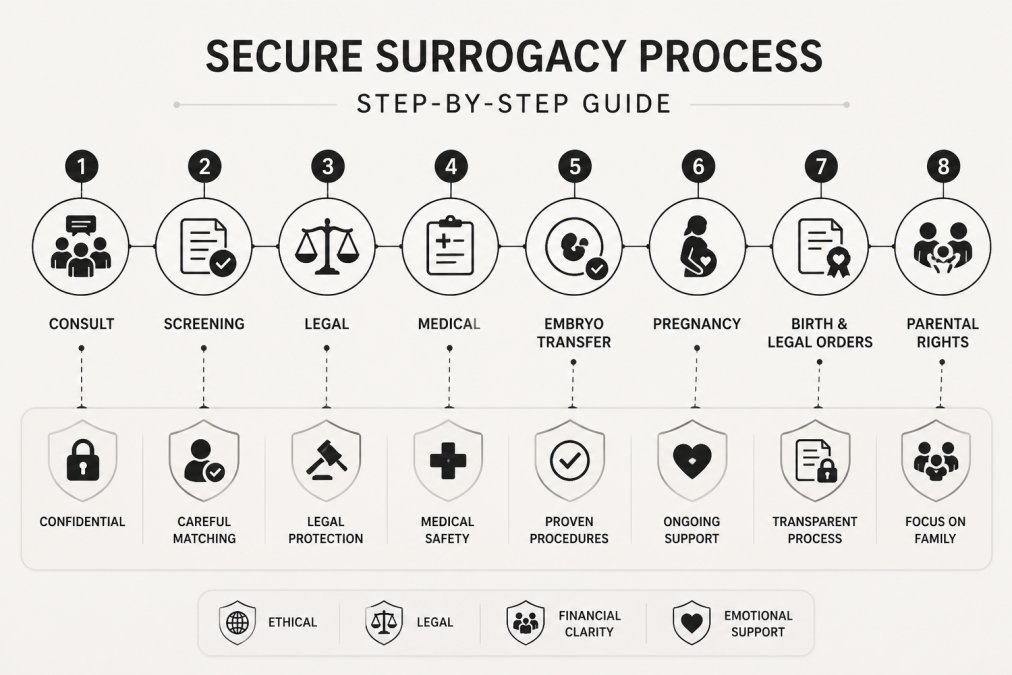
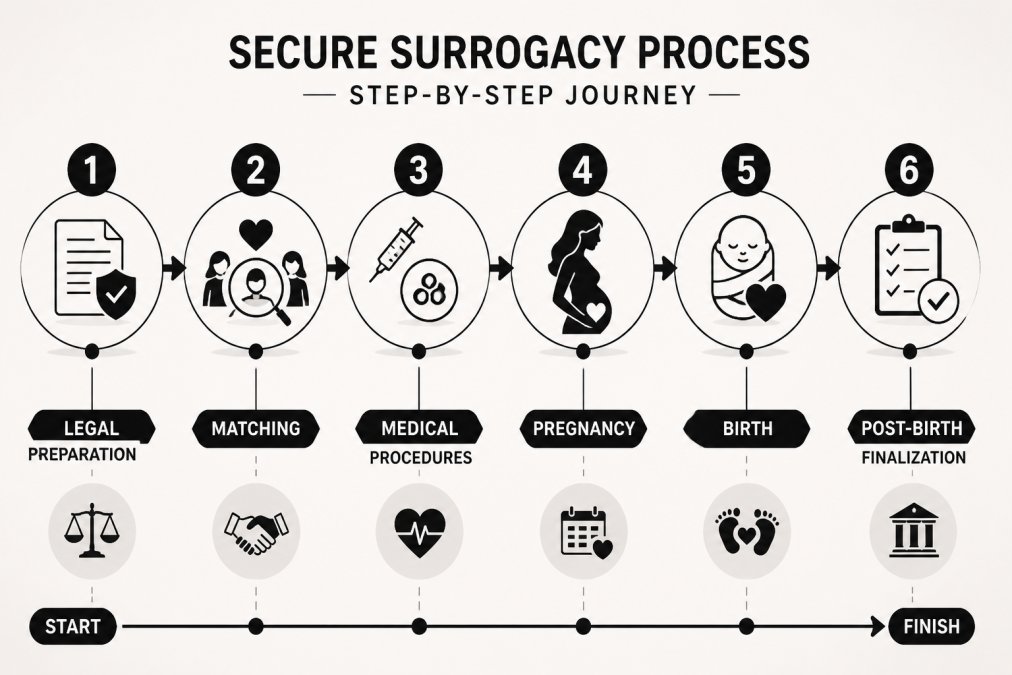
The secure surrogacy process unfolds in distinct phases: legal preparation, finding and matching with a surrogate, medical screening and evaluation, embryo transfer and pregnancy, and post-birth legal finalization.
Herman Family Group specializes in cross-border surrogacy in legally sound destinations to ensure a safe, ethical, and successful journey for diverse family structures, including single parents and couples.
International Surrogacy Laws and Legal Requirements
Understanding surrogacy laws in your destination country is essential. Each country where Herman Family Group operates has different legal structures that directly affect your parental rights and your child’s citizenship.
Ukraine allows gestational surrogacy for married couples. The Intended Parents’ names can appear on the birth certificate before the child leaves the hospital, one of the clearest legal pathways available internationally.
Czechia permits gestational surrogacy under specific conditions. Parental rights are established through post-birth court approval, typically taking several weeks after birth.
Mexico allows surrogacy in certain states with established legal frameworks. Parental rights are secured through legal documentation before or shortly after birth, depending on state requirements.
Armenia has surrogacy laws that permit gestational carriers to participate in family-building arrangements, with legal protections for Intended Parents in place.
The secure surrogacy process requires legal counsel in both your home country and your destination country. Your home country’s laws determine how you bring your child back and establish citizenship. Your destination country’s laws determine your rights during pregnancy and at birth. Herman Family Group coordinates with experienced reproductive law specialists in each location to ensure your parental rights are protected.
Finding a Surrogate Mother: The Matching Process
The matching process prioritizes safety, transparency, and genuine compatibility.
Step 1: Surrogate Screening We work with vetted gestational carriers who have completed medical and psychological evaluations. Each surrogate undergoes background checks, health screening, and psychological assessment. The carrier must have had at least one successful pregnancy and birth, which reduces medical risk.
Step 2: Matching Criteria You’ll provide information about your preferences: location, language, and lifestyle factors. We match based on compatibility and practical fit.
Step 3: Meeting and Agreement Once matched, you’ll communicate with your surrogate and review the surrogacy agreement, a legal contract outlining everyone’s responsibilities, medical decisions, communication during pregnancy, and financial arrangements.
Step 4: Relationship Building Before the embryo transfer, many Intended Parents and surrogates develop a genuine relationship. Some share updates regularly; others prefer less frequent contact. The process respects these preferences while ensuring clear communication.
Surrogacy Medical Procedures and Embryo Transfer
The medical side of surrogacy involves coordinated care between fertility clinics, the gestational carrier, and your medical team.
Embryo Creation If you’re using your own eggs and sperm, the process begins with in vitro fertilization (IVF). Your eggs are retrieved, fertilized in the laboratory, and allowed to develop for 5-6 days until they reach blastocyst stage.
Surrogate Preparation While your embryos develop, the surrogate undergoes hormone treatment to prepare her uterus for implantation. This involves estrogen and progesterone medication over 1-2 weeks, with ultrasound monitoring to confirm readiness.
Embryo Transfer The embryo transfer is a simple outpatient procedure. The doctor uses ultrasound guidance to place the embryo into the surrogate’s uterus in about 15 minutes.
Pregnancy Confirmation A blood test 10-12 days after transfer confirms pregnancy by measuring human chorionic gonadotropin (hCG). An ultrasound 2 weeks later confirms normal development in the uterus.
Ongoing Pregnancy Care The surrogate receives regular prenatal care from her local obstetrician. You’ll receive updates on appointments, ultrasounds, and pregnancy progress as established in your surrogacy agreement.
Medical Phase | Duration | Key Milestone |
|---|---|---|
Egg retrieval & IVF | 2-3 weeks | Embryos reach blastocyst stage |
Surrogate uterine prep | 1-2 weeks | Uterine lining confirmed ready |
Embryo transfer | 1 day | Embryo placed in uterus |
Pregnancy confirmation | 10-12 days | hCG blood test positive |
First ultrasound | 2 weeks post-transfer | Fetal heartbeat visible |
Herman Family Group works with established fertility clinics in each country and ensures your medical records are shared securely with all necessary providers.
Post-Birth Legal Finalization
Post-birth legal work is critical, this is when your parental rights are formally recognized and your child’s legal status is established.
Obtaining the Birth Certificate In some countries (like Ukraine), your names appear on the birth certificate at birth. In others (like Czechia and Mexico), a court order later transfers parental rights to you.
Citizenship and Passport Your child’s citizenship depends on your citizenship and the laws of your home country. Most countries grant citizenship to children born to their citizens abroad. You’ll apply for a passport through your country’s embassy or consulate, typically taking 2-4 weeks.
Coming Home Before you travel with your newborn, you need travel documents. Your country’s embassy will issue a passport or travel permit. Airlines require proof of parental relationship before allowing you to board with the infant.
Updating Legal Documents at Home Once you return home, you may need to register your child’s birth with local authorities. Your home country’s laws determine this process.
Emotional Support Throughout the Journey
The secure surrogacy process is not just logistical, it’s emotional. Intended Parents often experience joy, anxiety, hope, and uncertainty all at once.
Many Intended Parents have spent years trying to conceive. By the time they pursue surrogacy, they’ve grieved the loss of a biological pregnancy. Starting this new path can feel vulnerable. Some worry about bonding with a child they didn’t carry. These feelings are normal and valid.
Psychological support helps. Herman Family Group connects Intended Parents with counselors experienced in reproductive medicine and family-building. Communication with your surrogate also matters. When Intended Parents and surrogates feel genuinely connected, the entire experience feels more secure and meaningful.
Building your family through surrogacy requires expert coordination across medicine, law, and logistics. Herman Family Group provides comprehensive support from initial planning through birth and beyond, managing medical appointments, legal documentation, surrogate coordination, and emotional support in one seamless process. Create My Plan with Herman Family Group today and take the first step toward bringing your child home.
Frequently Asked Questions
What are the key steps in a secure surrogacy process?
The secure surrogacy process includes: legal consultation and surrogacy agreement preparation, medical screening of both Intended Parents and gestational carrier, psychological evaluation, in vitro fertilization and embryo transfer, pregnancy monitoring, birth coordination, and post-birth legal finalization. Each step protects parental rights and ensures informed consent from all parties. Working with experienced legal counsel throughout ensures your family's protection.
How do international surrogacy laws protect Intended Parents?
International surrogacy laws vary by country, but protection typically comes through formal surrogacy agreements, pre-birth or post-birth legal orders that establish parental rights, and documentation of the embryo transfer process. Legal counsel specializing in your specific country's laws ensures your parental rights are recognized before and after birth. This includes securing birth certificates and citizenship documentation for your child.
What medical screenings happen before finding a surrogate mother?
Medical screening for Intended Parents typically includes reproductive health assessment, infectious disease testing, and general health evaluation. The gestational carrier undergoes comprehensive medical clearance, including uterus and fertility assessment, infectious disease screening, and general health screening. Psychological evaluation is also standard to ensure all parties understand the surrogacy journey and can provide informed consent.
What happens after birth in the secure surrogacy process?
Post-birth legal finalization includes obtaining a birth certificate with Intended Parents listed as parents, securing citizenship documentation, and completing any remaining legal requirements in your home country. This process varies by location but is essential for parental recognition and your child's legal security. Working with experienced legal counsel ensures all documentation is properly filed and recognized internationally.
This article was written using GrandRanker