Table of Contents
- What Is a Surrogacy Agency Fee?
- International Surrogacy Cost Breakdown
- Surrogacy Program Transparency and Fee Models
- Planning Your Surrogacy Budget
Last Updated: August 17, 2026
What Is a Surrogacy Agency Fee?
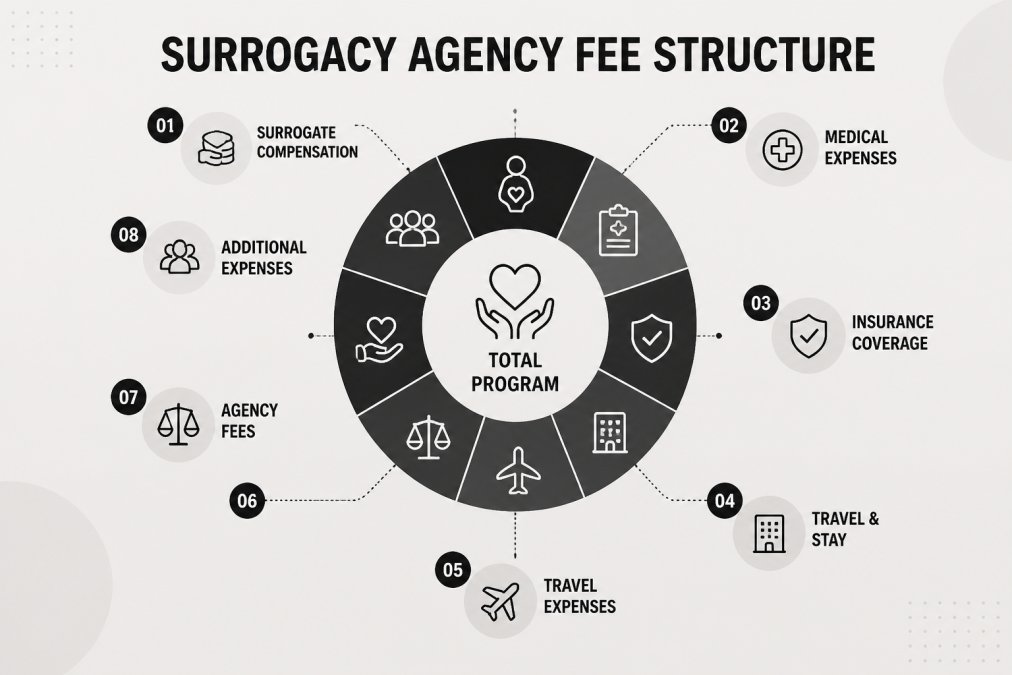
A surrogacy agency fee structure is the breakdown of costs that Intended Parents pay to an agency for coordinating their surrogacy journey. These fees cover the agency’s services, matching Intended Parents with a gestational carrier, managing legal representation, coordinating with fertility clinics, and providing emotional support throughout the process.
Understanding what’s included in these fees is essential because surrogacy involves multiple parties and complex logistics. An agency fee typically represents a significant portion of the total surrogacy program cost, but it’s distinct from other expenses like medical care, surrogate compensation, and travel.
The key difference between agencies comes down to transparency. Some agencies use fixed program fees, meaning Intended Parents know upfront what they’re paying for agency services. Others use variable cost models where certain expenses are billed separately. Herman Family Group emphasizes transparent pricing with no hidden fees, so Intended Parents understand exactly what their agency coordination covers before committing to a program.
International Surrogacy Cost Breakdown
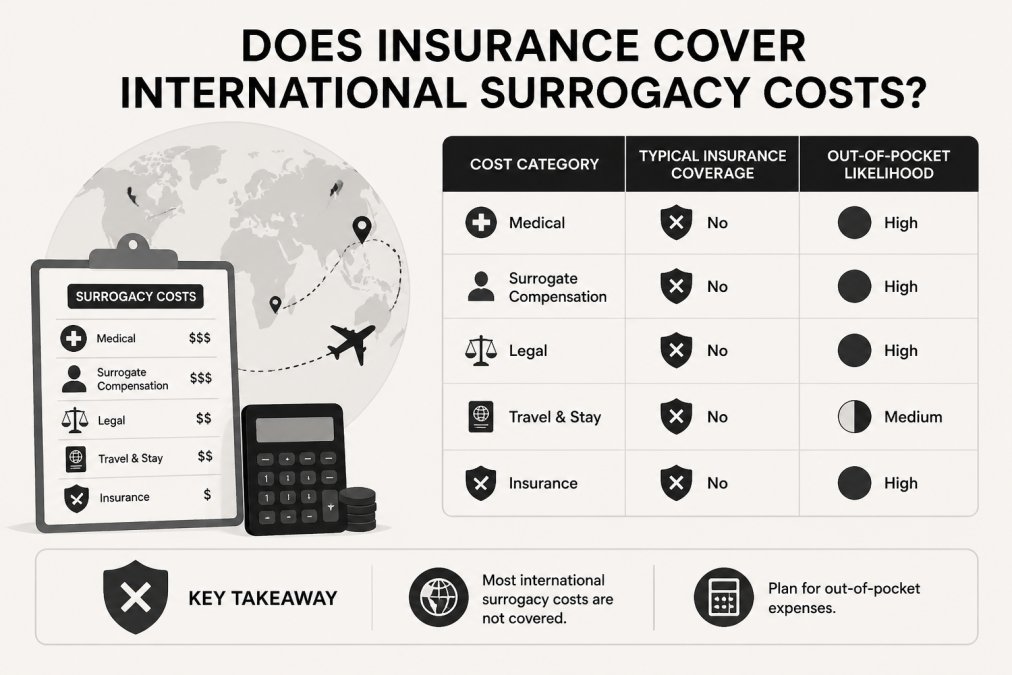
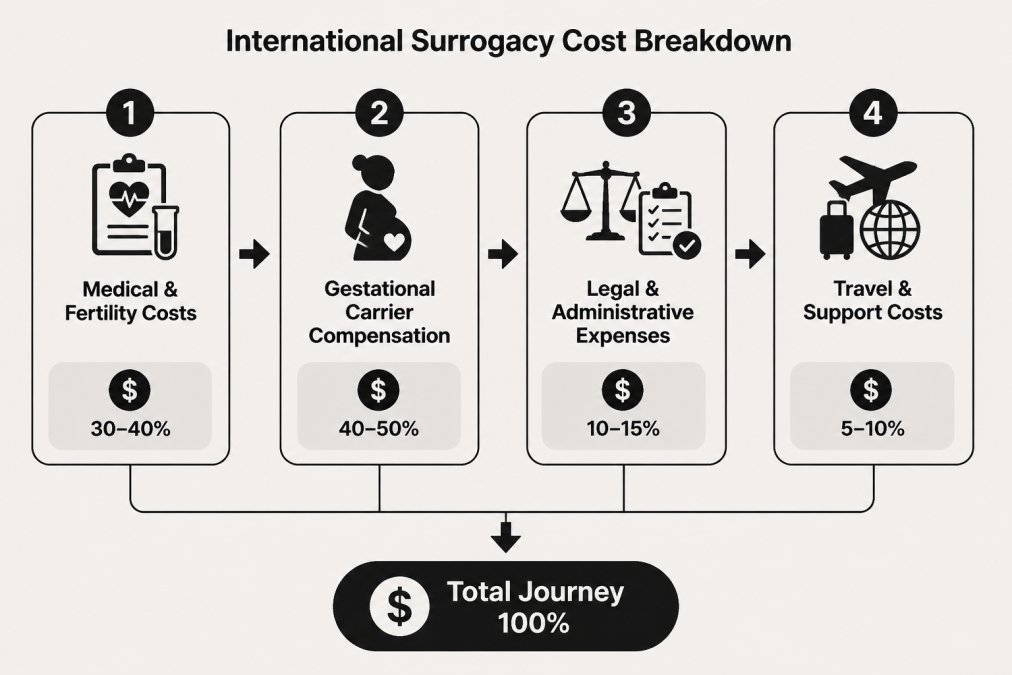
When Intended Parents pursue international surrogacy, the total program cost includes several distinct categories beyond just the agency fee. Medical expenses cover fertility clinic services, embryo creation, and pregnancy monitoring. Surrogate compensation includes base fees, maternity clothing allowance, and lost wage reimbursement during her surrogacy journey. Legal costs cover contracts, parentage establishment, and citizenship documentation. Travel and accommodation expenses account for flights, housing, and meals during required visits.
The medical component typically involves initial consultations, egg retrieval if using the Intended Parent’s egg, embryo transfer, and ongoing prenatal care. These services are provided by fertility clinics that partner with surrogacy agencies. The costs vary based on the clinic’s location and the complexity of the fertility treatment needed.
Surrogate compensation is separate from agency fees. It covers the gestational carrier’s time, physical effort, and the risks she accepts during pregnancy. This is distinct from reimbursable expenses like maternity clothing or transportation to medical appointments. The amount of surrogate compensation depends on local laws and practices in the surrogacy destination.
Legal representation ensures that contracts protect both Intended Parents and the gestational carrier. Lawyers draft surrogacy agreements, handle parentage establishment, and manage immigration and citizenship paperwork so the child can be legally recognized as the Intended Parents’ child. This legal infrastructure is particularly important in international surrogacy because it involves multiple jurisdictions.
Travel expenses are often underestimated by first-time Intended Parents. Most surrogacy journeys require at least two visits to the surrogacy destination, one for embryo transfer and one for birth. Some Intended Parents choose to be present for additional appointments or to spend time with the gestational carrier and support her during pregnancy.
Surrogacy Program Transparency and Fee Models
Transparency in surrogacy program pricing means Intended Parents receive a clear, itemized list of what their fees cover and what costs are separate. This protects Intended Parents from surprise expenses mid-journey and allows them to budget accurately.
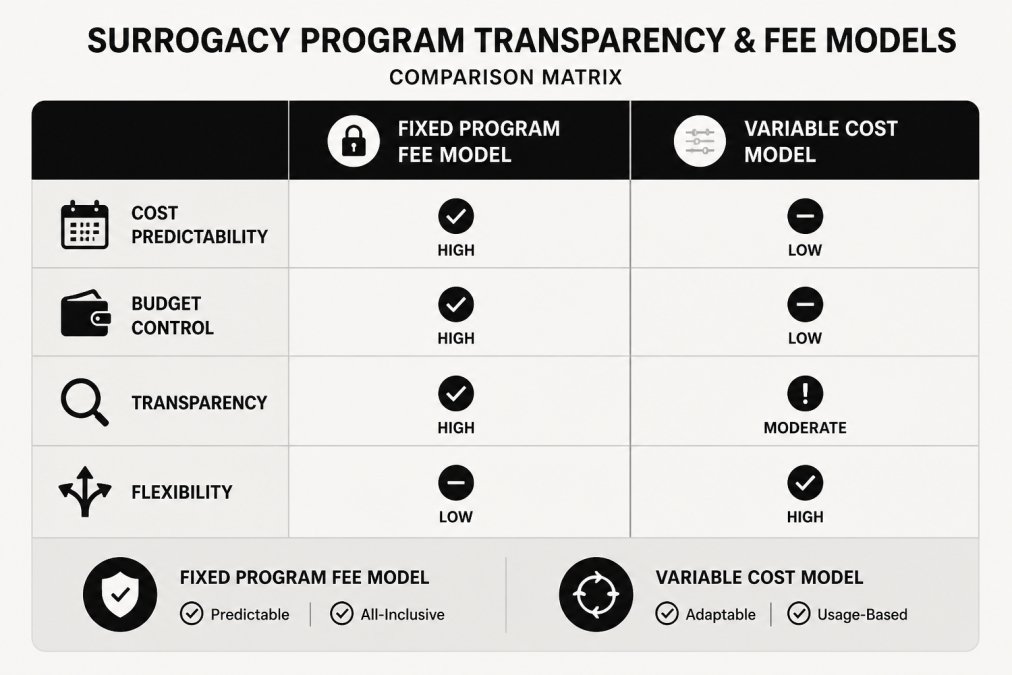
Fixed program fees bundle agency services into one price. Everything the agency provides, screening and matching the gestational carrier, coordinating with the fertility clinic, managing legal representation, and providing emotional support, is included in that single fee. This model offers predictability. Intended Parents know their agency costs upfront and can plan their budget accordingly.
Variable cost models itemize each service. Screening fees, matching fees, coordination fees, and support services are billed separately. This approach can be transparent too, but it requires careful attention to the contract to ensure no fees are hidden. Intended Parents may face unexpected charges if the contract doesn’t clearly define what each service costs.
The most important question to ask any agency is: “What happens if something goes wrong?” Some agencies include support for failed cycles in their fees. Others charge additional fees if a surrogate miscarries or if a cycle needs to be repeated. Understanding these contingencies prevents financial surprises during an already emotionally difficult situation.
Herman Family Group’s commitment to transparent pricing means Intended Parents understand exactly what their fees cover, with no hidden charges appearing later in the process. This approach reduces stress and allows families to focus on the emotional aspects of their surrogacy journey rather than worrying about unexpected costs.
Planning Your Surrogacy Budget
Creating a realistic surrogacy budget requires understanding all cost categories and building in flexibility for unexpected expenses. Start by requesting a detailed cost breakdown from any agency you consider. This breakdown should separate agency fees from medical costs, surrogate compensation, legal fees, and travel expenses.
Many Intended Parents find it helpful to create a spreadsheet tracking each cost category. List the fixed costs (agency fee, surrogate compensation base amount) separately from variable costs (additional medical procedures, travel expenses). This visual representation helps identify where costs might increase or where savings are possible.
Consider the timeline when budgeting. Most surrogacy journeys take 18-24 months from initial consultation to birth. Some costs are paid upfront, while others are spread across the program. Understanding the payment schedule helps with cash flow planning. Some agencies accept installment payments, which can ease the financial burden compared to paying everything at once.
Build contingency funds into your budget. Medical complications, additional travel, or unexpected legal fees can arise. Many financial advisors recommend setting aside 10-15% additional funds beyond your initial budget estimate. This safety net prevents financial stress if circumstances change during the surrogacy journey.
Intended Parents should also ask agencies about their refund policies. If a cycle fails or if the surrogate cannot continue the pregnancy, what happens to the fees already paid? Some agencies credit fees toward a new cycle. Others have different policies. Understanding these terms prevents misunderstandings and protects your financial investment.
Understanding the surrogacy agency fee structure helps Intended Parents to make informed decisions about their family-building journey. Clear fees, transparent pricing, and detailed cost breakdowns reduce financial anxiety and allow families to focus on the emotional aspects of surrogacy. Herman Family Group provides comprehensive support with transparent fee structures designed to eliminate hidden costs, so Intended Parents can move forward with confidence knowing exactly what their investment covers. Create My Plan and begin your surrogacy journey with clarity and expert guidance every step of the way.
Frequently Asked Questions
What exactly is included in a surrogacy agency fee?
A surrogacy agency fee typically covers coordination services such as surrogate screening and matching, legal representation, medical oversight, and administrative support throughout the journey. The agency acts as the operational infrastructure connecting Intended Parents with fertility clinics, surrogates, and legal professionals. Transparent agencies clearly itemize what their fixed program fee includes so you understand which costs are covered and which are separate expenses like medical procedures or travel.
How does the international surrogacy cost breakdown work?
The international surrogacy cost breakdown includes several components: fertility clinic and medical procedures, surrogate compensation and her pregnancy-related expenses, legal fees for contracts and parentage establishment, agency coordination fees, and travel or support costs. Each component varies based on the program location and individual circumstances. Understanding this breakdown helps Intended Parents budget accurately and identify where their money goes at each stage of the surrogacy journey.
Are there hidden costs in surrogacy programs?
Reputable agencies with surrogacy program transparency disclose all costs upfront. However, some expenses may be unexpected if not clearly explained, such as travel for legal clearance appointments, additional medical procedures, or maternity clothing allowances for the surrogate. A transparent agency provides a detailed list of fixed and variable costs, explains what triggers additional expenses, and answers questions about out-of-pocket costs before you commit to the program.
How can I ensure I'm working with a transparent surrogacy agency?
Look for an agency that provides a written breakdown of all fees, explains the difference between fixed program fees and variable costs, and answers specific questions about what happens if complications arise. Transparent agencies discuss factors influencing total cost, explain how they manage funds, and provide references from Intended Parents who have completed their journey. Ask about their fee structure comparison by program location and request details on payment schedules before signing any agreement.
This article was written using GrandRanker