Table of Contents
- How to Find Ethical Surrogacy Agencies: Key Steps
- Surrogate Screening Process: What Ethical Agencies Do
- Legal Aspects of Ethical Surrogacy: Essential Protections
- Surrogacy Agency Checklist: Red Flags and Green Lights
Last Updated: July 21, 2026
Finding a trustworthy surrogacy agency is one of the most important decisions Intended Parents will make on their path to building a family. The stakes are high, emotionally, legally, and financially. This guide explains how to find ethical surrogacy agencies by walking you through key evaluation criteria, red flags to watch for, and questions you should ask before committing to any program.
How to Find Ethical Surrogacy Agencies: Key Steps
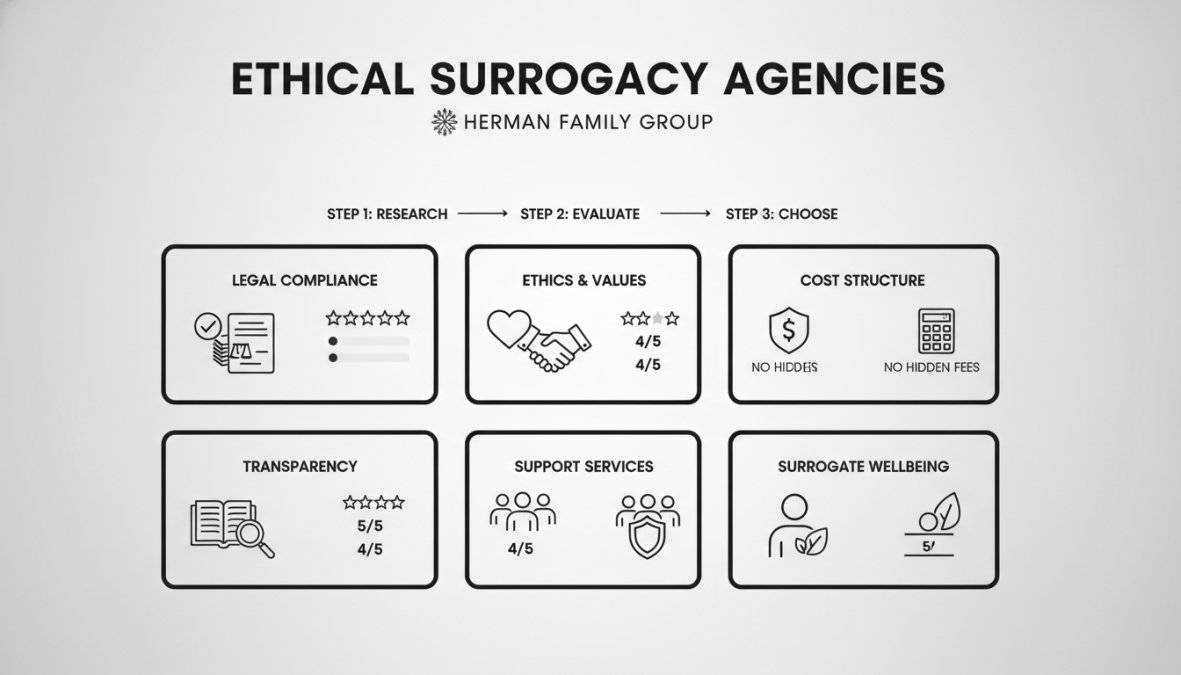
Start by researching agencies that specialize in your specific situation, domestic, international, or cross-border surrogacy. Look for transparent websites, clear contact information, and publicly available information about legal frameworks and screening processes.
Verify credentials and affiliations. Ethical agencies hold memberships in professional organizations, maintain proper licensing, and provide references from past Intended Parents. Request at least three references and contact them.
Request detailed documentation about their process, including legal protections, medical protocols, and contingency plans for every phase from surrogate matching through post-birth support.
Schedule a consultation with the agency’s director or case manager. Pay attention to how they answer your questions. Do they rush you or pressure quick decisions? Ethical agencies take time to understand your family structure and customize their approach.
Compare multiple agencies before deciding. Get proposals from at least three providers and compare timelines, support structures, cost transparency, and how they handle each phase.
Surrogate Screening Process: What Ethical Agencies Do
Ethical surrogacy agencies maintain rigorous screening protocols to protect both Intended Parents and surrogates. Comprehensive screening should include medical evaluation, psychological assessment, background checks, and legal review.
Medical screening covers reproductive health history, current health status, infectious disease testing, and genetic screening when relevant. Reputable agencies require surrogates to have completed at least one prior pregnancy successfully and verify adequate health insurance.
Psychological evaluation by licensed mental health professionals assesses whether the surrogate understands the emotional complexity, has realistic expectations, and has adequate support systems.
Legal screening ensures the surrogate has independent legal representation, understands contract terms, and has agreed voluntarily.
Legal Aspects of Ethical Surrogacy: Essential Protections
Legal protections are the backbone of ethical surrogacy. Understand the laws in your jurisdiction and the surrogate’s jurisdiction, as they vary dramatically by country, state, and region.
Ethical agencies ensure Intended Parents have a written surrogacy agreement drafted by qualified family law attorneys. This agreement specifies parentage rights, medical decision-making authority, financial obligations, confidentiality terms, and dispute resolution procedures. Both parties must have independent legal representation.
The agreement must address difficult scenarios: surrogate change of mind before birth, Intended Parents’ inability to accept the child, pregnancy complications, or surrogate health emergencies.
For cross-border surrogacy, citizenship and immigration laws are critical. Ethical agencies specialize in their destination countries and understand how to navigate citizenship, birth certificates, and parental recognition.
Surrogacy Agency Checklist: Red Flags and Green Lights
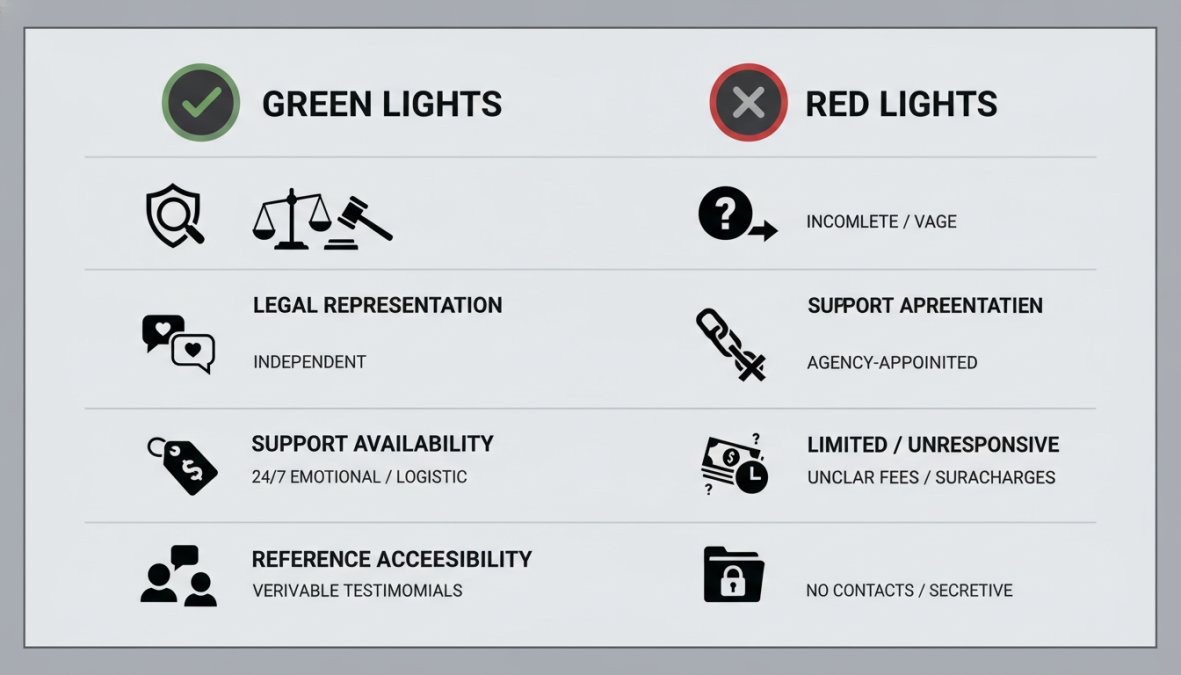
Use this checklist to evaluate whether an agency operates ethically.
Evaluation Area | Green Lights (Ethical) | Red Flags (Warning Signs) |
|---|---|---|
Transparency | Clear pricing with no hidden fees; written process documentation; readily available contact info | Vague pricing; pressure to decide quickly; difficult to reach leadership |
Screening | Comprehensive medical, psychological, legal, and background checks for surrogates | Minimal screening; no psychological evaluation; fast-tracked matching |
Legal Framework | Independent attorneys for both parties; written surrogacy agreements; clear parentage protections | No mention of legal representation; verbal agreements; unclear parentage rights |
Support Services | Medical support throughout pregnancy; emotional counseling for all parties; post-birth assistance | Minimal support after matching; no counseling offered; hands-off approach |
References | Provides multiple past client references; willing to connect you with previous Intended Parents | No references available; refuses to share client testimonials; evasive about outcomes |
Experience | Specializes in your specific situation; decade+ of operations | New agency; generalist approach; limited track record |
Communication | Responsive to questions; explains processes clearly; respects your timeline | Slow to respond; dismissive of questions; pressure tactics |
Financial Practices | Transparent fee breakdown; explains what each cost covers; no surprise charges | Bundled costs; hidden fees appear later; pressure to pay upfront |
Questions to Ask Every Agency:
- How do you screen surrogates? Listen for detail about medical evaluation, psychological assessment, background checks, and prior pregnancy requirements.
- What legal protections do Intended Parents have? They should explain independent legal representation, written agreements, and how parentage is established.
- What happens if something goes wrong? Ask about complications, health emergencies, surrogate change of mind, and Intended Parent withdrawal.
- How much ongoing support do you provide? Ask about medical coordination, emotional support, communication between parties, and post-birth assistance.
- Can I speak with previous clients? Reputable agencies encourage this. If they refuse, that’s a major red flag.
- What are your total costs and what do they cover? Request an itemized breakdown.
- How do you handle international cases? They should explain citizenship, immigration, and birth certificate processes clearly.
- What’s your success rate and timeline? They should be honest about realistic timelines rather than making guarantees.
- Do you specialize in my family structure? Ethical agencies affirm they serve single parents, same-sex couples, and diverse family structures.
- What happens after the baby is born? Ask about legal documentation, support transitioning to parenthood, and ongoing availability.
Ethical surrogacy agencies prioritize transparency, legal protection, comprehensive screening, and ongoing support. When you evaluate agencies, trust your instincts. If something feels off, pressure tactics, vague answers, or unwillingness to provide references, move on. The right agency will respect your questions, provide clear answers, and demonstrate genuine commitment to your family’s wellbeing. Choose an agency that specializes in your situation, provides transparent pricing with no hidden fees, and offers comprehensive support from planning through birth and beyond.
Frequently Asked Questions
What defines an ethical surrogacy agency?
An ethical surrogacy agency prioritizes transparency, legal compliance, and the wellbeing of both Intended Parents and surrogates. It provides clear contracts, conducts thorough surrogate screening, offers comprehensive medical and emotional support, maintains no hidden fees, and operates in legally sound jurisdictions. Ethical agencies respect informed consent, ensure fair surrogate compensation, and provide ongoing support through birth and beyond.
What questions should I ask when evaluating a surrogacy agency?
Ask about their surrogate screening process, legal protections in your destination country, what medical and emotional support is included, how they handle complications, their experience with your family structure, their track record and success rates, how they ensure transparency in costs, and what happens if issues arise during pregnancy or after birth. Request references from previous Intended Parents and verify their credentials and memberships.
What are the main red flags when choosing a surrogacy agency?
Watch for agencies that lack transparency about costs, promise unrealistic timelines, have no verifiable track record, don't conduct thorough surrogate screening, operate in countries with unclear legal protections, pressure you into quick decisions, offer significantly lower pricing than competitors, lack proper legal representation, or avoid answering direct questions about their process and experience.
How can I verify the legal aspects of ethical surrogacy in my situation?
Verify that the agency has specialized lawyers in your specific country's laws, not just general international experience. Request written documentation of parental rights protections, citizenship pathways for the child, and contracts reviewed by independent legal counsel. Confirm the agency operates in legally recognized destinations. Ask for case studies showing successful legal outcomes similar to your family situation, and ensure all legal processes are explained clearly before you commit.
What should transparent pricing for ethical surrogacy include?
Transparent pricing should itemize all costs upfront: medical procedures, surrogate compensation, legal fees, agency coordination, insurance, and support services. Ethical agencies disclose what happens if complications arise and whether additional costs may occur. They explain their no-hidden-fee policy clearly and provide written breakdowns. Request detailed comparisons and ask specifically about potential additional expenses. Verify pricing matches their published rates and that all promises are documented in writing.
This article was written using GrandRanker