Table of Contents
- When Surrogacy Is Not Recognized Abroad: Immediate Legal Consequences
- International Surrogacy Legal Requirements and Parentage Recognition
- Legal Parentage in Surrogacy: Establishing Rights Across Borders
- Protecting Your Family: Steps to Ensure Recognition and Citizenship
- Frequently Asked Questions
Last Updated: August 31, 2026
When Surrogacy Is Not Recognized Abroad: Immediate Legal Consequences
When surrogacy isn’t legally recognized in your home country, the consequences are serious. You may have no legal parental rights, the child’s citizenship becomes uncertain, and travel home with your newborn can be blocked at borders. (Source: U.S. Department of State’s guidance on Consular Reports of Birth Abroad)
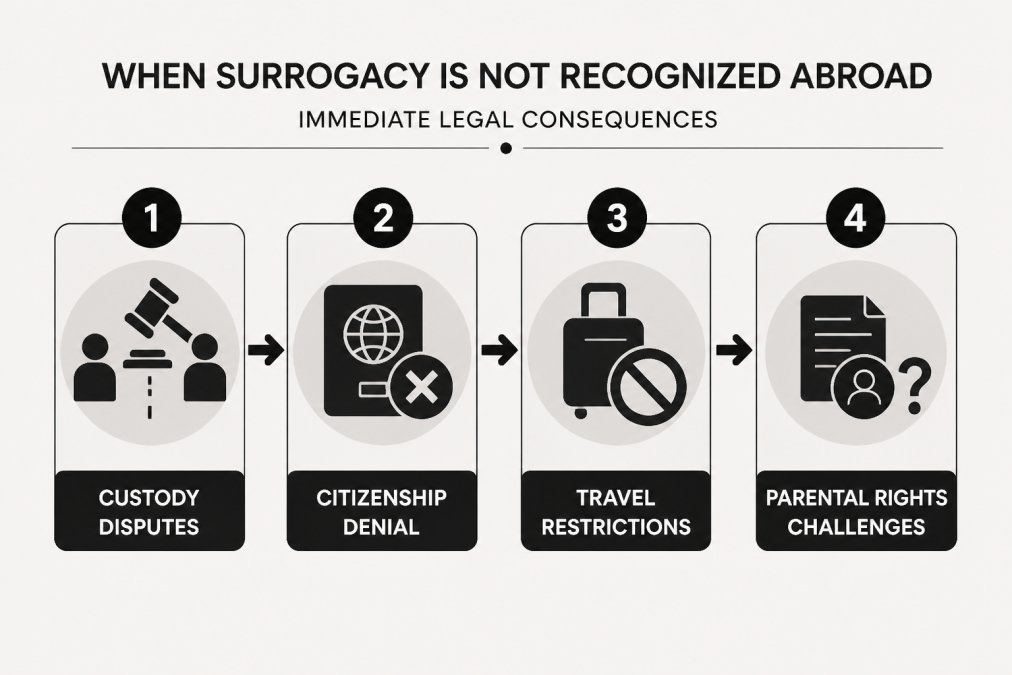
Without legal recognition, you have no automatic parental rights. The surrogate may be listed as the mother on the birth certificate. You cannot make medical decisions for the child or authorize treatment. If the surrogate changes her mind, she can claim custody.
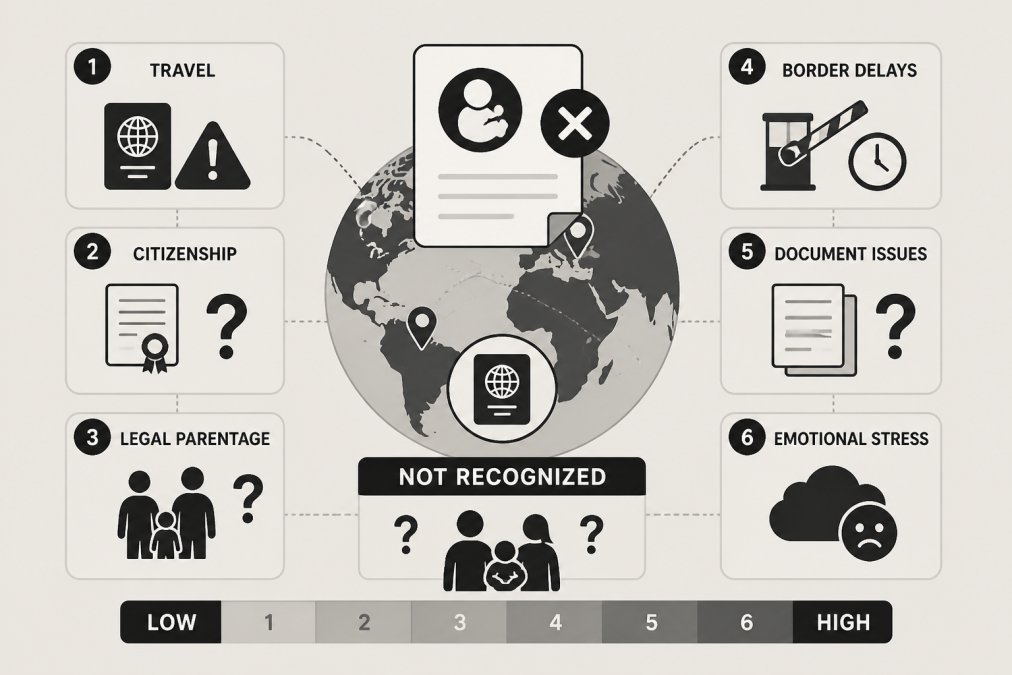
Citizenship is equally precarious. Many countries deny citizenship to children born via surrogacy if the Intended Parents aren’t genetically related or if surrogacy isn’t recognized locally. Your child may be stateless, holding no passport, unable to travel or access education or healthcare in most countries.
Travel home becomes impossible. Border agents will question how you obtained the child. Without a recognized legal relationship, you cannot prove guardianship.
International Surrogacy Legal Requirements and Parentage Recognition
Legal parentage in surrogacy varies by country. Some nations recognize gestational surrogacy fully. Others ban it entirely. Most allow it under strict conditions. Understanding the legal framework of both the surrogacy destination and your home country is essential before proceeding.
In some jurisdictions, the woman who gives birth is automatically the legal mother, regardless of genetics. In others, Intended Parents can establish parentage through court orders before birth. These differences mean the same surrogacy arrangement can be fully legal in one country and completely unrecognized in another.
Many countries require specific documentation to establish parentage: DNA testing, birth certificates, court orders, or consular reports of birth abroad. Missing even one required document can leave your family stuck in legal limbo.
Your child is born under the laws of the surrogacy destination, which may recognize your parental rights fully. But your home country may refuse to acknowledge that legal recognition. You then face a choice: live abroad indefinitely, fight for recognition in your home country’s courts, or attempt to adopt your own child.
Legal Parentage in Surrogacy: Establishing Rights Across Borders
Establishing legal parentage across borders requires coordination between two legal systems that may not recognize each other’s authority.
First, you must establish parentage in the birth country through a court order, birth certificate amendment, or consular report of birth abroad. Some surrogacy destinations issue birth certificates naming Intended Parents directly. Others require a court proceeding.
Next, you must get your home country to recognize that parentage. Your home country may require additional proof: DNA testing, a domestic adoption order, or a court judgment from your home jurisdiction. Some countries refuse to recognize surrogacy-based parentage at all.
A passport is issued by your home country based on citizenship and parentage. If your home country doesn’t recognize your parental rights, it may refuse to issue a passport to the child.
Protecting Your Family: Steps to Ensure Recognition and Citizenship
Planning ahead is the only reliable way to protect your family. Before you enter a surrogacy arrangement, verify that both the birth country and your home country will recognize your parental rights. This requires legal consultation in both jurisdictions.
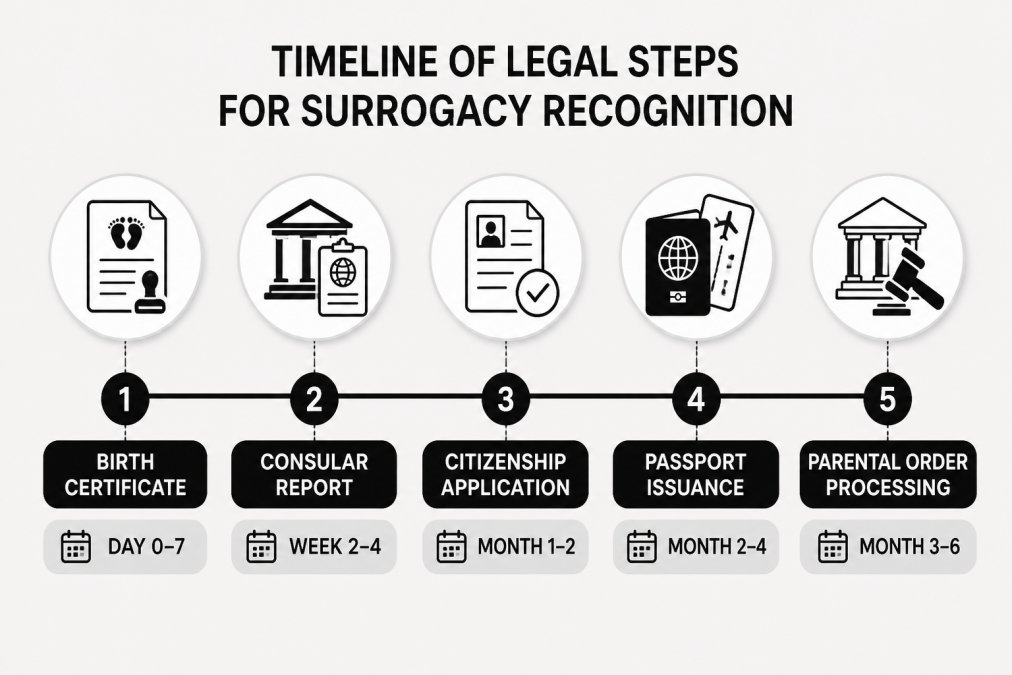
Hire a lawyer in the surrogacy destination who specializes in assisted reproductive technology and surrogacy law. They must confirm that surrogacy is legal there, that Intended Parents can establish parental rights before or immediately after birth, and what documentation you’ll receive. Get this in writing.
Simultaneously, hire a lawyer in your home country who understands international surrogacy. They must review your home country’s rules on recognizing foreign surrogacy arrangements and what documentation your government requires.
Ensure your surrogacy agreement is legally binding in the birth country. It should specify that the Intended Parents will have full parental rights and that the surrogate consents to transfer custody after birth.
Apply for citizenship and a passport immediately after birth. Provide all required documentation: the birth certificate, DNA testing if required, proof of your identity and citizenship, and the surrogacy agreement. Follow up regularly.
Keep copies of every document in multiple secure locations. Store originals in a safe deposit box. Have digital backups.
Herman Family Group specializes in cross-border surrogacy in legally sound destinations. Our team coordinates legal requirements across jurisdictions to ensure your parental rights are recognized from birth. We work with experienced local lawyers in each program country and guide you through every documentation step.
Frequently Asked Questions
What happens to a child’s citizenship if surrogacy is not recognized in the Intended Parents’ home country?
When surrogacy is not recognized abroad, the child may face statelessness—having no legal citizenship in any country. This creates severe travel restrictions, prevents access to education and healthcare, and leaves the child vulnerable. The Intended Parents may not be listed on the birth certificate, and the child cannot obtain a passport. Legal counsel specializing in international surrogacy legal requirements is essential to file consular reports of birth abroad or pursue parental orders to establish legal parentage before leaving the surrogacy destination.
Can Intended Parents bring a child home if the surrogacy agreement is not legally valid?
Without legal recognition of the surrogacy arrangement, Intended Parents face serious travel and custody barriers. Many countries require proof of legal parentage (a birth certificate listing the Intended Parents or a valid parental order) before allowing a child to exit or enter. Without this documentation, authorities may prevent the child from traveling or refuse entry. Establishing legal parentage in surrogacy through proper consular processing, DNA testing, and local court orders before departure is critical to avoid being stranded or facing legal prosecution upon return home.
What legal steps should Intended Parents take to protect themselves if surrogacy laws are unclear in their destination country?
Intended Parents must secure legal counsel in both the surrogacy destination and their home country before conception. Key steps include: obtaining a signed surrogacy agreement recognized by local law, ensuring the birth certificate lists the Intended Parents or is amendable, filing a consular report of birth abroad immediately after birth, completing DNA testing if required, and pursuing a parental order or adoption decree in the home country. These measures establish legal parentage in surrogacy and prevent statelessness, ensuring the child can travel, access services, and inherit rights.
This article was written using GrandRanker