Table of Contents
- 1. Access to Legal Frameworks That Recognize Same-Sex Parenthood
- 2. The International Surrogacy Process for Same-Sex Couples
- 3. Legal Requirements for International Surrogacy and Parental Recognition
- 4. Choosing a Surrogacy Destination That Supports Your Family
- Frequently Asked Questions
Last Updated: September 4, 2026
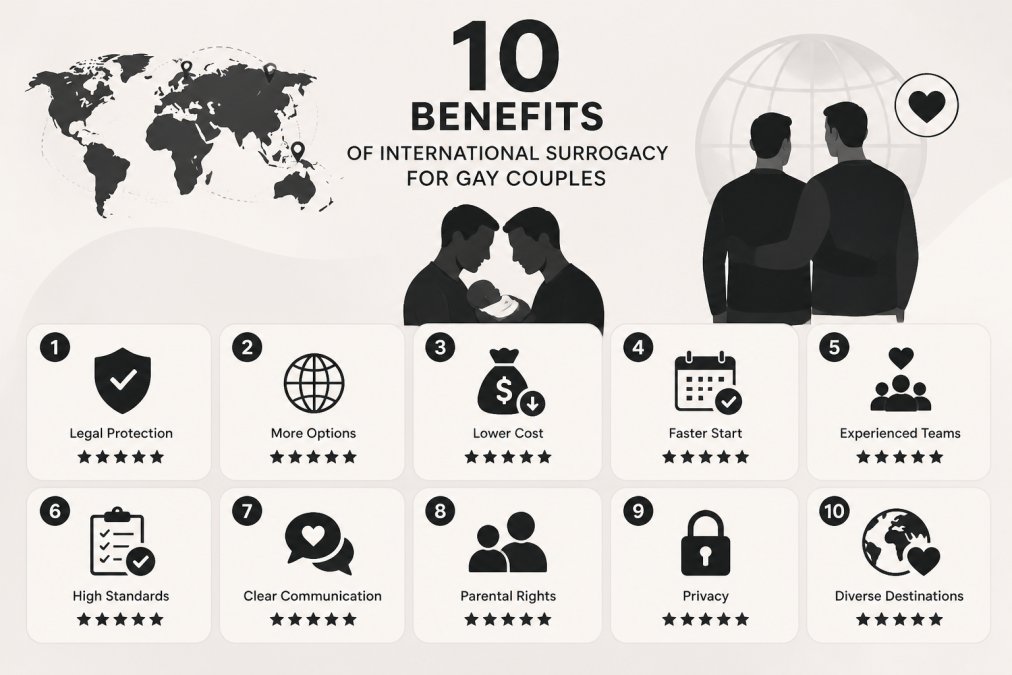
For same-sex Intended Parents, international surrogacy offers a path to parenthood, but success depends on choosing a jurisdiction where your family is legally recognized from birth. This guide explains the key benefits and legal steps that protect them.
The legal destination determines everything: parental recognition, citizenship, and your ability to travel home with your child. Choosing the right jurisdiction is the most important decision.
1. Access to Legal Frameworks That Recognize Same-Sex Parenthood
International surrogacy provides access to legal systems that explicitly recognize both Intended Parents from birth, something many home countries do not allow.
A legal framework recognizing same-sex parenthood allows both partners to be named on the birth certificate and secure a parentage order. This foundation enables citizenship, travel documents, and parental rights for both parents.
2. The International Surrogacy Process for Same-Sex Couples
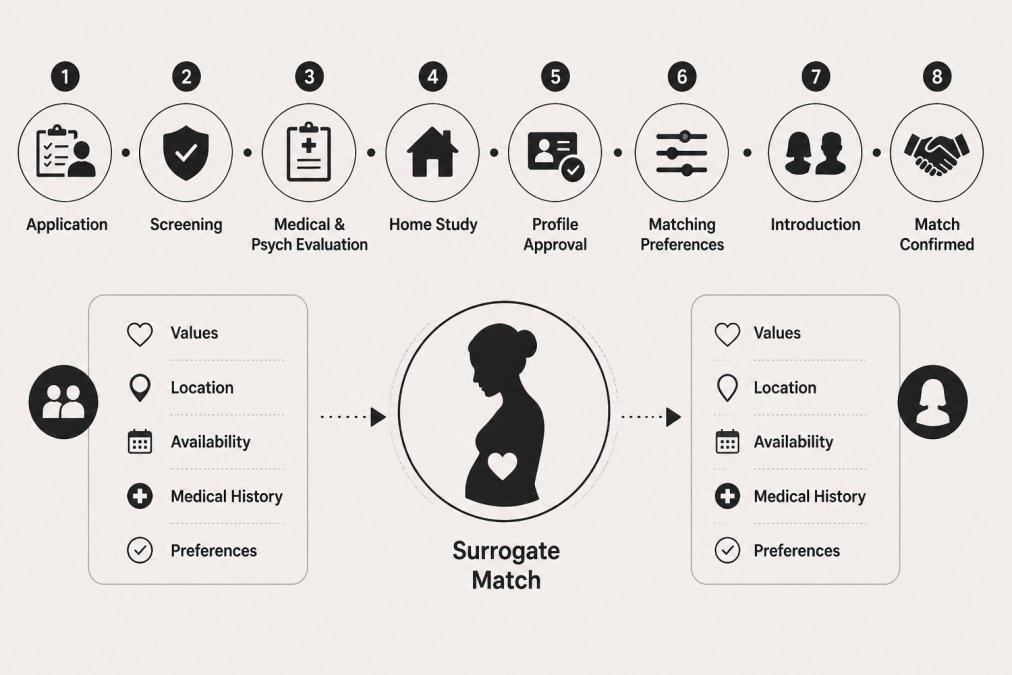
The process follows a structured sequence: legal consultation, surrogate screening, IVF, embryo transfer, and post-birth legal steps. Documentation requirements vary by destination.
Typically, both partners provide genetic material, with one partner’s embryo transferred to the surrogate. Legal paperwork then establishes parenthood for both partners through a parentage order, depending on local law.
3. Legal Requirements for International Surrogacy and Parental Recognition
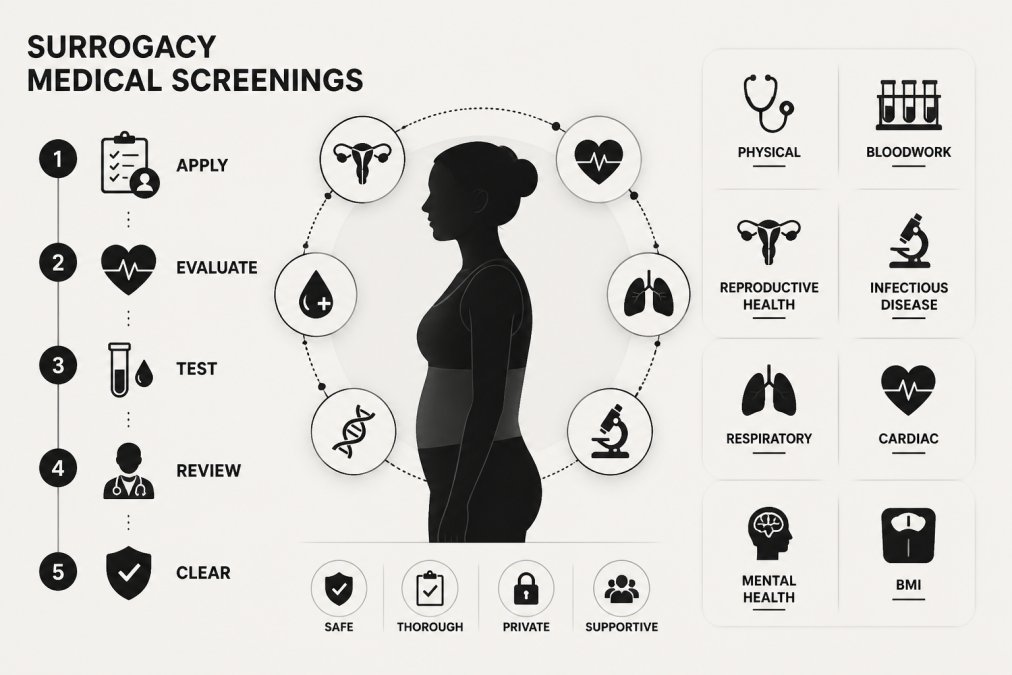
Legal requirements vary by destination. Intended Parents must typically be of legal age, medically cleared, and background-checked. Surrogates must have had at least one healthy pregnancy and pass psychological screening.
Parental recognition is secured through a parentage order issued by a local court. This order allows you to obtain a birth certificate naming both parents and apply for citizenship. Confirm before you begin that the destination’s courts will issue this order to same-sex couples.
4. Choosing a Surrogacy Destination That Supports Your Family
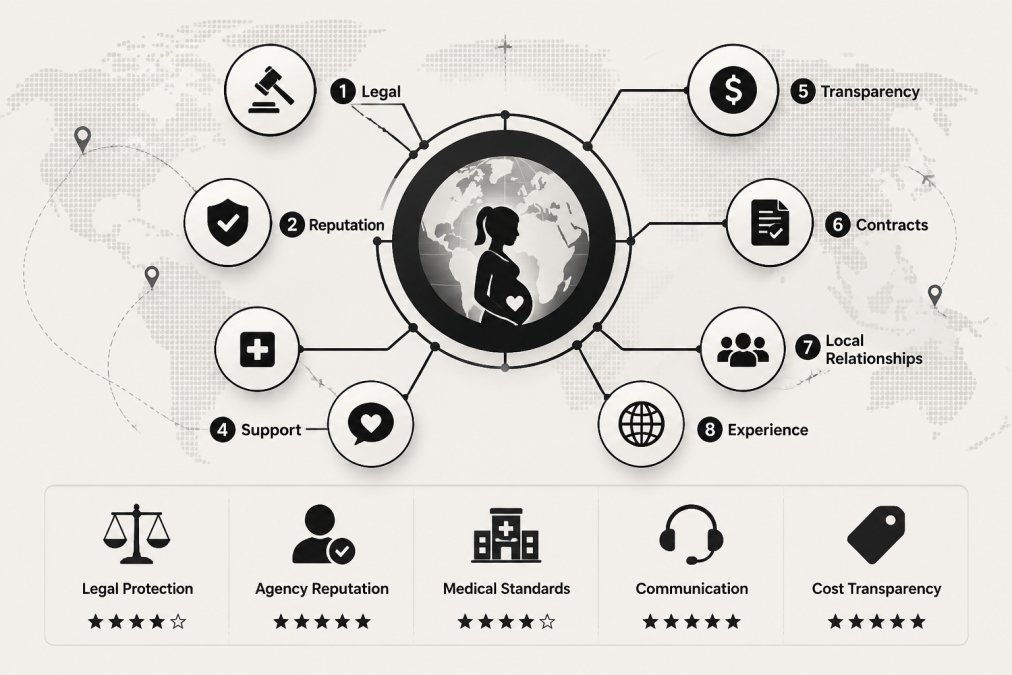
Choosing a surrogacy destination is the most important decision. Select a jurisdiction where the law clearly permits surrogacy for same-sex Intended Parents and courts reliably issue parentage orders naming both partners.
Comparison matrix of surrogacy destinations: legal recognition of same-sex parents, altruistic vs. commercial model, parentage order availability, citizenship pathways
Destination Factor | Why It Matters | What to Verify |
|---|---|---|
Legal recognition | Determines if both parents are named | Same-sex surrogacy explicitly legal |
Surrogacy model | Affects cost and legal complexity | Altruistic or commercial, per local law |
Parentage order | Secures parental rights before birth | Courts issue orders to same-sex couples |
Citizenship pathway | Allows travel home with your child | Citizenship by descent available |
Legal frameworks differ across countries. Ukraine, for example, is available only to married heterosexual couples under local law. A specialized agency can confirm which jurisdictions will issue a parentage order to both partners before you commit funds.
Securing a parentage order is only half the process; you also need to navigate citizenship, passports, and travel documentation to bring your child home legally. Herman Family Group structures programs in Mexico, Armenia, and the Czech Republic for same-sex Intended Parents, with legal counsel specializing in each destination’s requirements.
The benefits of international surrogacy only materialize when every step is handled by professionals who understand both the medical and legal landscape. Working with an experienced coordinator ensures you can focus on becoming parents rather than navigating paperwork.
Frequently Asked Questions
How does the international surrogacy process work for same-sex couples?
Same-sex couples typically begin with a consultation to understand legal options in their home country and identify suitable destinations. The process includes medical screening, embryo creation (using one or both partners’ genetic material through egg donation if needed), surrogate matching, and pregnancy management. After birth, intended parents complete legal documentation to establish parentage and secure citizenship or consular birth registration for the child. Agencies specializing in LGBTQ+ family building guide couples through each phase with medical and legal support.
What are the legal requirements for international surrogacy?
Legal requirements vary by destination. Intended parents typically need a surrogacy agreement reviewed by legal counsel, medical records confirming fertility treatment eligibility, background checks, and proof of financial capacity. Post-birth, you’ll need a parentage order or equivalent legal document from the surrogacy country, then file for citizenship or consular birth registration in your home country. Working with an agency experienced in cross-border surrogacy ensures compliance with both the destination country’s laws and your home country’s immigration and family law requirements.
What should we consider when choosing a surrogacy destination?
Evaluate legal recognition of same-sex parenthood, whether the country permits altruistic or commercial surrogacy models, success rates reported by clinics, travel logistics, and post-birth repatriation processes. Consider the clinic’s experience with LGBTQ+ intended parents and whether they offer comprehensive support including legal counsel and medical coordination. Review how the destination handles citizenship and birth registration for children born via surrogacy, as this directly affects your ability to bring your child home and establish legal parentage.
This article was written using GrandRanker