Table of Contents
- Understanding Legal Parentage for Same-Sex Couples
- Step 1: Establish Marital Presumption of Parentage
- Step 2: Secure Pre-Birth Orders for Same-Sex Couples
- Step 3: Navigate the Second-Parent Adoption Process
Last Updated: August 28, 2026
Understanding Legal Parentage for Same-Sex Couples
Building a family as a same-sex couple requires navigating legal frameworks that protect parental rights and ensure your child’s security. Legal parentage establishes clear recognition of both parents, which is essential for inheritance, medical decision-making, and citizenship. Without proper legal steps, only the biological parent has automatic legal standing. (Source: official guidance from the Department of Health and Human Services)
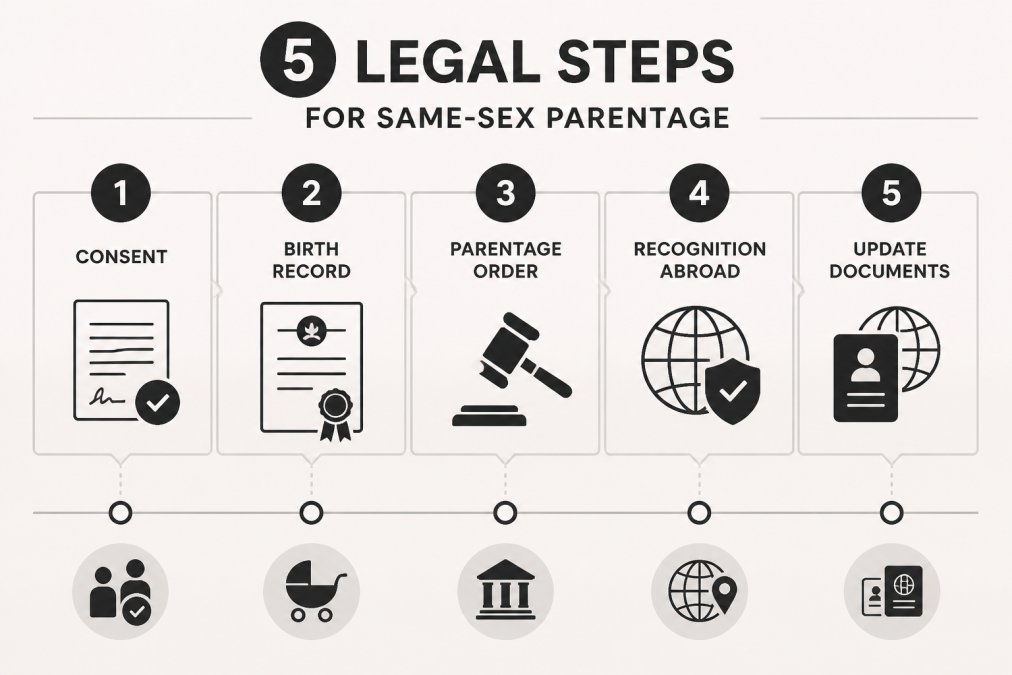
The path to legal parentage differs based on whether you’re married, unmarried, or using assisted reproduction. Each route requires specific documentation and court involvement. The goal is the same: obtaining a birth certificate that names both parents as legal parents.
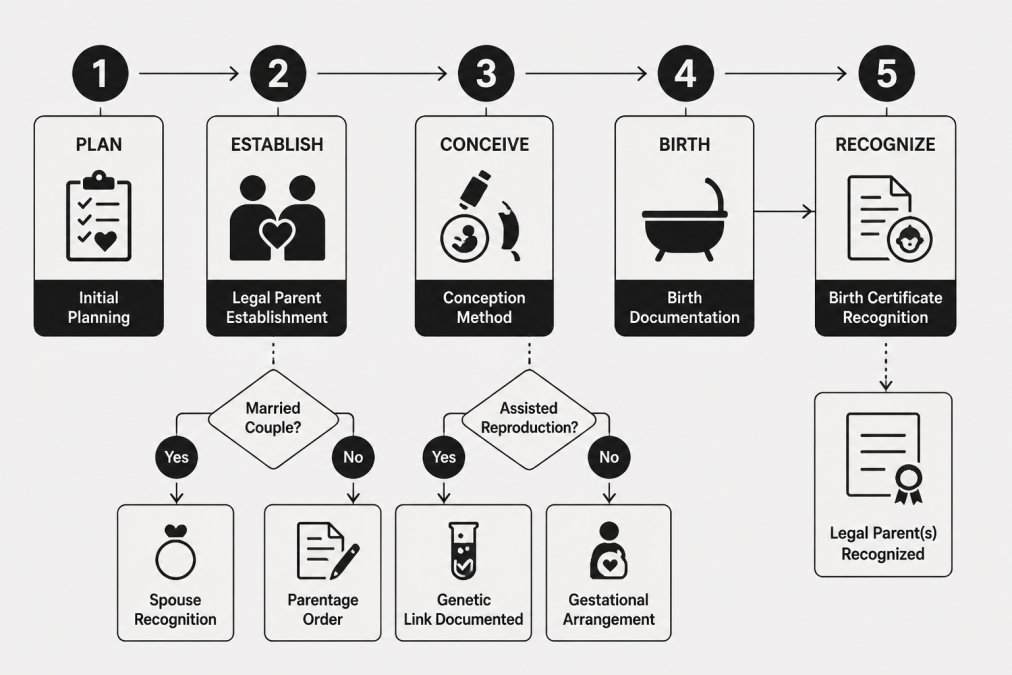
Which steps apply to your situation depends on your marital status, where your child is born, and whether you’re using surrogacy or other assisted reproductive technology.
Step 1: Establish Marital Presumption of Parentage
When you’re married, marital presumption of parentage is the fastest route to legal recognition. In many jurisdictions, marriage automatically establishes presumed parentage for children born during the marriage. Both spouses are presumed to be the legal parents without requiring additional court action, even when one spouse is not biologically related to the child.
To use marital presumption, you need a valid marriage license recognized by the relevant jurisdiction. Once your child is born, both names can typically be added to the birth certificate immediately, though procedures vary. The advantage is speed and often lower cost, as you may avoid adoption proceedings. However, confirm the specific rules of your jurisdiction, as not all treat same-sex marriages identically on birth certificates.
Step 2: Secure Pre-Birth Orders for Same-Sex Couples
Pre-birth orders are court documents issued before your child is born that establish parentage in advance. They’re particularly valuable for same-sex couples using surrogacy. A pre-birth order directs the hospital to list both Intended Parents on the birth certificate at birth.
Without a pre-birth order, only the birth mother’s name appears initially. The non-biological parent may then need to go through a separate adoption process, which can take time and add legal expense. A pre-birth order can help eliminate this delay.
To obtain a pre-birth order, you petition the court in the county where the birth is expected. The petition typically includes your marriage license, surrogacy agreement (if applicable), and documentation of your intent to parent. The court issues the order if it finds this serves the child’s best interest.
Pre-birth orders are available in many jurisdictions but not all. Checking the requirements of your chosen jurisdiction before conception is critical, especially if you’re planning surrogacy.
Step 3: Navigate the Second-Parent Adoption Process
The second-parent adoption process is used when marital presumption doesn’t apply or when you’re an unmarried couple. It’s a simplified adoption where one parent who is not biologically related to the child adopts that child from the other parent.
Second-parent adoption is often faster than standard adoption because both parents consent and there’s no competing claim. The process typically involves filing a petition in family court, obtaining a home study in some jurisdictions, and attending a hearing. The court then issues a final adoption decree establishing full legal parentage.
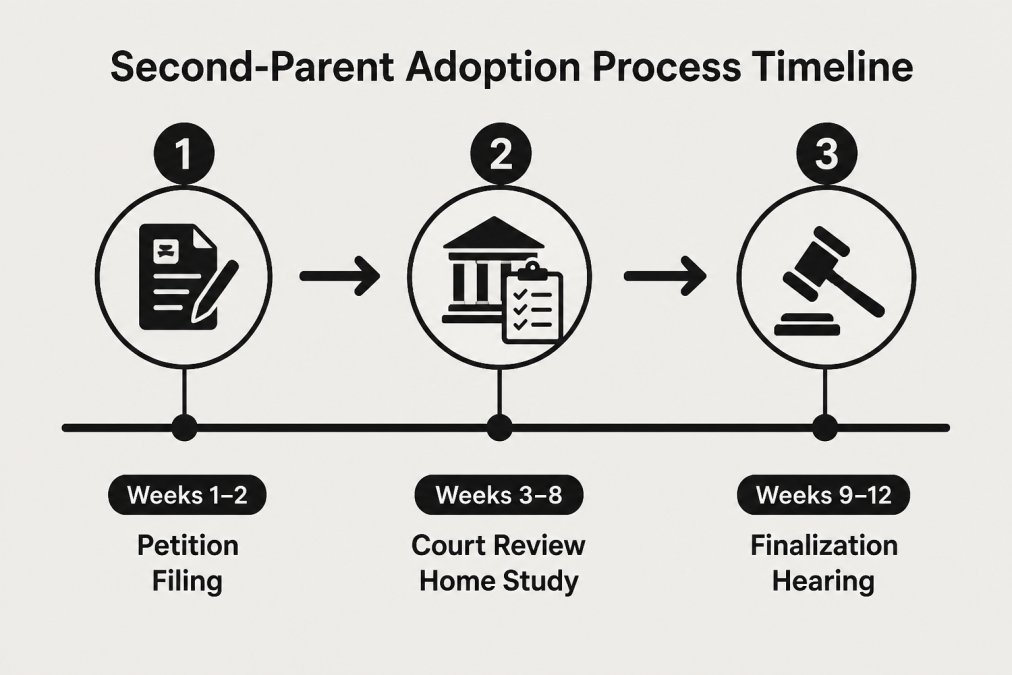
The timeline varies by jurisdiction. Second-parent adoption requires that the biological parent consent and that parental rights not be contested. For unmarried couples, this is often a reliable way to ensure both parents have equal legal standing.
Herman Family Group supports Intended Parents through the legal complexities of establishing parentage internationally. Our team coordinates with local attorneys in our program destinations to ensure your family structure receives proper legal recognition before and after birth. We provide guidance on which legal steps apply to your specific situation, helping you understand your options and timeline before committing to your surrogacy journey.
Frequently Asked Questions
How do same-sex couples establish legal parentage through surrogacy?
Same-sex couples establish legal parentage through a combination of pre-birth orders, genetic testing documentation, and second-parent adoption processes. The specific steps depend on the laws of the relevant jurisdiction and whether both parents have a genetic connection to the child. Working with family law specialists helps ensure all necessary court orders and documentation are in place before and after birth, creating clear legal recognition for both parents and protecting parental rights.
What is the second-parent adoption process and why is it important?
The second-parent adoption process allows a non-biological parent to establish legal parentage and equal parental rights. This is critical for same-sex couples because it helps ensure both parents have custody, inheritance, and succession rights. The process typically involves court petitions, home studies in some jurisdictions, and a judicial decree granting adoption. Without this step, only the biological parent may have automatic legal recognition, potentially leaving the child and non-biological parent without full legal protections.
What legal documents should same-sex couples prepare before birth?
Same-sex couples should prepare pre-conception agreements outlining parentage intentions, pre-birth order petitions filed with the court, genetic testing consent forms, and surrogacy agreements with clear parentage language. Additionally, couples may consider wills, healthcare powers of attorney, and guardianship designations to protect the child if something happens to either parent. These documents create a comprehensive legal framework that helps prevent custody disputes and ensures both parents' rights are recognized from birth.
This article was written using GrandRanker