Table of Contents
- Understanding Surrogacy for International Same-Sex Couples
- Surrogacy-Friendly States for LGBTQ+ Couples
- Legal Parentage for International Same-Sex Surrogacy
- Cost of Surrogacy for Gay Couples in the USA
Surrogacy for International Same-Sex Couples: A 2026 Guide
Last Updated: July 24, 2026
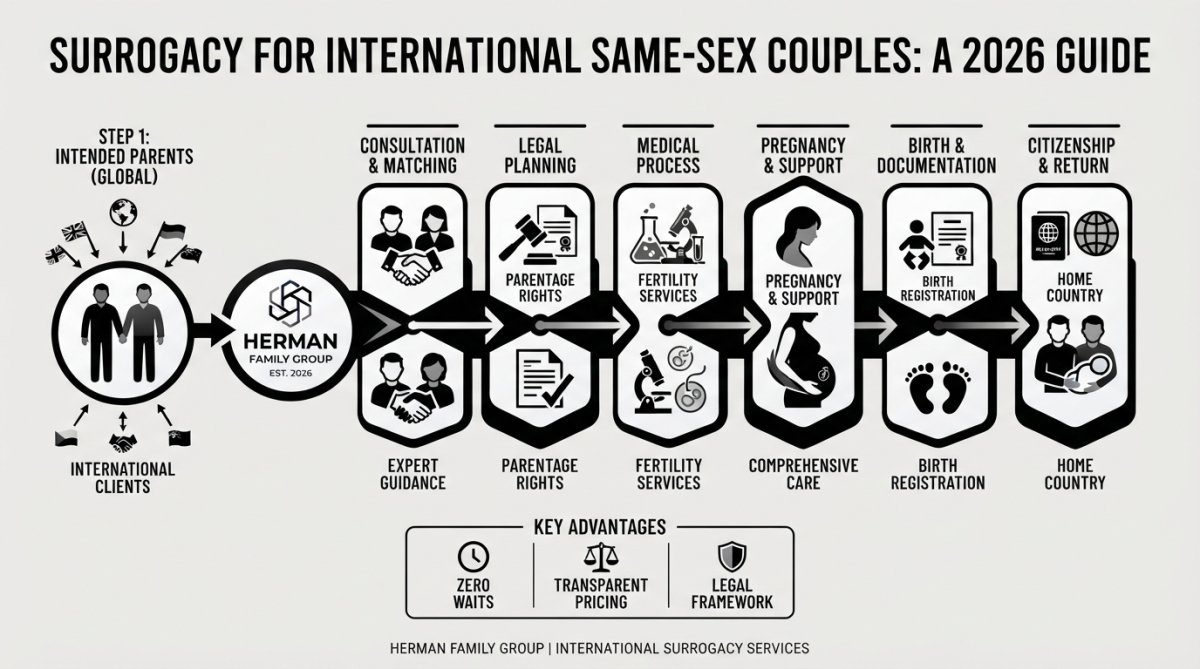
Surrogacy for international same-sex couples has become increasingly accessible, though legal rules vary significantly by country and U.S. state. At Herman Family Group, we’ve guided hundreds of Intended Parents through this journey and understand the unique challenges same-sex couples face when building families across borders.
Understanding Surrogacy for International Same-Sex Couples
Surrogacy for international same-sex couples involves a surrogate in one country carrying a pregnancy for Intended Parents in another, typically using genetic material from one or both partners. Unlike adoption, surrogacy allows same-sex couples to have a biological connection to their child, a significant advantage when same-sex marriage and parental rights remain restricted in many nations.
The process requires careful coordination across multiple legal systems. What’s legal in one jurisdiction may be prohibited in another, making specialists in cross-border surrogacy law essential.
Legal Parentage for International Same-Sex Surrogacy
Establishing legal parentage is the most critical step in international surrogacy for same-sex couples. Without clear legal recognition, Intended Parents risk traveling home without recognized parental rights, creating serious complications for citizenship, inheritance, and guardianship.
How legal parentage works:
For same-sex couples, the critical question is whether both partners can be listed as legal parents on the birth certificate. This depends on your state of residence and, if pursuing international surrogacy, your country of citizenship.
Cost of Surrogacy for Gay Couples
Surrogacy involves multiple cost categories. Intended Parents should understand what they’re paying for and why costs vary.
Typical cost components include:
- Medical expenses (surrogate’s prenatal care, delivery, postpartum care)
- Surrogate compensation
- Agency fees for matching and coordination
- Legal fees for surrogacy agreements and parentage establishment
- Fertility clinic fees (egg retrieval, sperm preparation, embryo transfer, genetic testing)
- Travel and accommodation
- Insurance and contingency funds
Cost Category | Variables |
|---|---|
Medical (surrogate) | Pregnancy complications, insurance coverage, location |
Surrogate compensation | Experience, location, altruistic vs. commercial |
Agency coordination | Matching speed, support level, geographic scope |
Legal fees | State law, international recognition needs, both partners’ genetic involvement |
Fertility clinic | Testing, egg retrieval, embryo creation, storage |
Travel & accommodation | Frequency of required visits, local costs |
Herman Family Group specializes in transparent pricing structures, allowing Intended Parents to understand exactly what they’re investing in. The team coordinates across medical providers, legal specialists, and surrogacy partners to ensure comprehensive support from initial planning through birth and beyond.
Choosing the Right Surrogacy Agency or Clinic
Not all agencies and clinics are created equal. For same-sex couples, finding providers with genuine experience and commitment to LGBTQ+ families is essential.
What to look for:
- Explicit experience with same-sex couples: Ask how many same-sex couples they’ve worked with and how they’ve resolved challenges
- International legal expertise: If pursuing cross-border surrogacy, verify that the agency has lawyers licensed in relevant countries
- Transparent communication: Providers should clearly explain timelines, costs, legal processes, and potential risks
- Emotional support: Quality agencies offer counseling, peer support, and regular check-ins throughout the process
- Ethical standards: Look for membership in professional organizations and adherence to ethical guidelines protecting both Intended Parents and surrogates
Red flags:
- Agencies claiming “zero wait times” without explaining their matching process
- Providers downplaying legal complexity or promising guaranteed outcomes
- Lack of transparency about costs or surprise fees mid-process
- Limited experience with same-sex couples or reluctance to discuss LGBTQ+ cases
Research potential providers thoroughly. Read reviews from other same-sex couples, request references, and have detailed conversations about their experience with cases similar to yours.
Surrogacy for international same-sex couples requires careful planning, strong legal guidance, and emotional resilience. The pathway is achievable with providers who understand both the medical and legal complexities. Herman Family Group brings over a decade of experience supporting diverse family structures, including same-sex couples, through every stage of the surrogacy journey. With personalized planning, comprehensive medical and emotional support, and expert coordination across borders, you can build your family with confidence. Create My Plan with Herman Family Group today to begin your journey toward parenthood.
Frequently Asked Questions
Which U.S. states are most favorable for international same-sex surrogacy?
States like California, Illinois, New Hampshire, and Delaware offer strong legal protections for same-sex couples pursuing surrogacy, including straightforward parentage establishment and pre-birth orders. These states recognize both parents on birth certificates and provide clear legal pathways for international couples. However, laws vary significantly, so working with an agency specializing in LGBTQ+ surrogacy ensures you choose the right jurisdiction for your situation.
What are the legal considerations for international same-sex couples pursuing surrogacy in the U.S.?
Key legal considerations include: securing pre-birth orders to establish parental rights before the baby is born, understanding your home country's recognition of U.S. birth certificates, obtaining citizenship for the child, and ensuring both partners can be listed as parents. You'll need U.S.-based family law attorneys familiar with international cases and your country's specific laws. Many agencies provide or coordinate legal support to navigate these complexities.
Can both same-sex parents be listed on the birth certificate in the U.S.?
Yes, in surrogacy-friendly states. California, Illinois, and several others allow both same-sex parents to be listed on the birth certificate through pre-birth orders or post-birth adoption procedures. The process and timeline vary by state. International couples should confirm their chosen state's procedures align with their home country's citizenship and legal recognition requirements before proceeding.
What should I look for when choosing an LGBTQ+ surrogacy agency?
Seek agencies with proven experience serving same-sex couples, transparent communication about all program components, legal expertise across multiple jurisdictions, and comprehensive support from matching through post-birth. Ask about their matching timeline, how they handle legal coordination, what happens if complications arise, and whether they provide emotional support. Verify their track record, ask for references, and ensure they explain costs clearly without hidden fees.
This article was written using GrandRanker