Table of Contents
- What You’ll Need Before Starting Your Donor Search
- Known vs Anonymous Egg Donation: Which Path Fits Your Family?
- Egg Donor Screening Requirements You Should Know
- What to Look For in an Egg Donor Profile
- Egg Donor Database Search Tips for Gay Couples
- How Your Donor Choice Shapes the Surrogacy Journey
- Common Mistakes to Avoid When Selecting a Donor
- Conclusion: Moving Forward With Confidence
- Frequently Asked Questions
Last Updated: September 6, 2026
Choosing an egg donor is one of the most significant decisions in your family-building journey, and for gay couples, the process carries unique considerations beyond basic medical screening. The right donor balances genetic health, physical traits, legal security, and the long-term emotional wellbeing of your child. At Herman Family Group, we guide Intended Parents through this process, and a clear framework transforms an overwhelming search into a confident choice.
Before browsing donor profiles, consider what kind of relationship you want with the donor now and in the future. This decision shapes every other choice you will make. Below, we break down the practical steps, medical requirements, and emotional considerations that matter most.
What You’ll Need Before Starting Your Donor Search
A successful donor search starts before you open a database. Most fertility specialists recommend completing a full reproductive workup first, including semen analysis and genetic carrier screening for both partners, so you know exactly what you need in a donor.
Your clinic or coordinator will guide you through the legal framework for third-party reproduction. Understanding how parental rights are established before you select a donor prevents heartache later. Discuss openly with your partner how much genetic connection matters to each of you, since only one partner can provide the sperm for embryo creation.
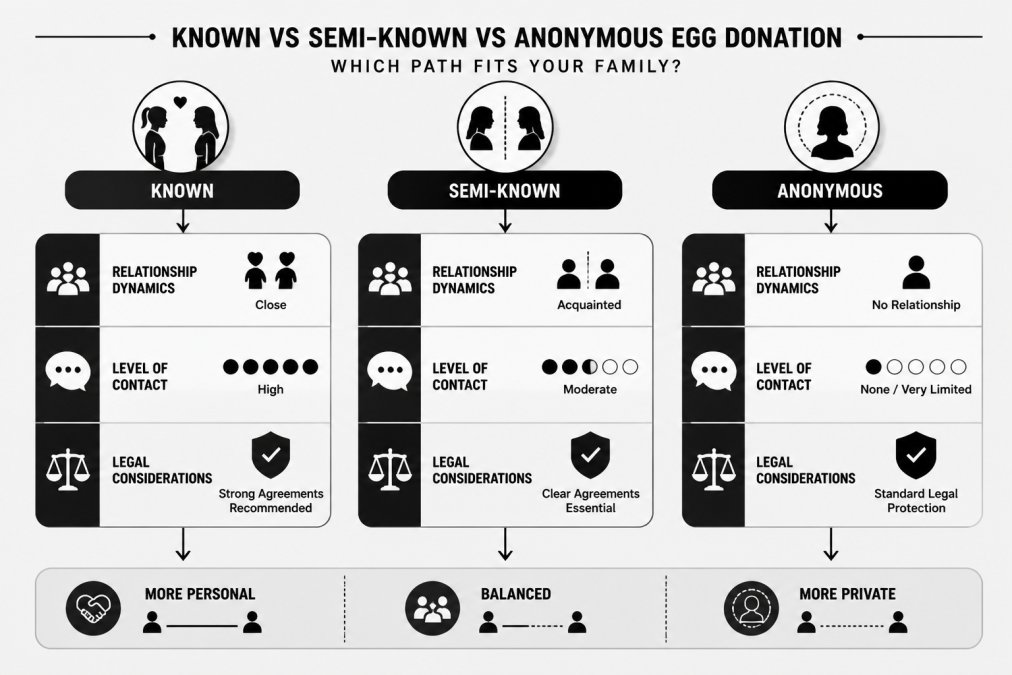
Known vs Anonymous Egg Donation: Which Path Fits Your Family?
The most fundamental choice is whether to pursue a known, semi-known, or anonymous egg donor. A known donor is someone you select personally, often a friend or family member, allowing your child to know their genetic origins from birth. An anonymous donor, typically accessed through an egg bank, offers privacy but means your child may have limited access to their genetic history.
Semi-known donation occupies a middle ground, where Intended Parents receive identifying information and often meet the donor, while the donor does not know the family. Many gay couples favor this path for its medical history transparency and option for future contact. Consider what your child might ask about their origins in fifteen years, and choose the path you can honestly support.
Egg Donor Screening Requirements You Should Know
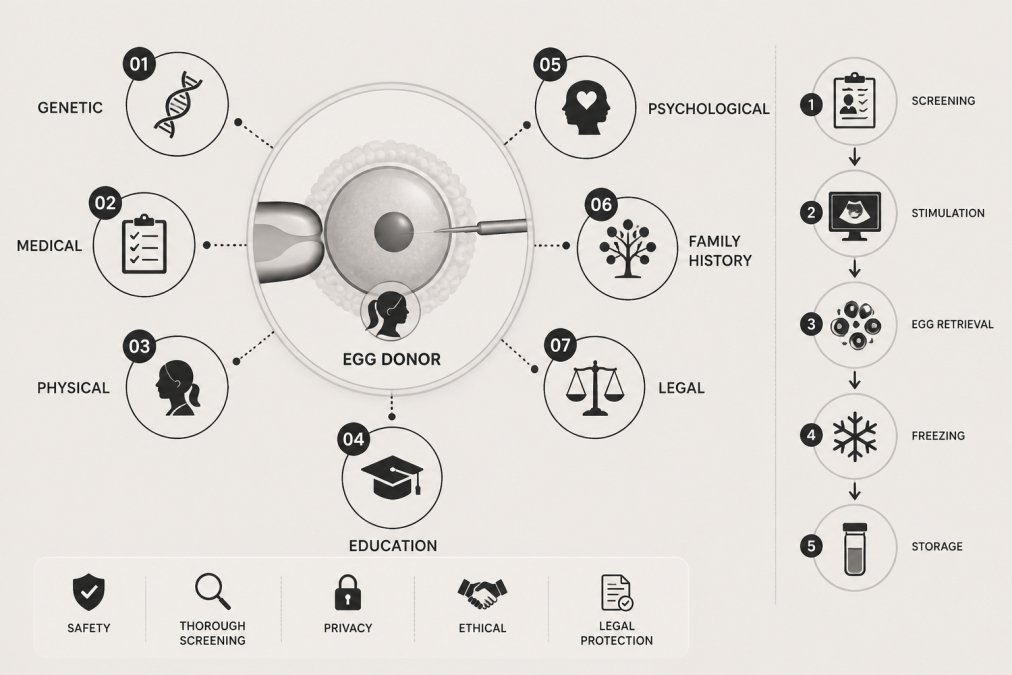
Reputable egg banks hold donors to rigorous standards. Most programs require donors to be between 21 and 32 years old, with a healthy body mass index and no significant personal or family history of genetic disorders (asrm.org). Donors undergo comprehensive genetic, psychological, and infectious disease screening before participating in an IVF cycle.
What most Intended Parents overlook is fertility-specific testing that predicts response to stimulation, including an antral follicle count and hormone level testing. When reviewing documentation, verify the bank follows guidelines from organizations like the American Society for Reproductive Medicine, and ask your fertility specialist to interpret the results.
What to Look For in an Egg Donor Profile
Once you understand the screening process, you can evaluate donor profiles with a discerning eye. A complete profile covers physical characteristics, educational background, personal interests, and the donor’s motivations. Look beyond baby photos and consider whether this person’s genetic background and health history align with your family’s needs.
Physical Traits and Ethnicity Matching
Many gay couples want a donor whose physical appearance reflects their own ethnic background or a blend of both partners’ heritages. Egg bank databases allow you to filter by these traits. Some Intended Parents also review adult photos of the donor to assess features that may emerge over time.
Ethnicity matching carries significance beyond appearance, as certain genetic conditions occur more frequently within specific populations. Your genetic counselor can help you weigh elevated carrier risks against your desire for physical similarity. Remember that genetics are unpredictable, and even a closely matched donor may produce a child who resembles neither parent.
Fertility Metrics and Genetic Screening
Clinical data matters more than appearance for your cycle’s success. Key metrics include the donor’s antral follicle count and previous donation history, as donors who have produced healthy blastocysts offer greater predictability. Ask your reproductive endocrinologist to review this information.
Many banks now offer expanded carrier screening covering hundreds of conditions. For gay couples using one partner’s sperm, this screening is essential, since the sperm provider’s genetic profile and the donor’s must be evaluated together to assess the embryo’s risk for recessive conditions.
Egg Donor Database Search Tips for Gay Couples
Searching an egg donor database can feel overwhelming. Start by applying your non-negotiable filters, such as ethnicity, blood type, and screening status, to narrow the field. Then shift your focus to qualitative factors like the donor’s stated motivations and the completeness of her medical history.
A common mistake is fixating on a single profile while ignoring practical realities like donor availability. Popular donors are often reserved quickly, and some banks limit how many families can use the same donor. When you identify strong candidates, ask your coordinator to check availability immediately and consider selecting a backup donor from the start.
How Your Donor Choice Shapes the Surrogacy Journey
Your donor selection directly influences your surrogacy timeline, legal documentation, and your child’s relationship with their genetic origins. Clinics typically require genetic screening of the donor and sperm provider before embryo creation, adding several weeks to your timeline. A donor with a complete, verified profile moves through this process faster.
Legal Parentage and the Second-Parent Adoption
Establishing legal parentage requires careful planning before the embryo transfer. In many jurisdictions, the non-genetic parent must complete a second-parent adoption or obtain a pre-birth order to ensure both partners hold full parental rights (law.cornell.edu).
The donor’s legal status matters here as well. Anonymous donors sign agreements relinquishing all parental rights, while known donors must complete separate legal waivers. Ensure your attorney reviews the donor agreements to confirm they align with the parentage laws in your jurisdiction.
Supporting Your Donor-Conceived Child’s Identity
Child development research increasingly emphasizes openness about donor conception. Experts recommend telling children about their genetic origins early, using age-appropriate language. For gay couples, this conversation includes explaining that while both fathers are their parents, a donor helped create them.
Consider how your donor choice affects this narrative. If you chose an anonymous donor, your child may someday pursue contact through donor sibling registries or DNA testing services. A semi-known donor who agreed to future contact gives your child that option directly. Whatever path you select, approach your child’s questions with honesty, reinforcing that they were deeply wanted and loved.
Managing the Donor Relationship Over Time
A critical yet often overlooked aspect is planning how the relationship will be managed as your child grows. For those who choose a known or semi-known donor, have an explicit conversation with your partner and, if possible, the donor about expectations for future contact. Will the donor be “Aunt” or a family friend? Will there be annual visits, or is contact limited to email updates? A simple memorandum of understanding, while not legally binding, can clarify these expectations.
For those who select an anonymous donor, many banks now offer “open identity” programs where the donor has agreed to be contacted when the child turns 18. Verify the bank’s specific policies, as some only offer non-identifying medical updates. Be aware that direct-to-consumer DNA testing has changed the landscape of anonymity; a 2020 study in the American Journal of Human Genetics estimated that over 60% of Americans of European descent can now be identified through DNA databases. Rather than promising a closed story, frame your choice as offering the best possible starting point, and commit to helping your child navigate whatever they discover.
:::tip A Practical Step for Openness
Regardless of your donor type, create a life story book for your child early. Include photos of the two of you during the pregnancy journey, a copy of the donor’s profile (if available), and a simple, honest explanation of how your family was built. This tangible resource helps normalize their story and provides a foundation for conversations at every developmental stage.
:::
The Emotional Weight of the Choice
Finally, acknowledge the emotional weight of this decision. It is common for one partner to feel a stronger pull toward a genetic link, while the other may feel like an outsider. These feelings are valid. Consider working with a therapist who specializes in third-party reproduction or LGBTQ+ family building. Processing these emotions now will make you a more present and resilient parent.
Common Mistakes to Avoid When Selecting a Donor
The most frequent error Intended Parents make is prioritizing physical resemblance over fertility metrics and genetic health. A donor who looks perfect but has a low antral follicle count may produce few viable embryos. Balance aesthetic preferences against clinical reality, and let your fertility specialist guide that trade-off.
Another mistake is neglecting to plan for multiple cycles. Even with an excellent donor, the first IVF cycle may not result in pregnancy. If your chosen donor has limited availability, you may face starting the search over. Consider securing enough genetic material for multiple cycles from the outset, and discuss frozen egg banks versus fresh donor cycles with your coordinator.
Mistake: Overvaluing the “Perfect” Profile
Many Intended Parents search for a donor who matches a long checklist of physical traits and achievements. These attributes do not predict the health of the child or the success of the cycle. What matters more is the donor’s overall health, genetic carrier status, and ovarian reserve. Focus on the medical data first, and treat biographical details as secondary.
Mistake: Ignoring the Sperm Provider’s Genetic Profile
For gay couples, the genetic screening of the sperm provider is just as critical as the donor’s. The real risk assessment happens when you compare the donor’s carrier status against the sperm provider’s. If both are carriers for the same recessive condition, such as cystic fibrosis, the risk to the child increases significantly (the CDC). Have your reproductive endocrinologist or a genetic counselor compare the two genetic panels before you finalize a donor.
Mistake: Choosing a Donor Without Considering the Child’s Future Questions
It is easy to forget that your child will one day ask about your choice. A common pattern is choosing an anonymous donor for privacy, only to realize years later that you cannot answer basic questions about genetic family medical history. Before you commit, ask yourself: What will I say when my child asks why we chose this person? If the answer is “very little,” consider whether a semi-known or open-identity donor might better serve your family’s long-term needs.
Mistake: Failing to Plan for the Donor’s Availability
Popular donors are often reserved quickly. When you identify strong candidates, ask your coordinator to check availability immediately and consider selecting a backup donor from the start. If you are planning for multiple children, confirm that the donor has enough vials available for future cycles. Some banks offer “family matching” programs that reserve a portion of a donor’s eggs, but this is not universal.
:::warning A Note on Donor Sibling Registries
If you choose an anonymous donor, be aware that your child may one day connect with half-siblings through donor sibling registries like the Donor Sibling Registry. This can be a wonderful source of community, but it also means your child’s donor family network may be larger than you anticipated. Prepare yourself for this possibility and approach it with openness rather than resistance.
:::
Mistake: Underestimating the Emotional Impact on Your Partner
The non-genetic parent often carries an unspoken burden during the selection process, feeling a sense of loss or exclusion even while being supportive. Make space for honest conversations about these feelings, and involve both partners equally in the selection process. Some couples choose a donor whose traits reflect a blend of both partners’ backgrounds, creating a symbolic connection that fosters a deeper sense of belonging.
Conclusion: Moving Forward With Confidence
Selecting an egg donor as a gay couple involves balancing medical data, legal strategy, and the emotional future of your family. The goal is not perfection but a thoughtful choice you can stand behind when your child asks about their origins. Herman Family Group specializes in guiding diverse family structures through every stage of third-party reproduction, from donor selection through birth and beyond. Create My Plan with Herman Family Group and take the next step toward confident, supported parenthood.
Frequently Asked Questions
What are the legal considerations when choosing an egg donor for gay couples?
Legal parentage is the central issue. The gestational carrier and her spouse, if any, may have presumptive parental rights unless waived. A legal contract with the egg donor must clarify she has no parental rights or obligations. After birth, the non-genetic father should complete a second-parent adoption to secure his legal status in all states. An attorney specializing in third-party reproduction should review your specific situation before you finalize a donor.
Should intended parents prioritize known or anonymous egg donors?
There is no single right answer. Known donors can offer medical history and a relationship, but require more legal coordination. Anonymous donors through an egg bank provide more privacy and streamlined logistics. Semi-known arrangements, where both parties agree to future contact through an agency, can balance both needs. Your decision often depends on your comfort with future contact and how you plan to discuss the donor with your child.
How do I evaluate an egg donor profile beyond physical appearance?
Focus on the medical and psychological screening results, which are far more predictive of an IVF cycle’s success. Look for a normal antral follicle count (AFC) and AMH level, as these indicate ovarian reserve. Review the genetic screening panel results and the donor’s personal and family medical history. Psychological screening helps confirm she is making an informed, voluntary decision. These factors matter more than a baby photo.
How does the choice of egg donor impact the surrogacy journey?
The donor choice directly impacts the logistics, timeline, and cost of your surrogacy journey. Using a fresh donor requires synchronizing her cycle with the gestational carrier’s cycle, which adds coordination. Using frozen donor eggs from an egg bank allows you to schedule the IVF cycle at your convenience. Your choice also influences the legal contracts needed and the type of relationship you may have with the donor-conceived child’s genetic half-siblings.