Table of Contents
- Understanding International Surrogacy Agency Requirements
- How to Evaluate Surrogacy Agency Transparency
- The Surrogacy Legal Process in Ukraine, Czechia, Mexico, and Armenia
- Steps to Find and Select the Right International Surrogacy Agency
Last Updated: August 25, 2026
Understanding International Surrogacy Agency Requirements
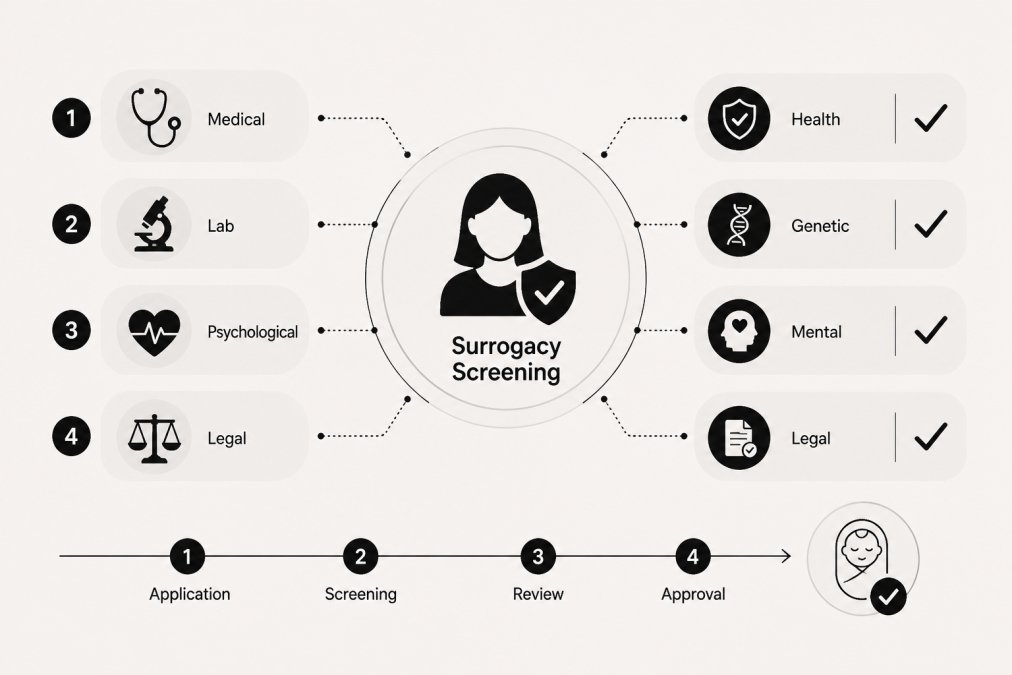
Choosing the right international surrogacy agency is crucial. The agency guides you through medical screenings, legal documentation, matching with a gestational carrier, and bringing your child home. Ukraine, Czechia, Mexico, and Armenia each have distinct legal frameworks and requirements for Intended Parents. Understanding these differences helps you identify which agency and destination align with your family situation.
The best agencies are transparent about their processes. They explain screening protocols, how they match Intended Parents with gestational carriers, and walk you through legal parentage procedures before you commit.
How to Evaluate Surrogacy Agency Transparency
Transparency separates trustworthy agencies from those that obscure their processes. Request detailed information about their screening process for both Intended Parents and gestational carriers. Ask about case management: who is your primary contact, and how often will you communicate with your medical team and legal counsel?
Review contract templates before committing. A transparent agency shares their standard surrogacy contract so you understand financial obligations, medical responsibilities, and legal documentation timelines.
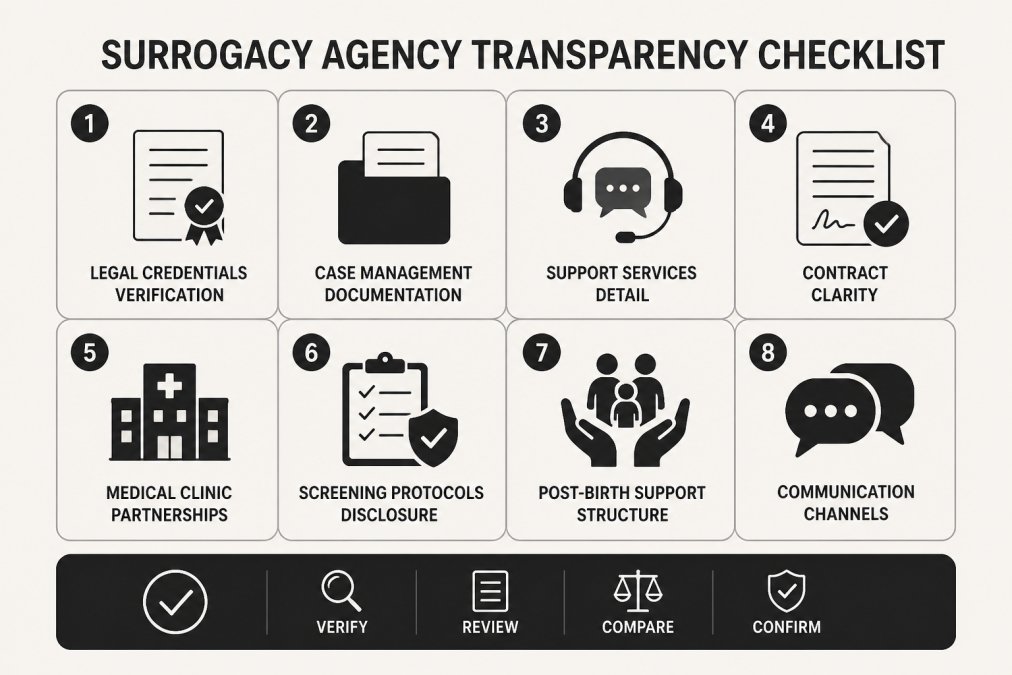
Check partnerships with medical clinics and legal counsel. Reputable agencies work with established fertility clinics and reproductive attorneys licensed in their operating countries. Ask directly about post-birth support: Does the agency help with birth certificates, citizenship paperwork, and visa applications?
The Surrogacy Legal Process in Ukraine, Czechia, Mexico, and Armenia
Each country has distinct legal requirements for establishing parental rights and obtaining birth certificates.
In Ukraine, surrogacy is legally recognized for heterosexual married couples. Legal parentage is established through a court order before birth. Once the birth certificate lists you as the parent, you can proceed with citizenship documentation and visa applications.
Czechia permits surrogacy for unmarried couples. The legal framework requires a surrogacy contract, medical documentation, and court proceedings to establish parental rights.
Mexico’s surrogacy laws vary by state, but several recognize gestational surrogacy for heterosexual couples and single Intended Parents. Legal parentage is established through the surrogacy agreement and medical records.
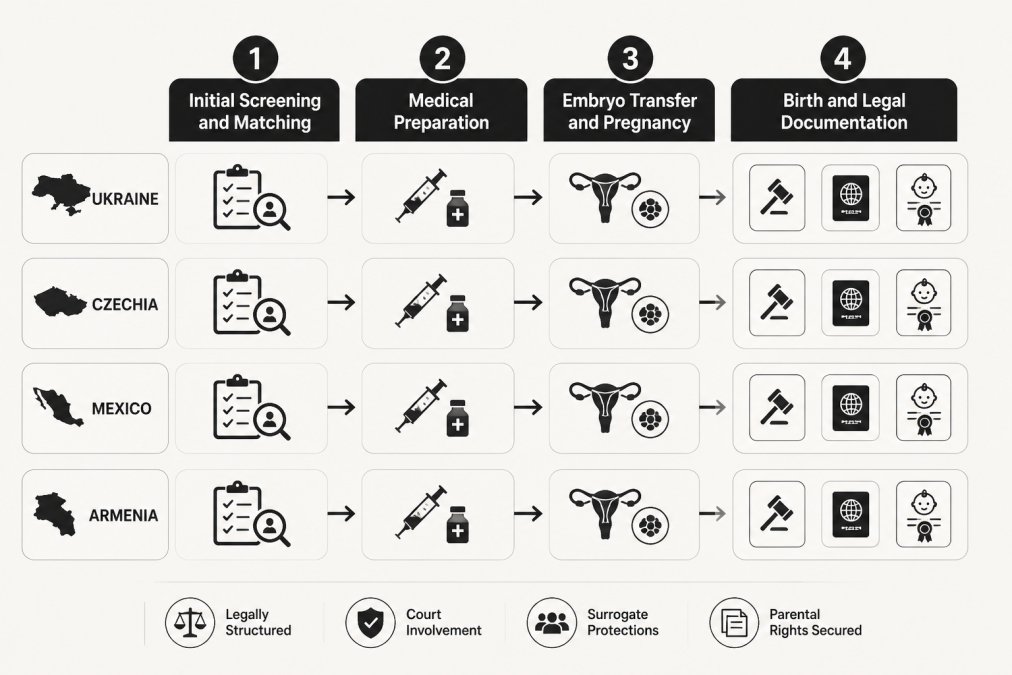
Armenia recognizes surrogacy within its legal framework. The process involves a surrogacy agreement, medical documentation, and legal proceedings to confirm parental rights.
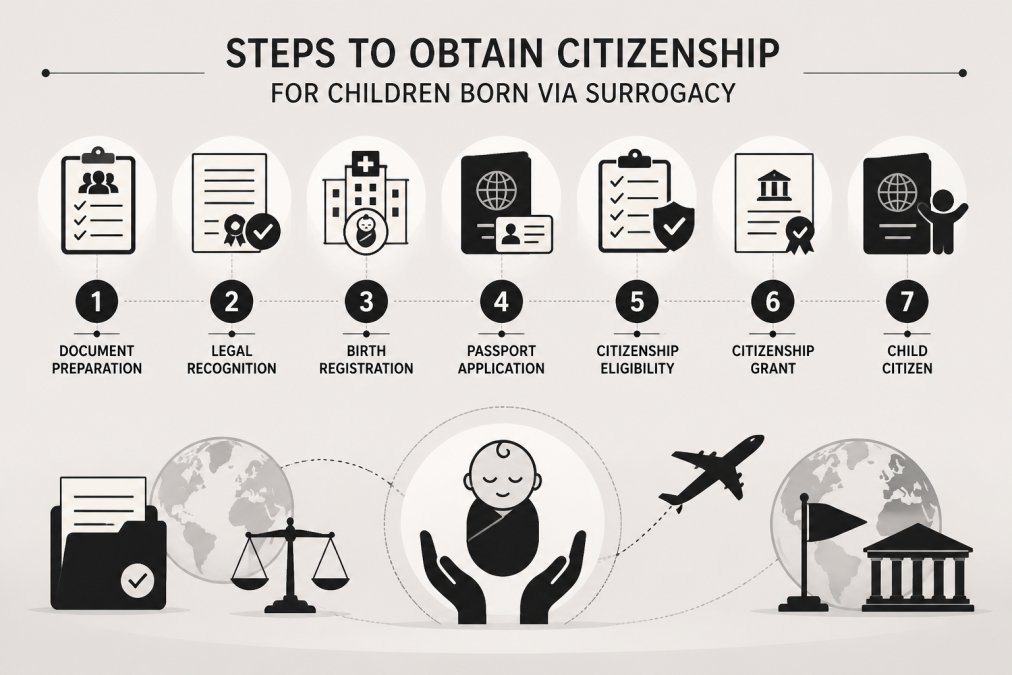
In all four destinations, securing a legal parentage order before leaving the country is critical (peer-reviewed research). This document proves you are the legal parent and is essential for obtaining your child’s birth certificate, passport, and travel visa.
Steps to Find and Select the Right International Surrogacy Agency
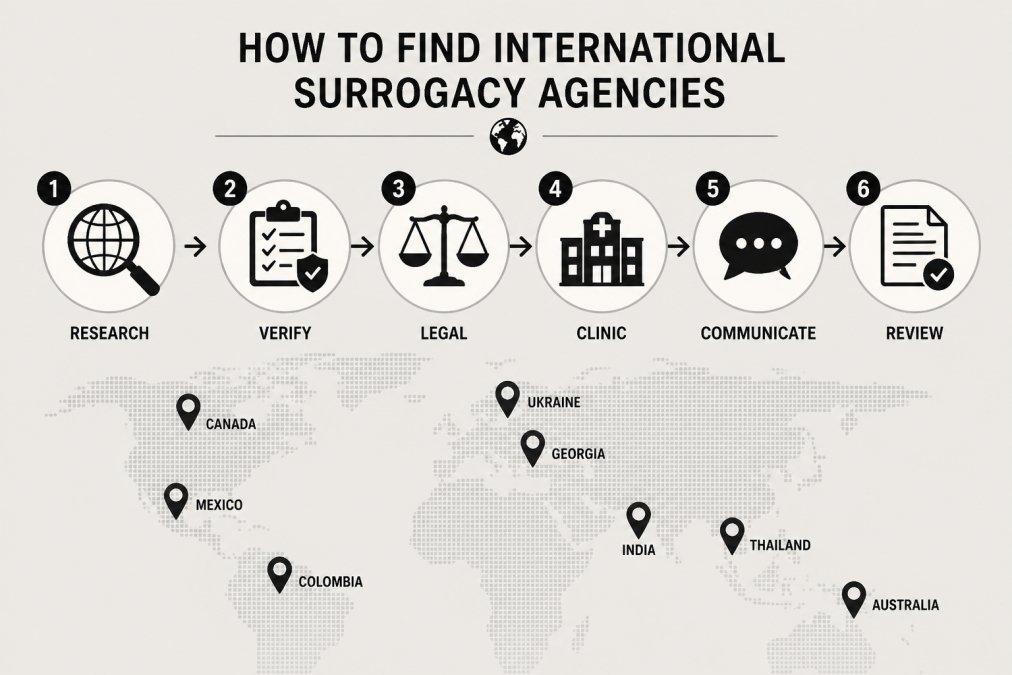
Start by identifying which destination aligns with your family situation. Ukraine offers established legal frameworks for heterosexual couples. Mexico and Czechia provide clearer pathways for single men and other family structures. Armenia is an option for couples seeking alternative routes.
Research agencies operating in your chosen destination. Look for documented experience, clear communication channels, and verifiable partnerships with medical clinics and legal counsel.
Request references from past Intended Parents. Ask about responsiveness, medical preparation, handling of complications, and whether post-birth legal support actually happened as promised.
Schedule consultations with at least two agencies. Ask about screening processes, timeline expectations, support structure, and post-birth legal documentation. Pay attention to direct answers versus vague reassurances.
Verify credentials independently. Confirm that medical partners are licensed fertility clinics and that legal counsel are reproductive attorneys licensed in relevant countries.
Review the agency’s contract thoroughly before signing. Have your own attorney review sections covering financial obligations, medical responsibilities, and outcomes if pregnancy doesn’t result in a live birth.
Ask about ongoing support after birth. How will the agency help with birth certificate registration, citizenship applications, and visa procedures? This question reveals which agencies truly support Intended Parents through the entire journey.
Finding an international surrogacy agency requires careful evaluation. The agency you choose shapes your entire experience from medical screening through bringing your child home. Herman Family Group guides Intended Parents through this process with transparent communication, comprehensive medical support, and legal expertise across Ukraine, Czechia, Mexico, and Armenia. When you’re ready to explore your options, we can help create a personalized plan for your family situation.
Frequently Asked Questions
What should I look for when evaluating an international surrogacy agency's legal credentials?
Verify that the agency has licensed reproductive attorneys in the countries where it operates. Ask for documentation of their legal partnerships, proof of professional memberships, and examples of how they handle parentage orders and birth certificates. A transparent agency will explain its legal process in writing and provide references from past Intended Parents who can confirm they received proper legal support throughout their surrogacy journey.
How do I verify that an international surrogacy agency actually follows through on its legal promises?
Request written case studies or anonymized examples of completed cases, including how legal documentation was handled post-birth. Ask the agency to explain its process for obtaining parentage orders and managing citizenship issues. Speak directly with former Intended Parents if possible. A reliable agency will have clear, documented protocols and will answer specific questions about how they protect your parental rights from matching through birth and beyond.
What are the key differences in surrogacy laws between Ukraine, Czechia, Mexico, and Armenia?
Each country has distinct legal frameworks governing surrogacy eligibility, parentage recognition, and birth certificate procedures. Intended Parents should work with an agency that specializes in the specific country's legal requirements and has established relationships with local reproductive attorneys. The agency should provide a detailed legal overview before you commit, explaining how your situation is handled under that country's laws and what documentation you'll need to bring your child home.
This article was written using GrandRanker