Last Updated: August 20, 2026
Is International Surrogacy Legal for Singles Worldwide?
The legal status of international surrogacy for singles varies dramatically by country. Some nations explicitly permit single individuals to pursue gestational surrogacy with full legal protections, while others restrict it entirely. Single Intended Parents face a fundamentally different legal landscape than coupled Intended Parents, with risks ranging from non-recognition of parental rights to post-birth custody challenges. Herman Family Group specializes in navigating these cross-border complexities for diverse family structures, including single Intended Parents, by identifying legally sound destinations where single parents receive explicit recognition and birth certificate protections.
Legal Requirements for International Surrogacy 2026
The legal requirements for international surrogacy in 2026 depend entirely on your destination country and home country. Most countries require a signed surrogacy agreement, medical and psychological screening, legal counsel in the destination country, and establishment of parentage through pre-birth or post-birth legal orders. For single Intended Parents, the critical requirement is explicit statutory recognition of the right to pursue surrogacy. Pre-birth parentage orders eliminate ambiguity and allow immediate departure with a valid birth certificate.
U.S. State Department guidance on international surrogacy and citizenship
Surrogacy Laws for Single Men by Country
Single men face distinct legal hurdles in international surrogacy. Mexico (Tabasco and Sinaloa states) explicitly permits single individuals of any gender to pursue surrogacy, with parentage orders issued before hospital discharge and birth certificates naming the Intended Parent directly. Colombia allows commercial surrogacy with a relatively clear legal framework for single Intended Parents through judicial recognition. Jurisdictions offering explicit pre-birth parentage orders and immediate birth certificate recognition are safest for single men.
Legal Risks of International Surrogacy
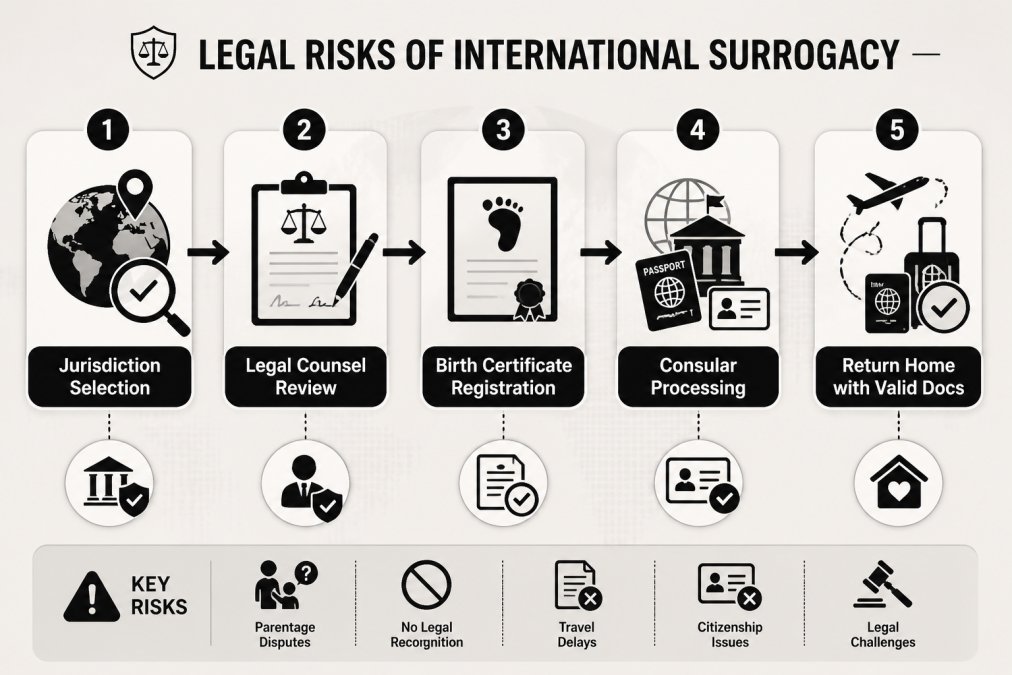
Even if a destination country issues a birth certificate naming you as the parent, your home country may not recognize it. Many jurisdictions require adoption proceedings or guardianship orders to legally establish parentage for children born via surrogacy abroad. A newborn is not automatically a citizen of the Intended Parent’s home country; citizenship is typically granted through naturalization. Mitigating these risks requires working with legal counsel experienced in both the destination country’s surrogacy law and your home country’s immigration and family law.
What Single Intended Parents Need to Know
Single Intended Parents must prioritize jurisdictions offering explicit legal recognition and pre-birth parentage orders. Engage legal counsel in both jurisdictions before committing. Verify that the destination country explicitly permits single-parent surrogacy through written confirmation from local legal counsel. Confirm pre-birth parentage order availability so you can depart immediately with a legally recognized birth certificate. Understand your home country’s citizenship and passport requirements by contacting your country’s consular office. Herman Family Group specializes in coordinating these legal and logistical elements for single Intended Parents, identifying destinations where single parents receive explicit legal recognition, securing pre-birth parentage orders, and managing consular processing to ensure smooth citizenship and passport acquisition.
International Surrogacy and Citizenship Rights
Cross-Border Reproductive Care and Legal Frameworks
This article was written using GrandRanker