Table of Contents
- Why International Intended Parents Choose US Surrogacy
- US Surrogacy Laws for International Parents
- International Surrogacy Travel Requirements
- Obtaining a US Birth Certificate for International Surrogacy
- Surrogacy Agency Support Services You Need
- The Surrogacy Journey: Key Steps and Timeline
- Financial Planning and Transparency
- Post-Birth Legal Repatriation and Citizenship
Last Updated: August 9, 2026
Why International Intended Parents Choose US Surrogacy
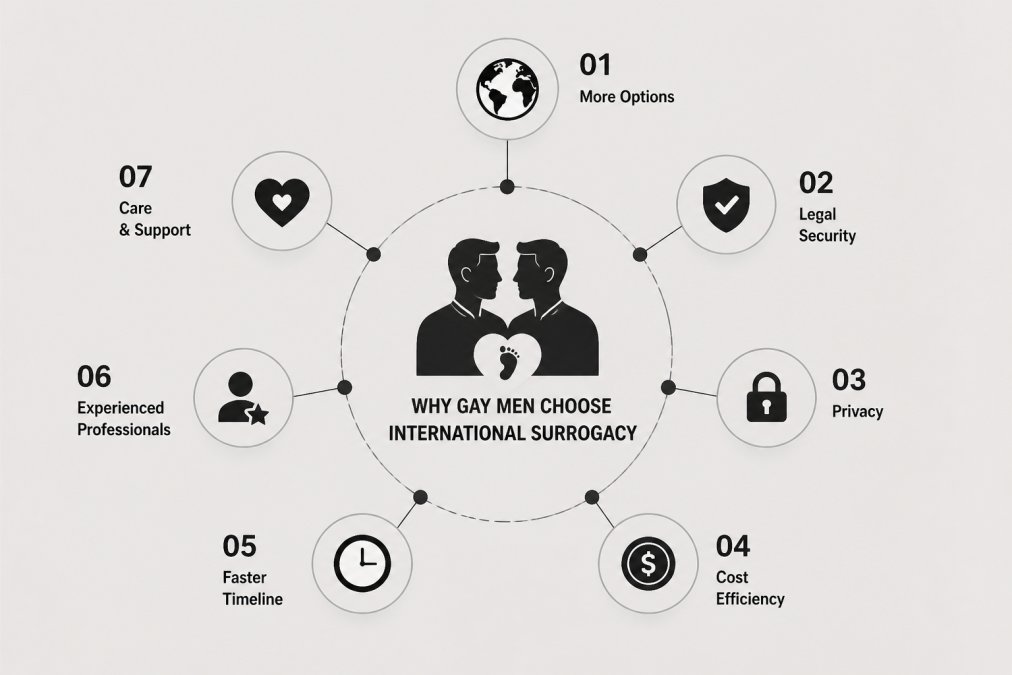
International Intended Parents increasingly turn to the United States for surrogacy because the country offers legal clarity, advanced medical infrastructure, and ethical safeguards that few other destinations can match. For same-sex couples, single parents, and heterosexual couples living in countries where surrogacy is restricted or unavailable, the US represents a viable pathway to biological parenthood.
The US offers advanced medical technology, a regulatory environment that protects all parties, and the gestational surrogacy model, where the surrogate has no genetic connection to the child, aligns with the legal frameworks of many countries. What distinguishes the US surrogacy journey is the combination of medical excellence and legal structure. Fertility clinics have decades of experience with IVF and embryo transfer procedures. Surrogacy-friendly states provide pre-birth orders that establish parental rights before delivery, eliminating custody ambiguity at birth. For International Intended Parents, this clarity means returning home with a child whose legal parentage is already secured in the US, simplifying citizenship and legal recognition in their home country.
Many US states issue birth certificates naming the Intended Parents directly, without requiring post-birth adoption proceedings. This significantly reduces legal complexity when repatriating a child to countries with strict recognition requirements.
US Surrogacy Laws for International Parents
Understanding US surrogacy laws is critical for International Intended Parents because state-level variation means legal protections differ dramatically depending on where the birth occurs. Surrogacy regulation in the United States is fragmented across states rather than governed by federal law.
State-by-state legal variations
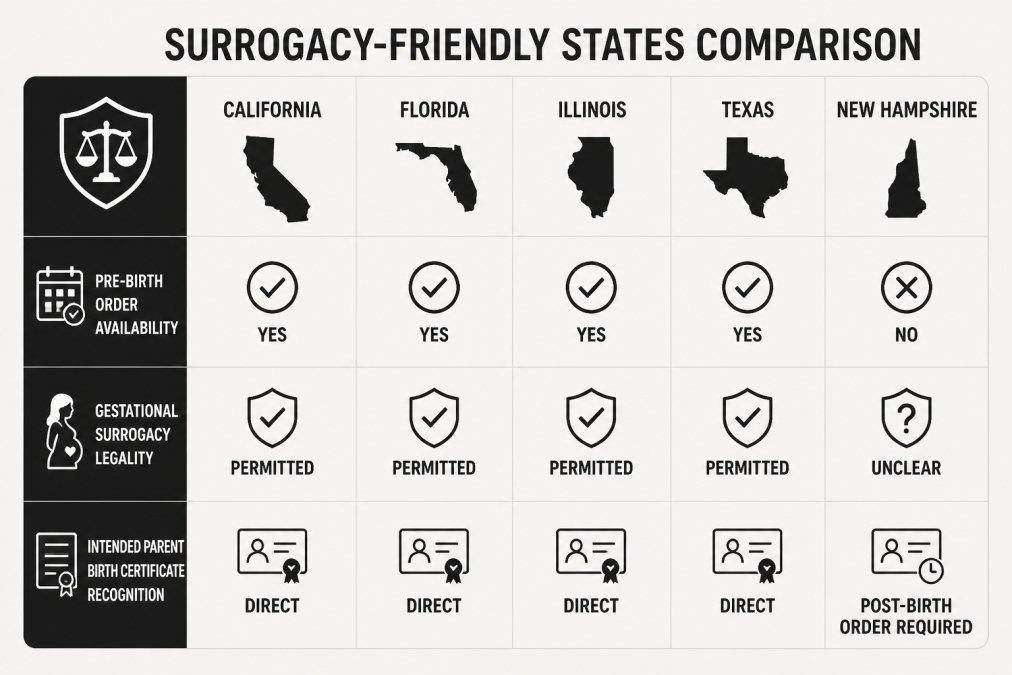
Some states explicitly permit gestational surrogacy and provide pre-birth orders that name the Intended Parents on the birth certificate before delivery. Others have no clear surrogacy law, leaving the process ambiguous. A small number of states restrict or prohibit compensated surrogacy.
In surrogacy-friendly states like California, Florida, and Illinois, the legal process is well-established: Intended Parents can obtain a pre-birth order, which means the birth certificate will list them as parents without requiring post-birth adoption. In states with unclear law, the process may require post-birth legal proceedings, complicating repatriation and delaying citizenship establishment.
Attempting surrogacy in a state with restrictive or unclear law can result in the birth certificate listing only the surrogate, requiring post-birth adoption proceedings in both the US and the Intended Parents’ home country. This can delay citizenship by months and create legal ambiguity about the child’s status during travel.
Parental rights and pre-birth orders
A pre-birth order is a court judgment issued before delivery that establishes the Intended Parents as the legal parents. In states permitting gestational surrogacy, the court recognizes that the Intended Parents, not the gestational carrier, have parental rights to the embryo and resulting child.
The pre-birth order directs the hospital to issue a birth certificate naming the Intended Parents as parents, establishes legal parentage before birth, and provides a clear legal document for establishing citizenship and obtaining a passport. Obtaining a pre-birth order typically involves filing a petition with the court in the state where the birth will occur. In surrogacy-friendly states, courts routinely grant these petitions when documentation is complete.
International Surrogacy Travel Requirements
For International Intended Parents, the logistics of traveling to the United States involve visa planning, documentation preparation, and understanding key in-person milestones that require presence in the country.
Visa and documentation planning
International Intended Parents will need to enter the United States multiple times during the surrogacy journey. Each entry requires a valid passport and, depending on country of origin, either visa-free travel under the Visa Waiver Program or a B-2 visitor visa.
For countries in the Visa Waiver Program (including most European nations and Australia), citizens can enter the US for tourism or temporary business without a visa, staying up to 90 days. The Electronic System for Travel Authorization (ESTA) is required and obtained online. For citizens of countries not in the Visa Waiver Program, a B-2 visitor visa from a US embassy or consulate is necessary. B-2 visas are typically valid for up to 10 years with multiple entries, though each visit is limited to the duration granted upon arrival (typically 6 months).
International Intended Parents should verify passport validity well in advance, passports must be valid for at least six months beyond intended travel dates.
When entering the US as part of a surrogacy journey, describe it as “medical tourism” or “visiting for fertility treatment,” which aligns with your B-2 visitor status. Immigration officials are familiar with fertility travel and will not challenge legitimate medical visits.
Timeline and in-person milestones
The surrogacy journey requires International Intended Parents to be present at several key moments. The first milestone is the initial consultation and legal review, typically occurring 1-2 months before the IVF cycle, lasting 2-4 days with at least one Intended Parent present.
The second milestone is embryo transfer, which occurs after the surrogate has prepared her uterus. The procedure takes 15-30 minutes, but associated appointments may require 3-5 days in the US. At least one Intended Parent should be present.
The third milestone is birth itself. International Intended Parents typically travel 1-2 weeks before the due date and may stay 1-3 weeks, depending on delivery timing and post-birth legal procedures. Between milestones, much of the process proceeds without requiring physical presence.
Obtaining a US Birth Certificate for International Surrogacy
The birth certificate is the foundational legal document for establishing the child’s identity and citizenship. In surrogacy-friendly states with pre-birth orders, the hospital issues a birth certificate at delivery naming the Intended Parents as parents.
For International Intended Parents, obtaining certified copies of the US birth certificate is a critical early step. Most states issue birth certificates with the Intended Parents’ names automatically if a valid pre-birth order is in place. Certified copies can be requested from the state’s vital records office and usually arrive within 1-2 weeks. Families should request multiple certified copies, typically 5-10, because these will be needed for passport applications, citizenship applications, and legal recognition in the home country.
The birth certificate serves as the primary document for establishing the child’s US citizenship. A child born in the US to at least one US citizen parent is automatically a US citizen. For International Intended Parents who are not US citizens, the child’s citizenship is determined by the laws of their home country.
The birth certificate is your primary repatriation document. Obtain 5-10 certified copies before leaving the US and keep them secure. You’ll need them to apply for citizenship, obtain a passport, and establish legal recognition in your home country.
Surrogacy Agency Support Services You Need
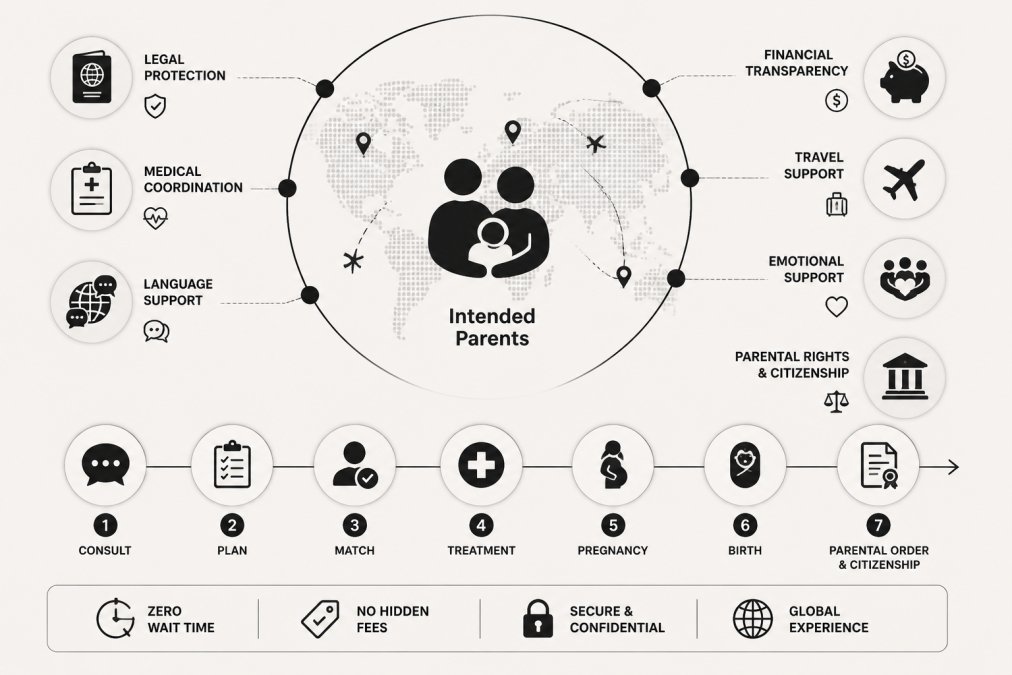
Choosing a surrogacy support provider is one of the most important decisions International Intended Parents make. The right agency coordinates medical care, manages legal processes, handles financial arrangements, and provides emotional support. Herman Family Group specializes in comprehensive surrogacy support for International Intended Parents, offering immediate program commencement and transparent coordination from initial planning through birth and beyond.
Medical coordination and fertility clinic partnerships
Medical coordination is the backbone of any surrogacy program. A quality provider has established partnerships with accredited fertility clinics, ensuring Intended Parents receive care from experienced reproductive specialists who have successfully managed surrogacy cases.
Effective medical coordination includes initial fertility assessments, egg or sperm retrieval, embryo creation through IVF, genetic testing of embryos if desired, and embryo storage. The clinic also manages the surrogate’s preparation, hormone protocols to prepare the uterus, timing of embryo transfer, and pregnancy monitoring. A quality provider explains the medical timeline clearly and ensures communication between the clinic, surrogate, and Intended Parents, with medical updates reaching families promptly.
Legal and escrow management
Legal coordination is equally critical. Surrogacy involves a binding surrogacy agreement between the Intended Parents and gestational carrier, establishment of parental rights through a pre-birth order, and eventually, citizenship and legal recognition in the Intended Parents’ home country.
A quality provider employs or coordinates with experienced surrogacy attorneys licensed in the state where the birth will occur. These attorneys draft the surrogacy agreement, file the pre-birth order petition, coordinate with the hospital to ensure correct names appear on the birth certificate, and provide guidance on citizenship and repatriation.
Escrow management is a financial safeguard. Intended Parents deposit funds into an escrow account managed by an independent escrow agent. Funds are released according to the surrogacy agreement. Escrow protects all parties: Intended Parents know funds are held securely and released only when contractual obligations are met, and the surrogate knows she will be compensated as agreed.
Emotional and logistical support
International Intended Parents need emotional support throughout the surrogacy journey. A quality provider offers counseling or connects Intended Parents with mental health professionals experienced in fertility and surrogacy, including individual counseling, couple’s counseling, and group support with other Intended Parents.
Logistical support is equally important. A comprehensive provider can recommend hotels near fertility clinics, arrange transportation, coordinate appointment schedules, and provide guidance on what to expect at each stage. This support reduces stress and allows Intended Parents to focus on the emotional aspects of their journey.
The Surrogacy Journey: Key Steps and Timeline
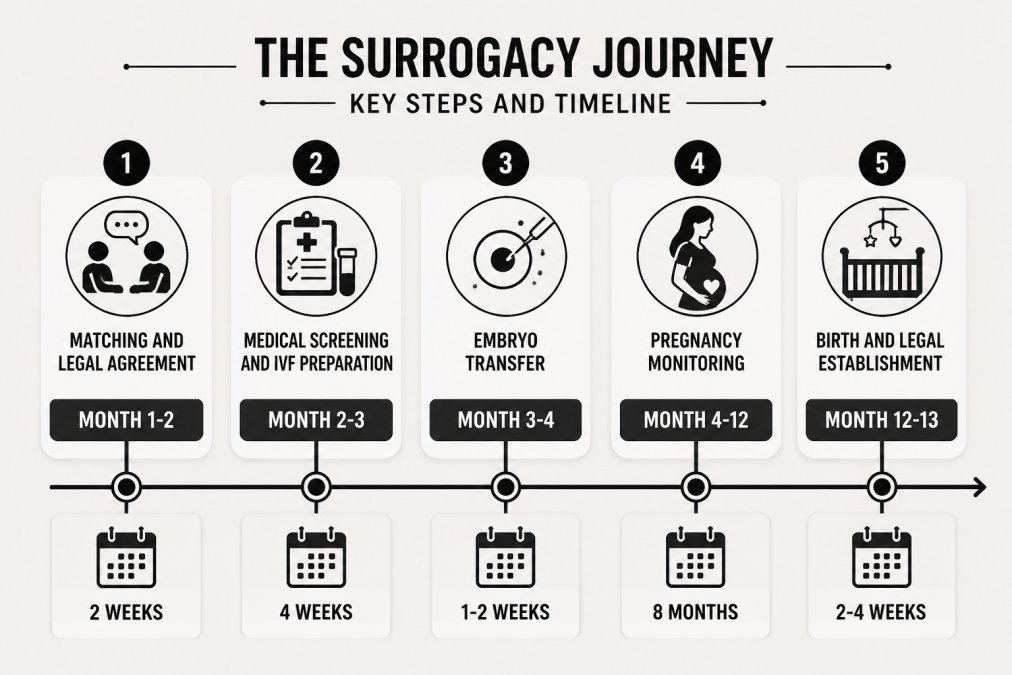
The surrogacy journey for International Intended Parents follows a predictable sequence of medical, legal, and logistical milestones.
Matching with a gestational carrier
The first step after committing to surrogacy is being matched with a gestational carrier, a woman who will carry the pregnancy but has no genetic relationship to the child. A quality program maintains a network of screened and qualified gestational carriers and facilitates the matching process.
Matching involves reviewing profiles of available carriers, considering factors like location, medical history, previous pregnancy experience, and personal compatibility. Once both parties agree, the legal surrogacy agreement is finalized. Programs offering immediate commencement can often facilitate faster matching.
Medical screening and IVF preparation
Once matched, both Intended Parents and the gestational carrier undergo medical screening. For Intended Parents, this includes fertility assessments, infectious disease testing, and genetic screening if desired. For the gestational carrier, screening includes a comprehensive physical examination, infectious disease testing, psychological evaluation, and uterine imaging to confirm suitability for pregnancy.
If Intended Parents will provide their own eggs or sperm, the fertility clinic begins hormone protocols to stimulate egg production or prepares sperm collection, typically lasting 2-3 weeks. If donor eggs or sperm are necessary, the clinic coordinates with an egg bank or sperm bank to select and prepare donor gametes.
The gestational carrier begins hormone protocols to prepare her uterus for embryo implantation, typically involving estrogen and progesterone supplementation for 1-2 weeks before the planned transfer.
Embryo transfer and pregnancy support
Embryo transfer is a minor procedure in which a single embryo is placed into the prepared uterus, taking 15-30 minutes. For International Intended Parents, this is typically the second major travel milestone, with at least one parent present.
After transfer, the gestational carrier receives progesterone supplementation to support early pregnancy. A pregnancy test is performed 10-14 days after transfer. If positive, ultrasounds confirm normal progression, and the carrier transitions to routine prenatal care with an obstetrician. Throughout pregnancy, the surrogate receives regular prenatal care, and the fertility clinic maintains communication with Intended Parents, providing updates on pregnancy progress.
Birth, legal parentage, and return home
As the due date approaches, International Intended Parents travel to the US to be present for delivery, typically the third and longest travel milestone, lasting 1-3 weeks.
At delivery, assuming a valid pre-birth order is in place, the hospital issues a birth certificate naming the Intended Parents as parents. The surrogacy agreement is fulfilled, and the Intended Parents assume full legal and physical custody of the newborn.
After birth, Intended Parents work with the surrogacy program and legal counsel to complete post-birth procedures: obtaining certified copies of the birth certificate, applying for a US Social Security number for the child, and preparing for repatriation. Return home involves traveling internationally with a newborn, requiring careful planning. The child needs a valid passport to travel, and Intended Parents must understand their home country’s requirements for legal recognition and citizenship of a child born via surrogacy.
Financial Planning and Transparency
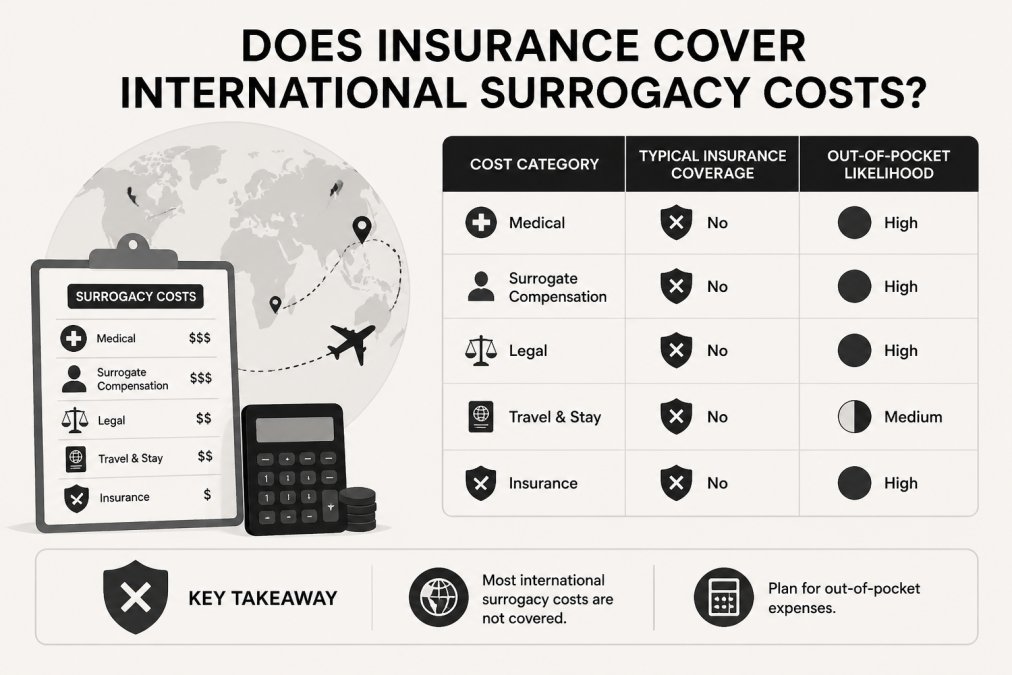
Financial planning is essential for International Intended Parents considering surrogacy. A quality surrogacy program operates with transparent pricing and no hidden fees. All anticipated costs should be explained upfront, including medical expenses, legal costs, surrogate compensation and support, and program coordination fees.
International Intended Parents should understand that some costs are fixed (legal fees, program coordination) while others vary based on individual circumstances (whether donor eggs or sperm are needed, whether genetic testing of embryos is desired, whether the surrogate requires additional medical care). A transparent provider clearly distinguishes between standard and variable costs.
Financial planning should also include contingency planning. What happens if the embryo transfer is unsuccessful and a second cycle is needed? What if the pregnancy ends in miscarriage? A quality program explains these scenarios and financial implications in advance.
Request a detailed cost breakdown from any surrogacy program before committing. The breakdown should itemize every anticipated expense, distinguish between fixed and variable costs, and clearly state what is and is not included. This prevents misunderstandings and allows you to compare programs fairly.
Post-Birth Legal Repatriation and Citizenship
Completing the surrogacy journey doesn’t end at birth. For International Intended Parents, the post-birth phase involves establishing the child’s citizenship, obtaining travel documents, and ensuring legal recognition in the home country.
Immediately after birth, Intended Parents should obtain multiple certified copies of the US birth certificate (typically 5-10). These copies are essential for all subsequent legal processes.
Establishing US citizenship for the child is the first step. A child born in the US is automatically a US citizen if at least one parent is a US citizen. For International Intended Parents who are not US citizens, the child’s citizenship depends on US law and the laws of their home country. In most cases, a child born in the US is granted US citizenship by birth, and Intended Parents can apply for a US passport for the child at any US passport acceptance facility.
Obtaining a US passport is the next step. A passport is required for the child to travel internationally and return to the Intended Parents’ home country. US passports for minors are valid for 5 years and can be obtained at most post offices or passport agencies with the birth certificate, proof of citizenship, and Intended Parents’ identification.
Once the child has a US passport, Intended Parents must navigate citizenship and legal recognition in their home country. This process varies dramatically by country. Some countries grant automatic citizenship to children born to citizen parents, regardless of birthplace. Others require a naturalization application. Some countries recognize the Intended Parents’ legal parentage based on the US birth certificate and pre-birth order; others require post-birth legal proceedings.
International Intended Parents should research their home country’s specific requirements for citizenship and legal recognition well before birth occurs. Many countries require the child to be registered with the embassy or consulate within a specific timeframe (often 30-90 days). Failure to meet these deadlines can complicate citizenship and create legal ambiguity about the child’s status.
A quality surrogacy support provider, like Herman Family Group, provides guidance on repatriation and citizenship processes specific to the Intended Parents’ home country. This support may include connecting Intended Parents with immigration attorneys in their home country or providing templates and checklists for citizenship applications.
Do not assume that a US birth certificate automatically establishes citizenship or legal parentage in your home country. Many countries have specific requirements for recognizing a child born via surrogacy. Failing to complete these requirements can result in the child being stateless or not legally recognized as your child. Research your country’s requirements immediately and plan accordingly.
The path to parenthood through international surrogacy is complex, but achievable with the right support. The combination of US legal protections, advanced medical care, and comprehensive coordination from a trusted surrogacy support provider transforms the journey from overwhelming to manageable. Herman Family Group specializes in supporting International Intended Parents through every phase of this process, from initial planning through medical coordination, legal establishment, and post-birth repatriation. With transparent pricing, zero wait times for program commencement, and a mission-driven team dedicated to ensuring a safe and successful journey for diverse family structures, Herman Family Group helps Intended Parents worldwide build their families with confidence.
Frequently Asked Questions
What are the main legal requirements for international Intended Parents pursuing surrogacy in the US?
International Intended Parents must navigate state-specific surrogacy laws, as regulations vary significantly. Most surrogacy-friendly states require a valid surrogacy agreement, medical screening, and legal representation. Obtaining a pre-birth order (allowing you to be listed on the birth certificate before delivery) depends on your state. You'll also need proof of citizenship or legal residency status, and a US-based attorney to manage parental establishment and birth certificate issuance. Many states recognize gestational surrogacy but have different rules for same-sex couples and single parents. Working with an agency experienced in cross-border surrogacy ensures compliance with both US state law and your home country's citizenship requirements.
How do international Intended Parents obtain a US birth certificate for a child born via surrogacy?
A US birth certificate is issued by the state where the child is born. To secure one listing you as the parent, you'll need a pre-birth order (if available in that state) or a post-birth order from the court. The process involves filing legal paperwork before or shortly after birth, proving your parental rights under the surrogacy agreement and state law. Your attorney coordinates with the hospital and vital records office. Once the order is finalized, the birth certificate is amended to list you as the parent. This document is essential for obtaining a US passport and, if you're returning to another country, for consular registration and citizenship recognition. The timeline typically takes 2-6 weeks after birth, depending on state processing times.
What should I look for in surrogacy agency support services?
Comprehensive surrogacy agency support services should include medical coordination with fertility clinics, legal guidance from surrogacy-experienced attorneys, and gestational carrier matching. Essential services cover escrow account management (holding funds securely), pre-birth order filing, birth certificate coordination, and post-birth legal parentage establishment. Emotional support is equally important: many agencies offer counseling for both Intended Parents and surrogates, manage communication across time zones, and provide guidance through medical and legal milestones. Transparent pricing with no hidden fees is critical. The best agencies specialize in international cases, understand visa and travel logistics, and offer support through birth and beyond, including help with repatriation and citizenship documentation for your home country.
What travel and visa requirements should international Intended Parents expect?
International Intended Parents typically need to travel to the US multiple times: for initial consultations, IVF procedures (egg retrieval and embryo transfer), and birth. You'll need a valid passport and may require a visitor visa (B-2 tourist visa) depending on your country of origin. The US does not recognize surrogacy as a specific visa category, so you travel as a tourist. Plan for 2-3 weeks during the IVF cycle, then return for the birth (typically a few days before the due date). Your agency coordinates travel logistics and medical appointments. After birth, you'll need to apply for a US passport for your child before leaving the country, this requires the birth certificate and can take 1-2 weeks. Some countries also require consular registration of the birth. Budget time and resources for these trips, and ensure your travel insurance covers fertility-related care.
This article was written using GrandRanker