Safe International Surrogacy for Diverse Families: A Complete Guide
Last Updated: July 28, 2026
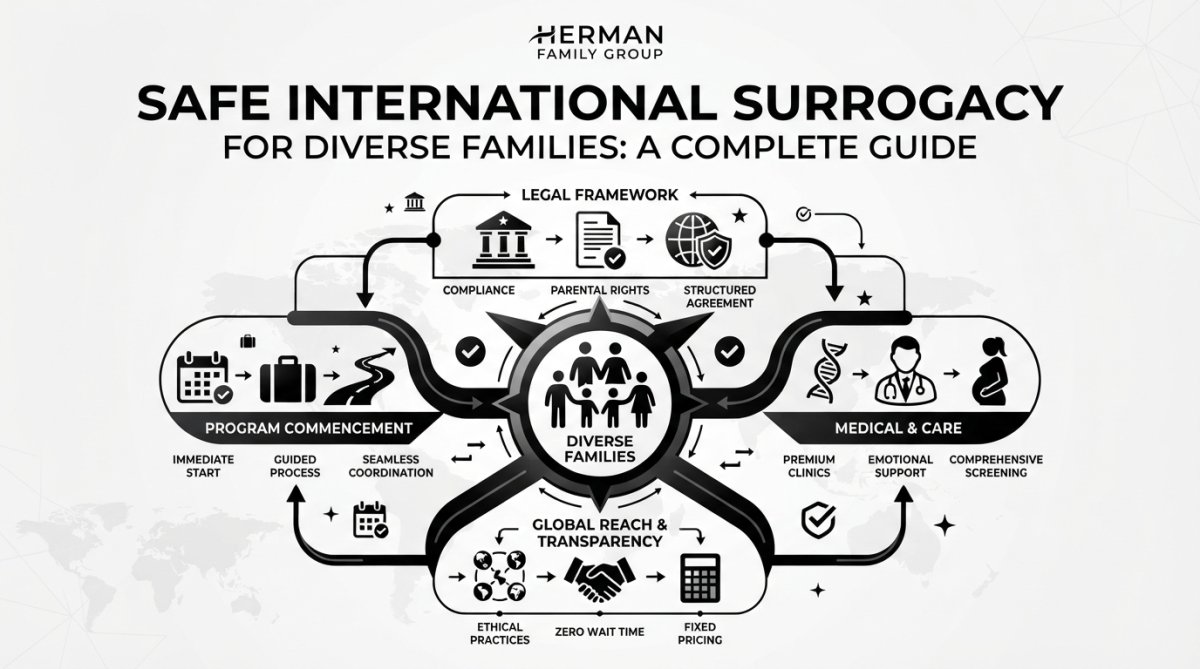
Building a family through safe international surrogacy for diverse families has become increasingly accessible and legally structured in recent years. Whether you’re a single parent, same-sex couple, or heterosexual couple facing fertility challenges, understanding the legal landscape, medical processes, and ethical frameworks is essential. At Herman Family Group, we help Intended Parents worldwide navigate this complex journey with confidence and transparency.
Understanding Safe International Surrogacy for Diverse Families
Safe international surrogacy depends on three critical factors: legal recognition of parental rights, transparent medical protocols, and ethical agency practices. The difference between a legally sound arrangement and a custody nightmare often hinges on whether your destination country has pre-birth orders, clear citizenship pathways, and established protections for gestational carriers.
Safe international surrogacy means choosing destinations where the law explicitly recognizes intended parents’ rights before birth, where medical screening is rigorous, and where surrogacy contracts are enforceable. It also means working with agencies that maintain accountability, provide ongoing support, and never pressure you into rushed decisions.
Single parents, LGBTQ+ couples, and mixed-nationality families often find that certain countries welcome them openly while others create unnecessary legal barriers. Understanding which destinations actively support diverse family structures shapes your entire experience.
International Surrogacy Legal Considerations by Region
Legal frameworks for international surrogacy vary dramatically by region. The key legal questions are: Can you obtain a pre-birth order naming you as the legal parent? Will your home country recognize the birth certificate issued abroad? What citizenship will the child receive?
Pre-birth orders and parental rights recognition determine whether you’re the legal parent from the moment of birth or whether you must navigate post-birth adoption proceedings. A pre-birth order is essential because it means your name appears on the original birth certificate, avoiding months of legal limbo and the need for costly post-birth adoption.
Citizenship and birth certificate documentation create a second layer of complexity. Some countries issue birth certificates naming the intended parent; others name the gestational carrier; still others issue documents that are ambiguous or contested. You need absolute clarity on this before committing.
Best Countries for International Surrogacy: Safety and Legal Framework
Comparing legal protections across destinations requires looking beyond marketing claims.
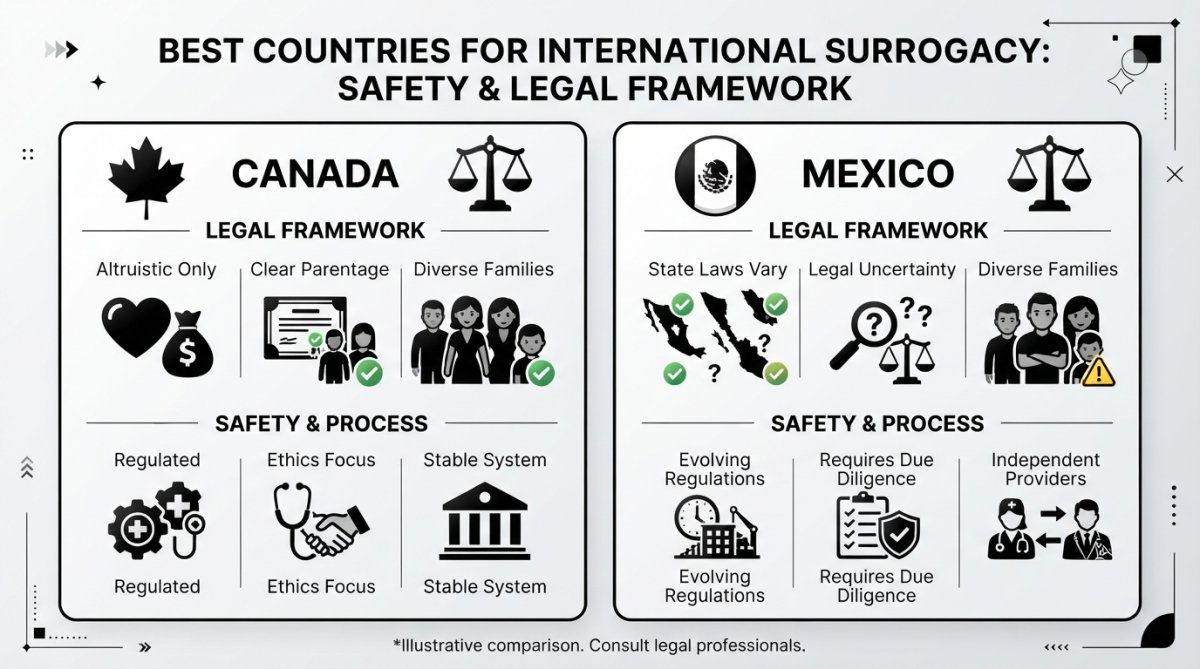
Canada offers one of the clearest legal frameworks. Surrogacy is legal, pre-birth orders are available, and LGBTQ+ couples and single parents are explicitly welcomed. The trade-off is cost; however, the legal certainty justifies the investment for many Intended Parents.
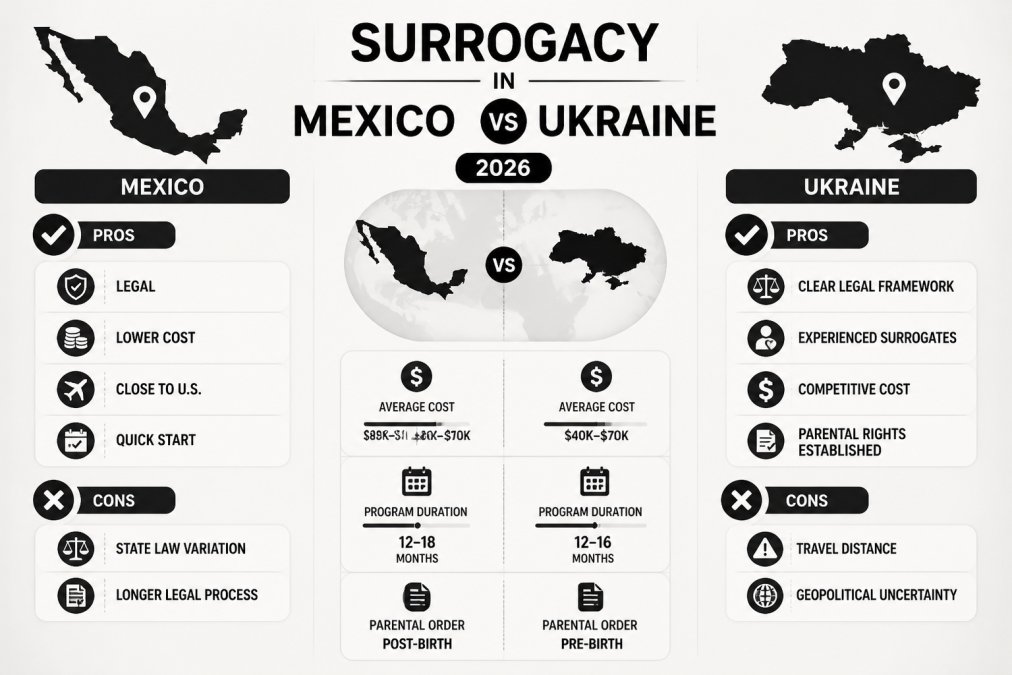
Mexico presents a mixed landscape. Some states (particularly Tabasco and Coahuila) have clear surrogacy laws and issue pre-birth orders. Other states prohibit or heavily restrict surrogacy. If you choose Mexico, your destination state matters enormously. The advantage is lower cost than Canada; the disadvantage is less predictability in some regions.
Ukraine similarly permits surrogacy and issues pre-birth orders, with strong medical infrastructure and explicit legal recognition of diverse families.
The critical comparison point is enforceability. Choose destinations where courts regularly uphold surrogacy agreements and issue birth certificates naming intended parents.
LGBTQ+ International Surrogacy: Legal Pathways and Support
Same-sex couples and LGBTQ+ individuals face distinct legal challenges in international surrogacy. While many destinations permit the medical process, not all recognize parental status for non-biological parents. In Mexico, both parents in a same-sex couple can be named on the birth certificate before birth.
The most significant legal risk for LGBTQ+ Intended Parents is the possibility that their home country won’t recognize both parents’ legal status. This requires careful vetting of your home country’s recognition laws before choosing a destination.
Verify that any agency you consider has actual experience with same-sex couples, works with destination countries with clear legal pathways for both parents, and provides legal guidance specific to your home country’s recognition laws.
Finding Ethical International Surrogacy Agencies
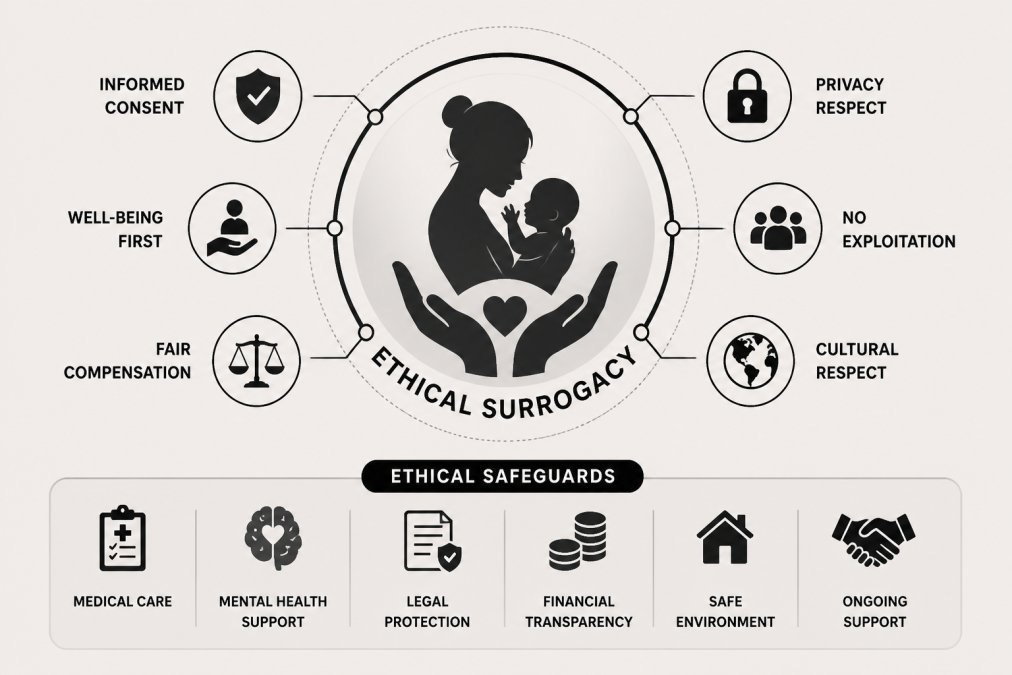
Not all surrogacy agencies operate with the same standards. Ethical agencies are transparent about costs, maintain ongoing relationships with gestational carriers, conduct rigorous medical and psychological screening, and never pressure Intended Parents into rushed decisions.
Red flags and verification criteria help you identify agencies worth trusting. A red flag is an agency that won’t clearly explain where your money goes, that promises unrealistically fast matching timelines, that discourages you from speaking directly with your lawyer, or that has no verifiable track record with families similar to yours. Verify the agency’s credentials by checking whether they’re registered with professional organizations and whether they can provide references from past clients.
Ethical agencies also prioritize the wellbeing of gestational carriers. They ensure carriers receive comprehensive medical care, psychological support, fair compensation, and legal representation.
Transparency, accountability, and ongoing support distinguish reputable agencies from transactional ones. A transparent agency provides a detailed breakdown of all costs upfront, explains what happens if complications arise, maintains communication throughout the pregnancy, and provides post-birth support.
Herman Family Group operates with this standard of transparency. We maintain ongoing communication from initial planning through birth and beyond, and work exclusively with destinations where legal protections for both Intended Parents and gestational carriers are clear. We specialize in supporting diverse family structures, single parents, LGBTQ+ couples, and mixed-nationality families, with legal guidance tailored to your specific situation.
The International Surrogacy Process: From Planning to Parenthood
The journey typically spans 12-14 months from initial planning to bringing your child home, though timelines vary based on your medical situation and destination choice.
Medical screening and matching begins with comprehensive health evaluations for the intended parent(s) and identification of a suitable gestational carrier. For single men or couples without a female partner, an egg donor is identified separately. The egg donor undergoes hormone stimulation to produce eggs; sperm is collected; and eggs and sperm are fertilized in vitro to create embryos. Meanwhile, the gestational carrier undergoes medical screening to ensure she’s healthy enough to carry a pregnancy safely.
Matching typically takes 1-2 months. Thorough medical and psychological evaluation of gestational carriers protects everyone involved.
Embryo transfer and pregnancy support follows once a suitable match is made. The gestational carrier receives hormone preparation to ready her uterus, then embryos are transferred. Pregnancy confirmation typically comes 10-14 days later. Throughout the pregnancy, the carrier receives regular medical monitoring, and the intended parents receive updates and support. This phase lasts approximately 9 months.
Post-birth legal documentation is where many international surrogacies encounter unexpected delays. If your destination country issues a birth certificate naming you as the legal parent, the process is straightforward. If the birth certificate names the gestational carrier, you’ll need to pursue post-birth adoption or parental recognition, which can add months and significant legal costs.
This is why choosing a destination with clear pre-birth order provisions is critical. It’s not just about convenience; it’s about avoiding a situation where you’re legally separated from your child for weeks or months while paperwork is processed.
Financial Planning and Insurance for Safe International Surrogacy
Understanding cost drivers and escrow protection helps you budget accurately and protect your investment. International surrogacy costs vary by destination, but the major cost components are consistent: medical procedures, gestational carrier compensation, agency fees, legal fees, travel, and insurance.
Cost Component | What It Covers | Variability |
|---|---|---|
Medical procedures | Egg retrieval, IVF, embryo transfer, pregnancy monitoring | Varies by clinic and destination |
Gestational carrier compensation | Carrier’s fee, medical care, maternity support, lost wages | Varies by country and carrier experience |
Agency fees | Matching, coordination, support services | Varies by agency and services included |
Legal fees | Contracts, pre-birth orders, documentation | Varies by destination complexity and home country recognition |
Travel and accommodation | Flights, hotels for medical appointments and birth | Varies by destination and frequency of travel |
Insurance | Medical complications, contingency coverage | Varies by plan selected |
Insurance coverage and contingency planning address what happens if complications arise. Medical complications during pregnancy or birth can be expensive; some surrogacy insurance policies cover these costs. Contingency insurance protects you if the pregnancy fails and you need to attempt another cycle. Clarify what’s covered before committing.
Herman Family Group provides transparent pricing with detailed breakdowns, allowing you to understand exactly what each component costs and plan your finances accordingly.
Mental Health and Support Networks for Diverse Families
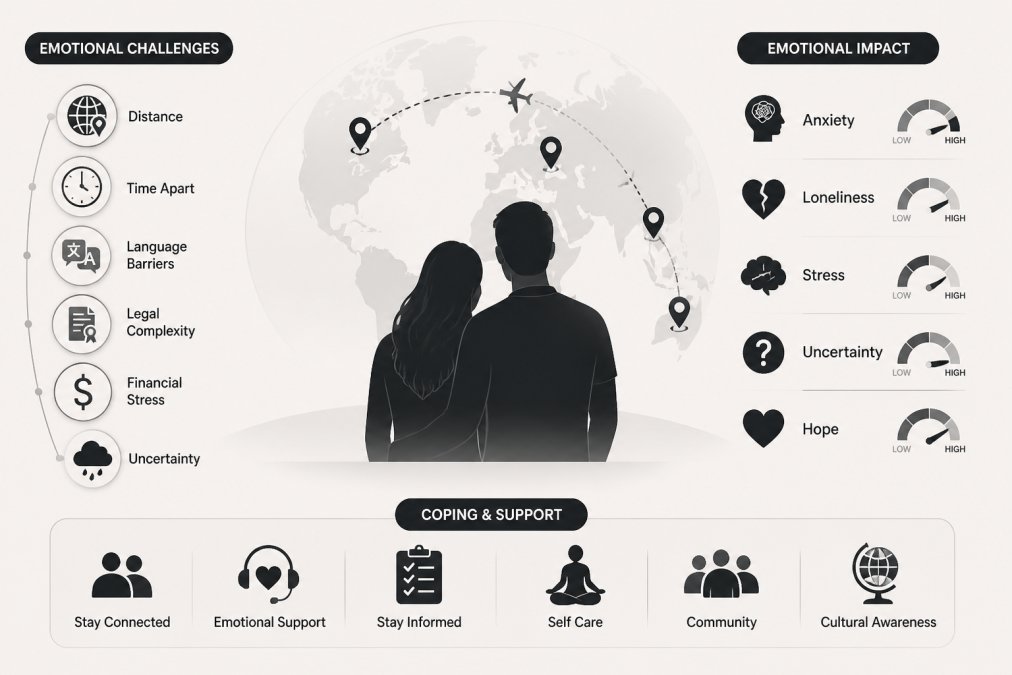
The emotional journey of surrogacy is often underestimated. Intended Parents experience hope, anxiety, and profound joy at birth. Gestational carriers experience physical and emotional demands. Creating a support network before starting the process is essential.
Mental health support should include access to a therapist familiar with surrogacy, connection to support groups of other Intended Parents, and clear communication channels with your agency and medical team. For diverse families, single parents, LGBTQ+ couples, and mixed-nationality families, additional support is valuable. Connecting with others who’ve navigated similar paths provides both practical guidance and emotional validation.
Herman Family Group provides comprehensive support from initial planning through birth and beyond, including connections to mental health professionals and peer support networks. This ongoing support acknowledges that the surrogacy journey continues as you navigate legal documentation, return home, and adjust to parenthood.
Building your family through safe international surrogacy for diverse families requires careful planning, the right legal guidance, and a partner who understands your specific situation. The complexity of international law, medical coordination, and emotional support is significant, but it’s manageable when you work with an agency that prioritizes transparency and your long-term success. Create Your Plan with Herman Family Group and begin your journey with a personalized roadmap, expert legal coordination, and comprehensive support every step of the way.
Frequently Asked Questions
What legal protections exist for Intended Parents pursuing safe international surrogacy?
Legal protections vary significantly by destination country. Pre-birth orders, surrogacy contracts, and escrow accounts provide foundational safeguards. Reputable agencies work with local legal specialists to ensure parental rights are recognized before birth, birth certificates list Intended Parents, and citizenship pathways are clear. However, protections depend entirely on the country's surrogacy laws and your home country's recognition of international surrogacy arrangements. Always verify that your destination offers explicit legal frameworks for gestational surrogacy and that your home country recognizes the resulting parental status.
How do ethical international surrogacy agencies ensure the safety and fair treatment of gestational carriers?
Ethical international surrogacy agencies conduct comprehensive medical and psychological screening of gestational carriers, provide transparent compensation through escrow accounts, ensure written surrogacy contracts protect all parties, and maintain ongoing medical support throughout pregnancy. They verify that carriers have independent legal representation, are not coerced, and understand their rights. Look for agencies that publish their standards, allow direct communication with carriers (when appropriate), and provide post-birth support. Agencies should be transparent about carrier compensation, medical protocols, and how they verify informed consent—never agreeing to arrangements where carrier details are hidden.
What are the main cost drivers in international surrogacy, and how can Intended Parents plan financially?
International surrogacy costs depend on medical procedures (IVF, embryo transfer, prenatal care), gestational carrier compensation, legal fees, agency coordination, travel, and insurance. Escrow accounts protect funds by holding money until contractual milestones are met. Financial planning should include contingency reserves for medical complications, legal delays, or failed cycles. Transparent agencies itemize all costs upfront with no hidden fees. Request a detailed cost breakdown before committing, verify what insurance covers, and confirm whether the agency's fee includes support through birth and post-birth documentation. Some destinations are more affordable than others, but the lowest price doesn't guarantee the safest outcome.
How can LGBTQ+ Intended Parents navigate international surrogacy when their home country doesn't recognize same-sex parental rights?
LGBTQ+ Intended Parents should work with agencies and legal specialists experienced in cross-border family law for their specific situation. Some international destinations explicitly allow surrogacy for same-sex couples and provide clear parental recognition; others require creative legal structures (such as single-parent adoption following birth, or guardianship arrangements). Pre-birth orders, dual-parent contracts, and post-birth legal documentation are critical. Agencies specializing in diverse families understand these complexities and can guide Intended Parents through destination selection, legal strategy, and home-country re-entry planning. Never assume your home country will automatically recognize parental status—legal preparation before conception is essential.
This article was written using GrandRanker