Table of Contents
- Surrogacy Agencies vs Independent Paths: Key Differences
- Surrogacy Agency Benefits and Support Systems
- Independent Surrogacy Pros and Cons
- Legal Aspects of Independent Surrogacy
Surrogacy Agencies vs Independent Paths: A Complete 2026 Comparison
Last Updated: July 22, 2026
When Intended Parents begin their surrogacy journey, they face a critical decision: work with a surrogacy agency or pursue an independent path. This choice fundamentally shapes the entire experience, from legal protection to emotional support to financial transparency. Intended Parents who understand both options report higher satisfaction with their final decision, regardless of which route they choose.
At Herman Family Group, we’ve guided thousands of families through this crossroads. We believe Intended Parents deserve a transparent comparison that covers real differences, not marketing claims.
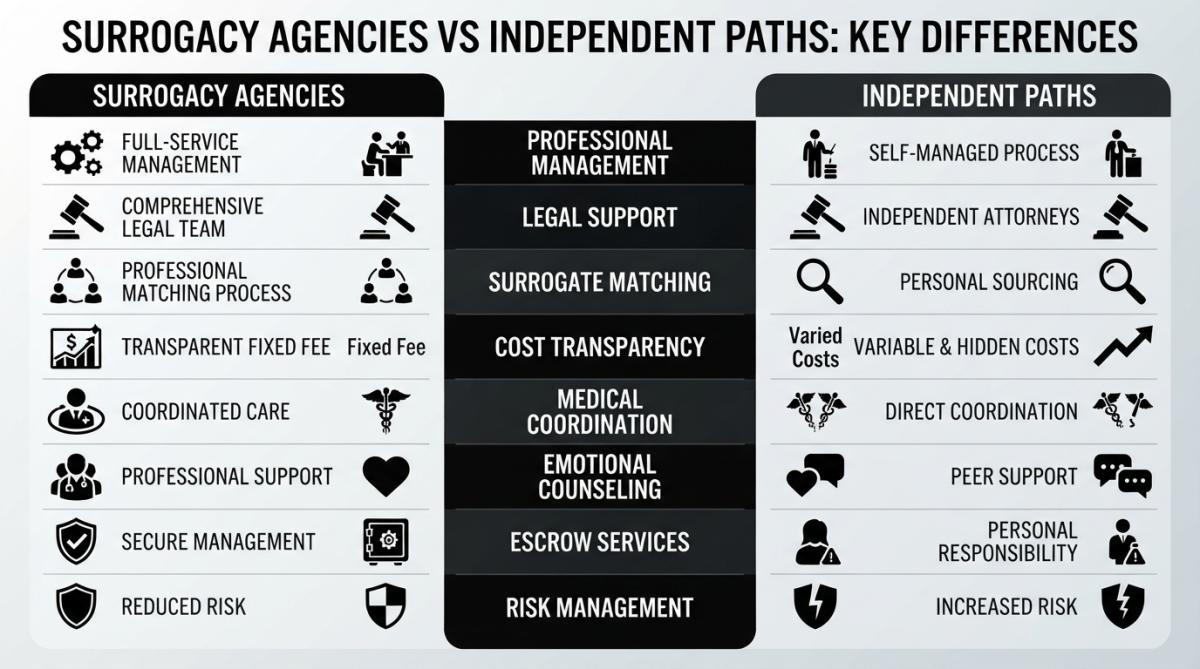
Surrogacy Agencies vs Independent Paths: Key Differences
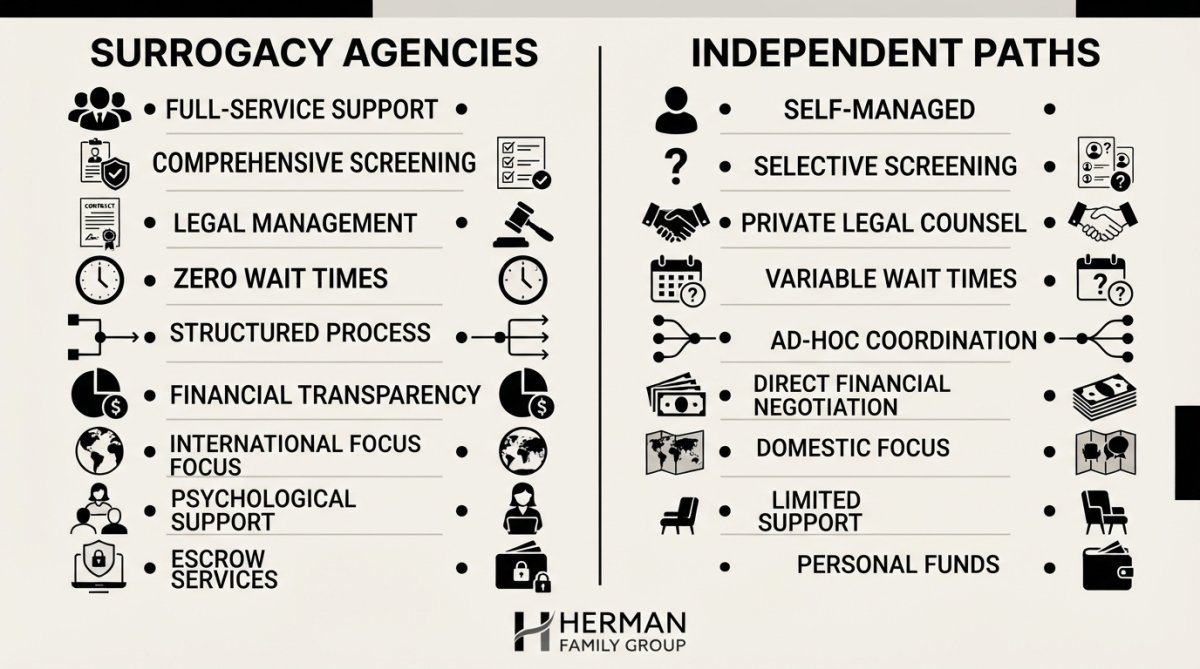
An agency-based surrogacy journey means working with a licensed organization that handles matching, legal coordination, medical screening, and case management. An independent path means Intended Parents directly hire a surrogate, coordinate with fertility clinics, retain their own legal counsel, and manage most logistics themselves.
The core tension is simple: agencies provide structure and oversight; independent journeys offer more control and potentially lower fees.
Dimension | Surrogacy Agency | Independent Path |
|---|---|---|
Surrogate Matching | Agency coordinates | You find or use broker |
Legal Oversight | Agency manages contracts | You hire own attorney |
Medical Screening | Agency coordinates | You arrange directly |
Psychological Evaluation | Agency arranges | You arrange or skip |
Case Management | Dedicated coordinator | You manage most tasks |
Emotional Support | Built-in support groups | Self-directed or limited |
Timeline to Match | 6-18 months typical | Highly variable |
Administrative Burden | Minimal on you | Significant on you |
Surrogacy Agency Benefits and Support Systems
Working with a surrogacy agency provides structured support from initial consultation through birth and beyond. Agencies manage surrogate matching, conduct psychological evaluations and medical screening, draft surrogacy contracts, coordinate with fertility clinics, and maintain ongoing case management throughout the IVF cycle and pregnancy.
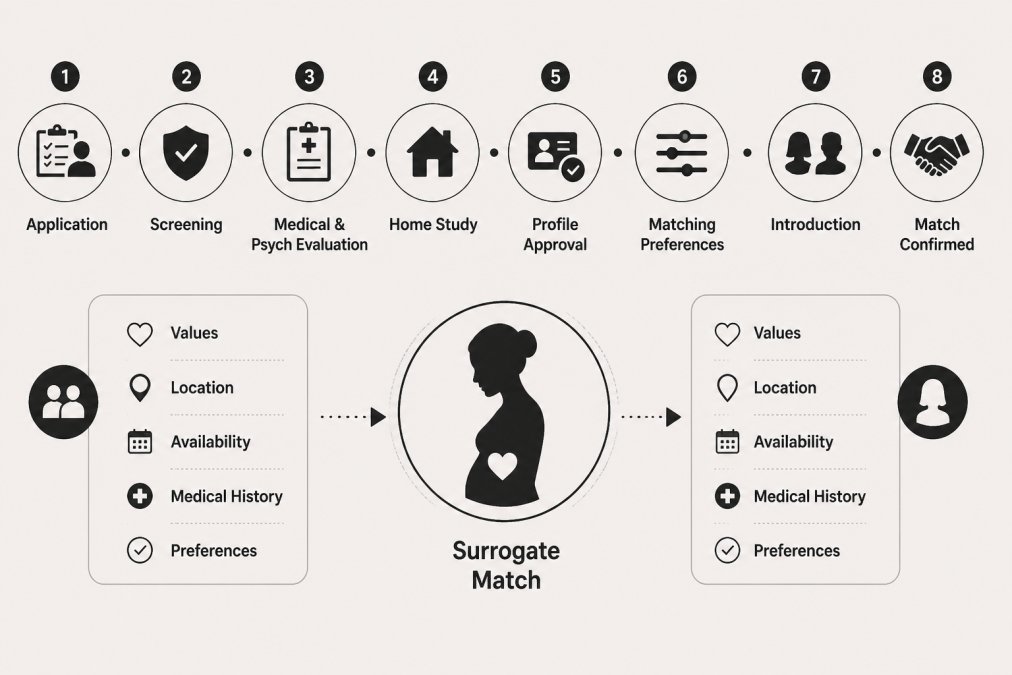
The matching process is where agencies add the most value. Professional agencies use detailed questionnaires, background checks, and compatibility assessments to pair Intended Parents with carefully vetted surrogates. This screening reduces mismatches and protects both parties.
Legal protection is another core benefit. Agencies work with experienced surrogacy attorneys to draft comprehensive contracts that address parentage orders, birth certificate procedures, compensation schedules, and liability. This professional accountability protects Intended Parents from legal surprises after birth.
Emotional support systems matter significantly. Agencies typically provide counseling referrals, support groups, and regular check-ins with a dedicated coordinator. However, agency support comes with fees and administrative requirements.
Independent Surrogacy Pros and Cons
An independent surrogacy journey offers more autonomy and potentially lower fees, but it requires significant personal effort and carries greater legal and financial risk if not managed carefully.
The primary advantage is cost control and flexibility. You eliminate agency fees, work directly with medical providers and attorneys, and control the timeline. If you already have a trusted surrogate relationship, you can move forward immediately without waiting for agency matching.
However, independent paths demand significant personal responsibility. You must handle surrogate recruitment or vetting, coordinate medical screening and psychological evaluation, draft legal contracts with proper state-specific language, manage escrow accounts, and maintain ongoing communication between all parties.
Legal risk increases substantially without professional oversight. A poorly drafted surrogacy contract can create ambiguity around parental rights, surrogate compensation, or medical decision-making authority. State surrogacy laws vary dramatically; what’s legal in one state may be unenforceable in another.
Emotional support is also minimal in independent journeys. You won’t have a dedicated coordinator or structured support group.
Legal Aspects of Independent Surrogacy
State-specific surrogacy laws create the biggest legal complexity for independent journeys. Surrogacy is legal in most U.S. states, but the legal framework varies significantly. Without proper legal guidance, an independent journey can result in a surrogate being listed as the legal parent at birth, forcing costly post-birth adoption or guardianship proceedings.
A surrogacy attorney specializing in your specific state can draft a contract that addresses parentage, compensation, medical authority, liability, and dispute resolution. They can also guide you through pre-birth parentage orders or post-birth adoption procedures, depending on your state’s laws.
Escrow account management is another critical legal consideration. Surrogacy compensation must be handled transparently and documented properly. In independent journeys, you must set up and manage the escrow account yourself or hire someone to do so.
Insurance and liability present additional risks. Agencies typically carry liability insurance and have established protocols for medical emergencies. Independent journeys leave you responsible for ensuring the surrogate has proper health insurance coverage and that all parties understand who bears financial responsibility if complications arise.
Comparing Costs and Hidden Fees
Agency surrogacy typically involves transparent, fixed fees covering matching, coordination, and support services. Independent surrogacy may appear cheaper initially, but hidden expenses often emerge.
Both paths incur costs for medical procedures, surrogate compensation, legal contracts, psychological evaluations, and fertility clinic fees. The real cost difference lies in what’s included and what you manage yourself. Many Intended Parents are surprised by hidden costs in independent journeys: surrogate medical expenses not covered by insurance, travel costs for medical appointments, legal fees for contract revisions, and escrow account management fees.
Transparency matters enormously. Reputable agencies disclose all fees upfront. Independent journeys require you to track expenses and budget carefully.
How to Choose: Agency vs. Independent Path
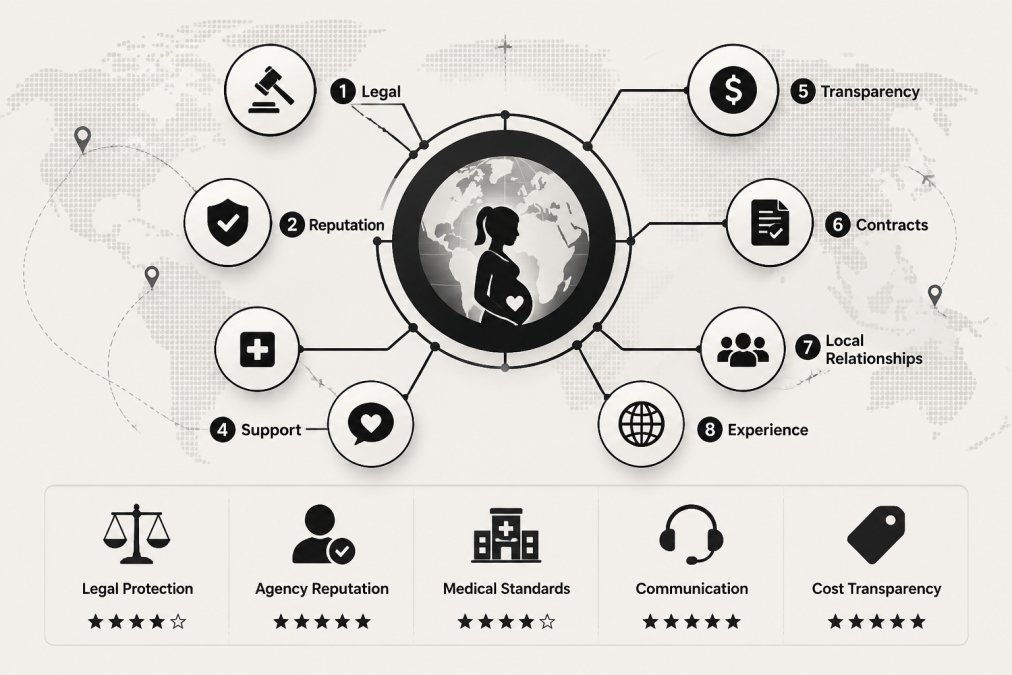
Your decision depends on three factors: your comfort with administrative complexity, your budget flexibility, and your existing relationships.
Choose an agency if you want professional coordination, structured legal oversight, emotional support, and a faster matching timeline. Agencies suit Intended Parents who value peace of mind and who don’t have an existing surrogate relationship.
Choose an independent path if you already have a trusted surrogate, you have time to manage logistics, you’re comfortable hiring and coordinating multiple professionals, and you want maximum control over the process.
The most important step is honest self-assessment. How much time can you dedicate to coordination? How comfortable are you managing legal and financial details? Do you have a surrogate relationship already? Your answers will clarify which path aligns with your situation.
Choosing between surrogacy agencies vs independent paths is one of the most consequential decisions in your family-building journey. The path you select shapes your legal protection, financial transparency, emotional support, and overall experience.
Herman Family Group specializes in legally structured international surrogacy with comprehensive medical and emotional support from initial planning through birth and beyond. Our team provides personalized surrogacy plans designed for diverse family structures, including single parents and couples, ensuring you receive expert guidance throughout your entire journey. If you’re ready to explore your options with a team that prioritizes your safety and success, create your personalized surrogacy plan with Herman Family Group today.
Frequently Asked Questions
What is the main difference between surrogacy agencies and independent surrogacy paths?
Surrogacy agencies provide professional matching, legal coordination, psychological screening, and ongoing emotional support throughout the gestational surrogacy journey. Independent paths mean Intended Parents manage surrogate matching, legal contracts, and medical coordination themselves, often with lower upfront agency fees but significantly higher personal responsibility and legal risk.
Is independent surrogacy cheaper than using a surrogacy agency?
Independent surrogacy may have lower initial agency fees, but total costs often remain comparable when accounting for legal counsel, surrogate compensation, medical screening, escrow account management, and administrative oversight. Agencies provide financial transparency and bundled services, while independent journeys require Intended Parents to coordinate and pay for each service separately, potentially missing cost-saving opportunities.
What are the main risks of independent surrogacy?
Key risks include inadequate psychological evaluation of the surrogate, insufficient legal contracts, disputes over parental rights, lack of insurance coverage for complications, and state-specific legal variance that may jeopardize birth certificate and parentage order processes. Without professional case management, Intended Parents face higher liability exposure and emotional stress during medical and legal complications.
How do I find a surrogate independently without an agency?
Independent matching typically involves online forums, social media groups, word-of-mouth referrals, or fertility clinic networks. However, this approach requires Intended Parents to personally conduct psychological evaluation, verify medical screening, negotiate compensation, draft contracts with legal counsel, and manage escrow accounts—tasks that surrogacy coordinators typically handle in agency-managed journeys.
What legal protections do Intended Parents have in each path?
Agency-managed journeys include professional legal counsel, contract oversight, and established protocols aligned with state-specific surrogacy laws. Independent paths require Intended Parents to hire their own family law attorney, understand local regulations, and ensure proper escrow account setup. State-specific legal variance means protections differ significantly—some states recognize gestational surrogacy clearly; others require additional steps for parentage orders and birth certificate amendments.
This article was written using GrandRanker