Table of Contents
- Understanding Key Clauses in Surrogacy Agency Contracts
- International Surrogacy Agency Fees Transparency
- Surrogacy Agency Contract Checklist for Intended Parents
- Legal Requirements for International Surrogacy
Last Updated: August 26, 2026
Understanding Key Clauses in Surrogacy Agency Contracts
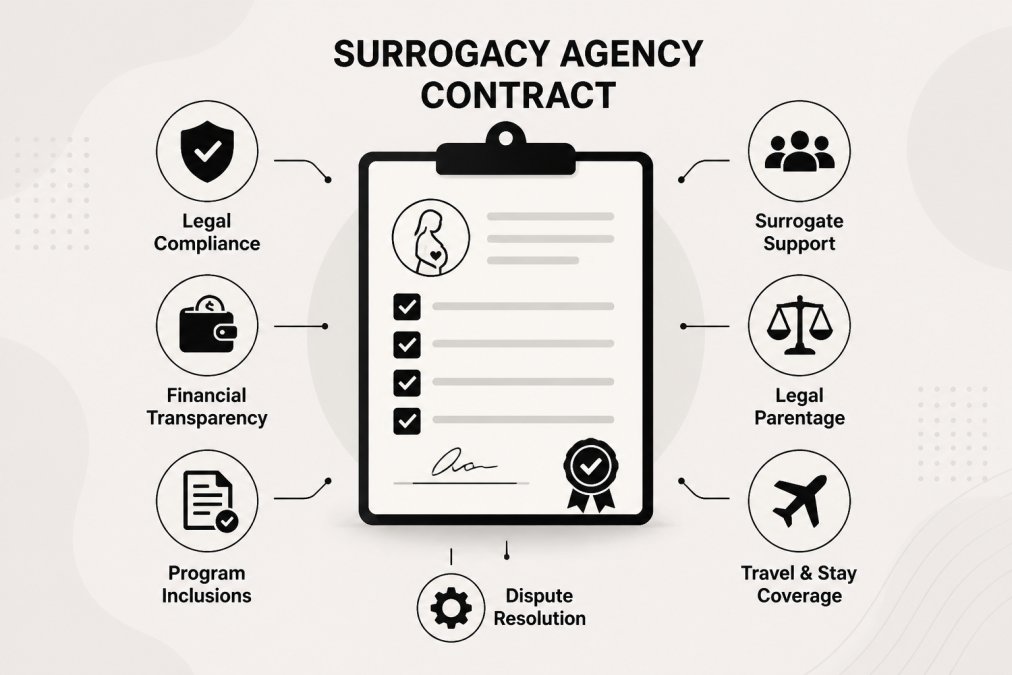
A surrogacy agency contract defines the relationship between Intended Parents, the agency, and the surrogate. The most critical clauses address parental rights, legal status, medical decision-making authority, and financial obligations. Your contract must clearly state how parenthood will be established in the destination country, what steps ensure your names appear on the birth certificate, and who makes medical decisions if complications arise during pregnancy. (Source: guidance from the Department of Health and Human Services)
International Surrogacy Agency Fees Transparency
Transparency in fee structures prevents costly surprises. Many Intended Parents overlook the distinction between the agency service fee and the separate surrogate compensation contract, this is where hidden costs often hide.
Agency Service Fees vs. Surrogate Compensation
Your agency contract covers the agency’s services: matching, legal coordination, medical liaison, and administrative support. This is separate from what the surrogate receives. A reputable agency will itemize both clearly:
- Agency service fee
- Surrogate base compensation
- Medical and prenatal care costs
- Surrogate living expenses during pregnancy (if applicable)
- Travel and accommodation for Intended Parents
- Legal document preparation and filing
- Post-birth support
Red Flags in Fee Structures
Request a detailed, written fee breakdown before signing. Watch for these warning signs:
- Vague language like “fees may vary” without specific conditions listed
- Bundled fees that hide individual costs. Ask the agency to break down any lump sum
- Reluctance to provide written estimates. Reputable agencies provide clarity
- Undefined “additional costs.” Ask specifically: What if the surrogate requires bed rest? If she carries multiples? If medical complications arise?
- No refund or dispute resolution clause. What recourse do you have if something goes wrong?
Questions to Ask Before Signing
- What is included in your agency fee, and what is not?
- If the surrogate becomes pregnant with multiples, do costs increase?
- If the surrogate requires medical leave or hospitalization, who pays?
- If the match fails before pregnancy is confirmed, what fees are refundable?
- Are there separate legal fees for the destination country and for recognizing parenthood in my home country?
- What happens if I need to extend my stay abroad due to legal delays?
- Is there a written fee schedule?
The Agency Contract vs. the Surrogate Contract
Your agency contract is with the agency. The surrogate contract is a separate legal document between you and the surrogate, typically drafted by a lawyer in the destination country. Both must address compensation, medical decision-making, and legal parenthood. Request both contracts in writing at least 30 days before you need to sign.
Surrogacy Agency Contract Checklist for Intended Parents
Review these essential elements before signing:
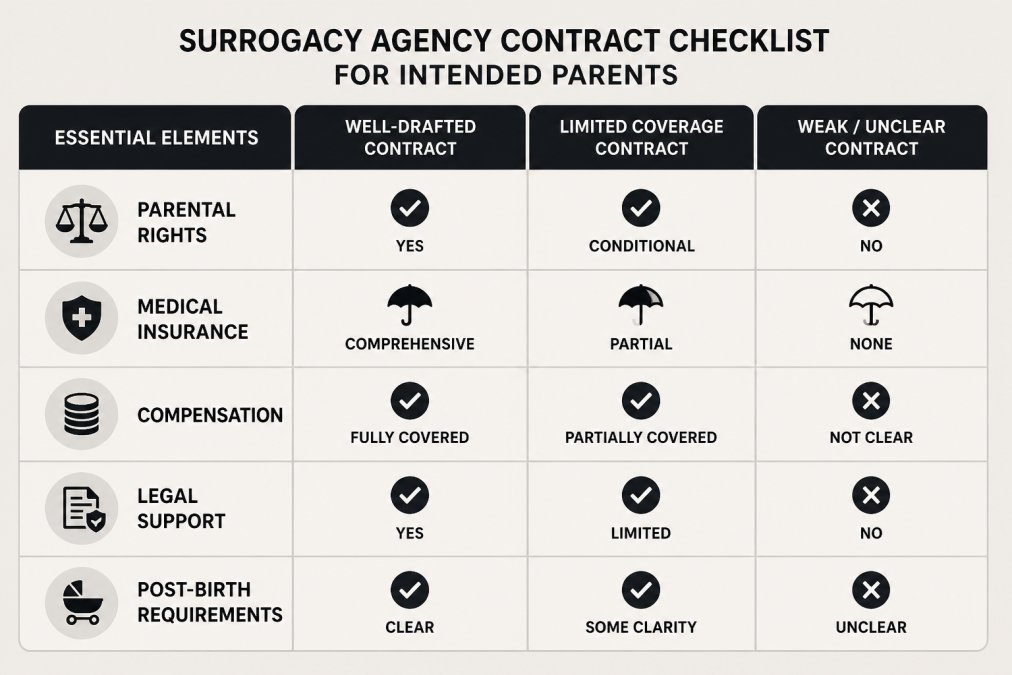
- Parental rights clause: Specifies how legal parenthood transfers to you and timeline for birth certificate registration
- Medical insurance coverage: Clarifies who pays for surrogate prenatal care, delivery, and complications
- Compensation structure: Details surrogate reimbursement and whether payments are held in escrow
- Legal representation: Confirms the agency provides independent legal counsel in both your home country and the destination jurisdiction
- Post-birth requirements: Outlines steps for obtaining travel documents and citizenship applications
- Dispute resolution mechanism: Establishes arbitration or mediation process if conflicts arise
- Termination conditions: Defines what happens if either party withdraws and any financial consequences
- Surrogate health and lifestyle expectations: Sets reasonable expectations around medical care compliance
Request the contract in writing at least 30 days before you need to sign.
Legal Requirements for International Surrogacy
Legal requirements vary significantly by destination country and by your home jurisdiction. A contract that is legally sound in the destination country may not be recognized in your home country.
Destination Country Law vs. Home Country Recognition (Source: consumer protection principles outlined by the Federal Trade Commission)
The surrogacy arrangement must be legal in the destination country where the pregnancy occurs. However, what matters most is whether your home country will recognize the legal parenthood established abroad.
What Your Contract Must Address
Before signing, your contracts must explicitly address:
- How legal parenthood is established in the destination country. The contract should specify the exact legal mechanism and what documents will be issued.
- What documents you will receive. You need certified copies of the birth certificate and medical records. The contract should specify who obtains these and who pays for certified translations.
- Contingency planning if your home country does not recognize the arrangement. Some contracts include provisions for additional legal steps if the destination country’s documents are not automatically recognized.
- Responsibility for legal counsel in both jurisdictions. Your contract should confirm that the agency will provide independent legal representation in the destination country and that you are responsible for hiring a lawyer in your home country to advise on recognition and any additional steps required.
Researching Your Home Country’s Surrogacy Laws
Before signing any contract, hire a family law attorney licensed in your home country to advise you on whether your home country recognizes surrogacy arrangements legally, what documents from the destination country your home country will accept as proof of parenthood, whether you will need to complete an adoption or guardianship petition, how long this process typically takes, whether your child will automatically be a citizen, and how to obtain a passport and travel documents for your child.
The Contract Should Explicitly State Responsibility
Your agency contract should include language confirming that the agency will provide legal representation in the destination country to establish legal parenthood and obtain a birth certificate, and that Intended Parents are responsible for hiring independent legal counsel in their home country to advise on recognition of this arrangement and any additional legal steps required. If your contract does not include this language, ask the agency to add it.
Frequently Asked Questions
What are the most important clauses to review in an international surrogacy agency contract?
Focus on parental rights and legal parenthood provisions, medical decision-making authority, compensation and reimbursement terms, insurance coverage (medical and life), dispute resolution procedures, and post-birth legal requirements. Each clause should clearly define responsibilities, timelines, and what happens if complications arise. Ask your independent legal counsel to review these sections before signing.
How can I ensure transparency in international surrogacy agency fees?
Request a detailed breakdown of all costs upfront, including agency fees, medical expenses, legal fees, travel, and insurance. Ask which costs are non-refundable and under what circumstances. Red flags include vague fee descriptions, unexpected charges mid-process, or fees that seem unusually low. A reputable agency should provide a written fee schedule and explain what each charge covers.
What legal protections should a surrogacy contract include for managing risks?
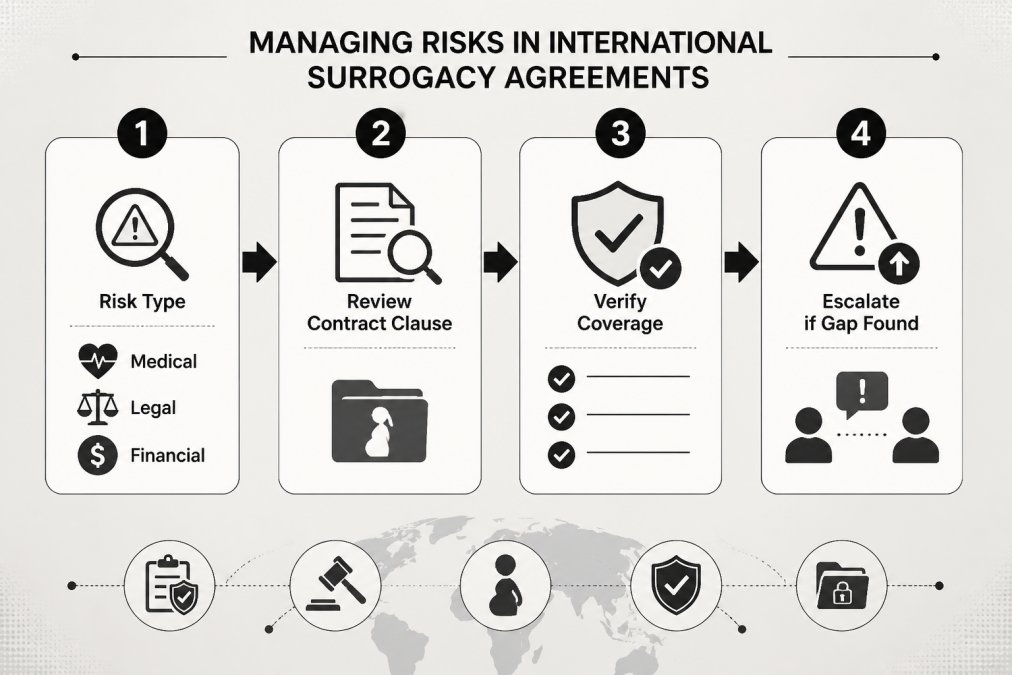
The contract should address liability and indemnification (who bears financial responsibility if complications occur), insurance requirements for both medical and life coverage, dispute resolution mechanisms (arbitration or mediation clauses), and contingency plans for medical emergencies or pregnancy loss. It should also specify jurisdiction and applicable laws, ensuring enforceability in your home country. Have an attorney experienced in international family law review these protections.
This article was written using GrandRanker